
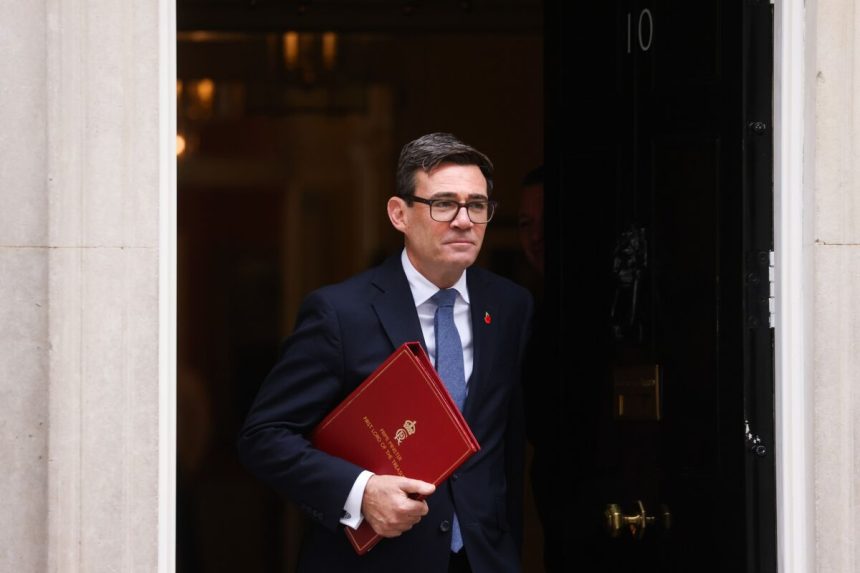
For a decade, British governments treated Brexit as a settled question. Prime Minister Andy Burnham is now betting that the country is ready to reopen it.
Burnham, who took office after Keir Starmer resigned, has broken the political taboo on revisiting Britain’s departure from the European Union. In recent interviews and at the Labour Party conference in Liverpool, he argued that Brexit has done more harm than good and that the UK needs an evidence-based debate about its future relationship with Europe.
A high-stakes month ahead
The issue will come to a head at two summits with European leaders this month. A UK-EU meeting in Brussels on November 20 is expected to discuss a more limited reset, including a trade deal for food and drink, agreements on energy and emissions trading, and a plan to let young people work across Britain and the EU for limited periods.
A broader summit, delayed since July after Starmer’s departure and now expected at the end of November or shortly after, will address the long-term shape of the relationship. Burnham has said he will put options to the country and ask the public to weigh in.
From closer ties to rejoining
Burnham has not ruled out a return to the EU single market, a customs union, or even full membership. For now, he remains bound by Starmer’s pledge not to rejoin the single market or customs union before the next election, which must be held by 2029. But he has made clear that those red lines could shift if he wins a fresh mandate.
He told the Sunday Times that closer ties would add to British GDP and strengthen migration control. On ITV, he said leaving the EU had actually made it harder to control unauthorized migration because Britain lost access to EU databases and agreements.
The truth of the matter is we have lost immigration control in the way that we once had, Burnham said.
Opposition from Farage and nervousness in Labour
The push carries serious political risk. Nigel Farage, leader of the anti-immigration Reform UK party, has accused Burnham of having no mandate to renegotiate Brexit. Reform UK is currently leading in the polls, making Burnham’s gamble especially dangerous.
Even within Labour, opinion is divided. Melanie Onn, a lawmaker representing a district that voted heavily for Brexit in 2016, warned against reopening the divisions of the past. Political trust is hard won and easily lost, she wrote.
A wary Europe
The EU has welcomed Britain's warmer tone, but leaders in Brussels are cautious. Any move toward the single market or a customs union would require guarantees that London has not yet offered, and member states are reluctant to give a former member the benefits of membership without the obligations.
Former Prime Minister Tony Blair has urged Burnham to go further, making rejoining a reformed EU within a decade the centerpiece of his planned 10-year vision for Britain.
The economic backdrop
Most economists agree that Brexit has weighed on the British economy. The UK left the EU in 2020 with a bare-bones trade deal that created new barriers with the bloc of 450 million people on its doorstep. Burnham argues that Britain cannot have a clear path through the rest of the century until it settles its relationship with its largest market.
David Henig, a trade expert at the European Centre for International Political Economy, said public support for Brexit has declined, but politicians remain reluctant to revisit an issue that caused what he called a nervous breakdown for UK politics. He added that Burnham's biggest challenge is not Brussels or the public, but managing the politics within his own party and cabinet.
Britain has had seven prime ministers in a decade. Burnham is now asking voters to look beyond the old divisions and consider whether the country's future lies closer to Europe.