
For years, the war in Ukraine was something most Russians watched from a distance. That distance is shrinking.
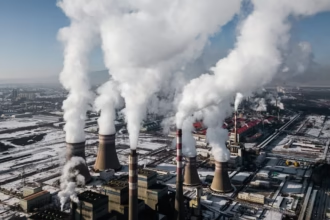
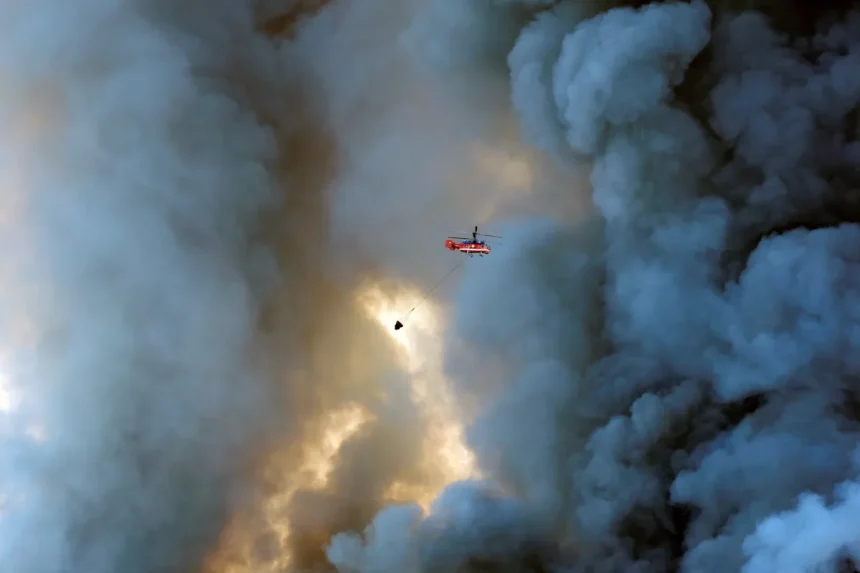
A missile strike on a military equipment factory in Kirov, a city roughly 800 kilometers northeast of Moscow, killed six people and injured 26, according to the regional governor. The blast shook apartment buildings, shattered windows, and sent a thick column of black smoke over a place better known for a 16th-century monastery than for military production.
The war reaches ordinary Russians
Olga, a 49-year-old choreographer who lives nearby, said the explosion jolted her awake and left her neighbors panicking. “We didn’t know whether we should run to a shelter,” she said. The scene is familiar in Ukrainian cities, but new in a Russian city so far from the front.
The Kirov plant is part of Russia’s defense industrial base. Ukrainian officials say such facilities are legitimate targets because they supply the Russian military. Russia has called the strike an attack on civilians and accused Kyiv of deliberately targeting Russian population centers.
Mounting losses on both sides
The Kirov strike comes as evidence of the war’s human cost continues to surface. Hacked records from Russia’s statistics agency, Rosstat, suggest the country has recorded roughly 400,000 deaths among its fighting forces since the full-scale invasion began nearly five years ago. The data, obtained by pro-opposition and Ukrainian hacker groups and shared with international outlets, is drawn from millions of death certificates.
On the same day as the Kirov attack, Russian and Ukrainian long-range strikes killed and wounded civilians in multiple locations. Both sides have expanded their use of drones and missiles, and the line between military target and civilian area has grown harder to see.
Diplomacy stalled on the sidelines
Peace talks have made little progress. A fresh round of US-led discussions began in Abu Dhabi, but the two sides remain far apart. Russia has demanded that Ukraine abandon NATO aspirations and accept limits on its military, while Ukraine and its allies insist that any settlement must preserve Ukrainian territory and include European security guarantees.
European governments have said Russia must halt its invasion before the West will discuss the broader security grievances the Kremlin has used to justify the war. The position risks creating friction with Washington, where the incoming administration has signaled interest in a faster diplomatic resolution.
A harder mood inside Russia
As strikes move deeper into Russian territory, the Kremlin faces a delicate balancing act. State media have portrayed the invasion as a limited operation far from home. Fatalities in cities like Kirov make that framing harder to sustain.
Russian officials have responded with a mix of outrage and reassurance, vowing to strengthen air defenses while continuing to characterize the conflict as defensive. For residents of Kirov, the experience was simpler and more frightening: a war they had seen on television had arrived at their windows.