
One of Vladimir Putin’s closest confidants is overseeing an ambitious Russian research project that screens aging monkeys in the hope of extending human life.
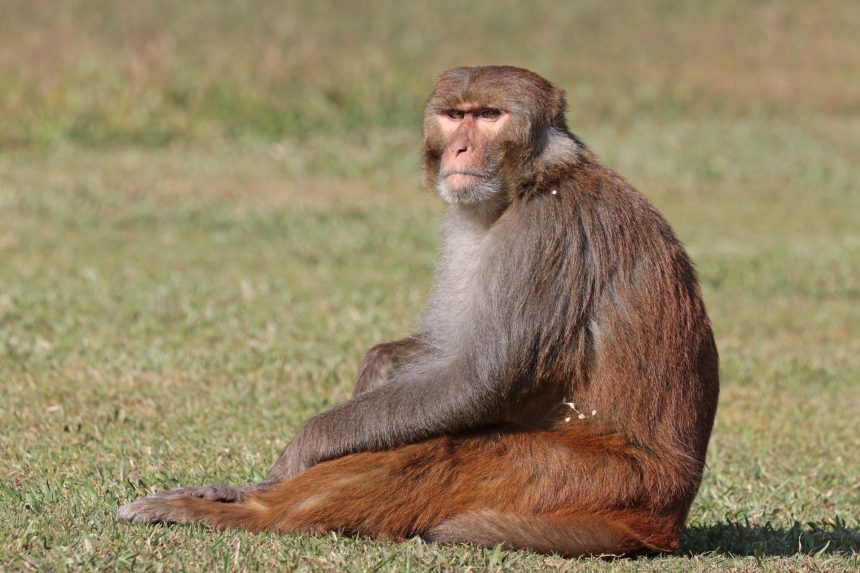
Mikhail Kovalchuk, a physicist who heads the National Research Center Kurchatov Institute, told reporters at the Kurchatov Genomic Forum in Moscow that scientists are examining elderly primates at every stage of aging. The institute’s breeding facilities house more than 7,000 monkeys across 22 species, including a rare collection of animals older than 20 and some aged beyond 30.
A colony built for longevity research
Kovalchuk said the study is not about counting animals but about understanding the biology of aging. Researchers are running biochemical and structural tests on the monkeys’ blood vessels and brains. Because primates are the closest model to humans, the data could form the basis of what Kovalchuk called a regulatory system for extending lifespan.
The Kurchatov Institute has also partnered with the Petrovsky Russian Research Center of Surgery to create a biobank of blood samples from long-lived primates. Konstantin Kotenko, director of the surgery center, said scientists will use the samples to study how aging works, according to reports from the forum.
Putin’s personal interest
The project aligns with a long-standing interest from the Kremlin. Putin, who turned 74 in October, has spoken openly about the potential of biotechnology to extend life. In September 2025, a hot microphone captured him discussing the topic with Chinese President Xi Jinping in Beijing. Putin said organs could be replaced endlessly and that people might even reach immortality, while Xi noted that some predict lifespans of 150 years this century.
Putin’s daughter, Maria Vorontsova, has also promoted Russian anti-aging research, saying the country could be the first to create an anti-aging pill. Western experts have treated such claims with skepticism.
A powerful patron
Kovalchuk and his brother, billionaire banker Yuri Kovalchuk, belong to Putin's inner circle. Mikhail Kovalchuk is widely described as the president's informal adviser on science, particularly genetics. In 2024, the independent outlet Meduza reported that he may have been a driving force behind a state anti-aging initiative, which a source close to the Kremlin attributed to an obsession amplified by lobbying.
Questions about cost and ethics
The scale of the primate colony and the planned biobank suggest significant state funding. Russian media have reported budget figures in the tens of billions of dollars for broader longevity and bioprinting programs, though independent verification is difficult. The research also raises ethical questions about the use of thousands of primates in experiments tied to the personal health ambitions of an aging leader.
For now, the work continues at the Kurchatov Institute, where scientists hope that studying old monkeys will eventually teach humans how to grow old more slowly.