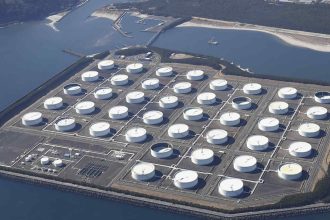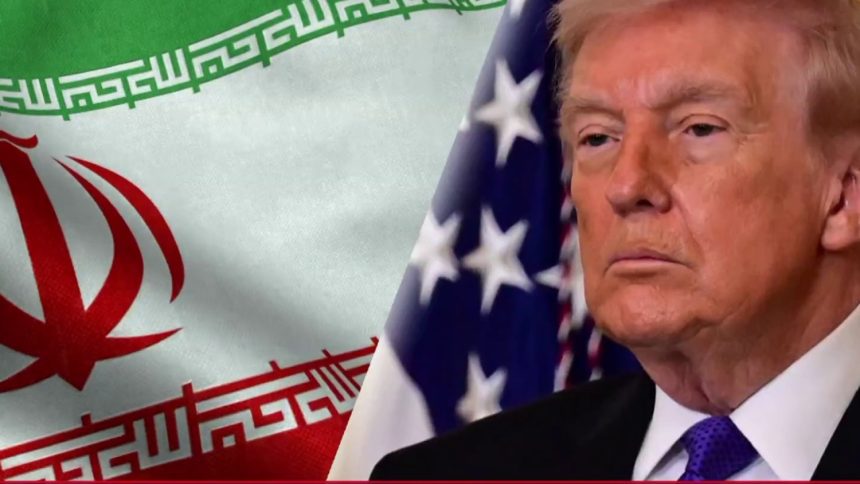
The Strait of Hormuz, a critical chokepoint for global oil supplies, has become the flashpoint in a deepening geopolitical standoff, with Iran seemingly dictating the terms to the Trump administration. As American voters grapple with rising gasoline prices and the specter of an ongoing conflict, analysts suggest President Trump finds himself in a difficult position, caught between domestic political pressures and unyielding Iranian demands. This complex dynamic illustrates a significant challenge for U.S. foreign policy in the Middle East, particularly as global markets react to the uncertainty.
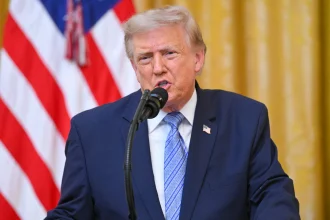
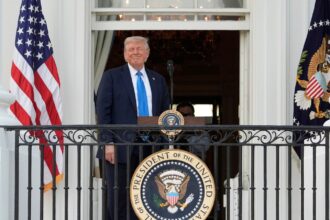
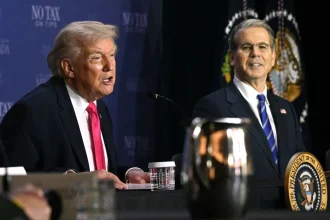
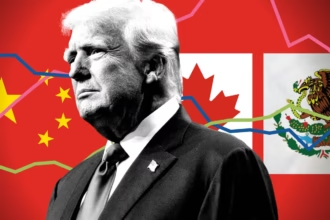
For President Trump, the situation presents a stark political dilemma. According to Dan Alamariu, chief geopolitical strategist at Alpine Macro, higher gasoline prices directly correlate with a decline in Trump’s poll ratings. Abandoning the conflict, Alamariu notes, is not a viable option for an American president, as voters tend to disapprove of leaders who “lose wars.” Yet, continuing the current course allows Iran to maintain its effective lockdown on the Strait, perpetuating high gas prices and further eroding Trump’s popularity. This creates a no-win scenario, where both disengagement and persistence carry substantial political costs ahead of the midterms.
The demands from Tehran are unambiguous and, for the Trump administration, largely unacceptable. Iran’s IRGC-dominated hardliners insist they will not reopen Hormuz without full control of the Strait, coupled with demands for reparations, an end to sanctions, and a complete U.S. military withdrawal from the region. These terms amount to capitulation, a position President Trump cannot publicly accept. Despite Trump’s recent assertion on Truth Social that “The Hormuz Strait is open and operating” and that “There are no talks or conversations going on, or scheduled,” the reality on the ground appears different. Only six vessels transited the Strait on a recent Tuesday, and reports indicate two ships were attacked by unknown entities, suggesting the waterway remains effectively shut.
While the conflict imposes economic strain on Iran, the surge in global oil prices has provided an unexpected buffer. The semi-official Fars news agency reported that Iran earned $7.5 billion from foreign currency oil sales in the first four months of the year, a substantial 50% increase over the previous year. This influx of revenue mitigates some of the economic impact of sanctions and the conflict, further empowering Iran’s hardline stance. Mohammad Baqer Qalibaf, the Iranian parliament speaker, has even declared a “new regional order” in the Gulf, asserting that “the interference of foreigners and extra-regional actors in the region’s equations is rapidly decreasing,” with American forces purportedly seeking a “dignified exit.”
Beyond the immediate geopolitical tensions, the broader economic ramifications are beginning to ripple through global markets. The unending siege in the Strait of Hormuz has contributed to a bond market selloff, with risk premiums on government debt from the U.S., U.K., France, Germany, and Japan all increasing. Johns Hopkins economist Steve Hanke characterized the current bond market as “pricing risk correctly,” describing the outlook as “ugly.” He argues that the Trump administration has inadvertently created a “deadly cocktail” for Treasuries, leading to a bond selloff that has pushed yields beyond informal thresholds set by Treasury Secretary Scott Bessent. Bessent reportedly aimed to keep the 10-year yield below 4% and had an upper red line around 4.5% for the 10-year and 5% for the 30-year. Currently, the 10-year sits at 4.696% and the 30-year at 5.284%, levels not seen for the latter since approximately 2003.
This rise in bond yields translates directly to higher interest rates for consumers on everything from mortgages to car loans, making borrowing more expensive across the board. The Federal Reserve’s stance, with Chairman Kevin Warsh declining to offer “forward guidance,” has further fueled market uncertainty, prompting investors to divest from U.S. bonds. Bassam Nawfal of Alpine Macro suggests this lack of guidance and the subsequent “bear steepening of the curve” could indicate a test of the Fed’s credibility. However, Nawfal also forecasts that impending inflation data might be soft, potentially preventing further rate hikes this year.
The confluence of these factors—a politically constrained President Trump, an emboldened Iran leveraging oil prices, and a global financial system reacting to heightened risk—paints a picture of a challenging international landscape. The prospect of negotiations remains distant, with Alamariu predicting Iran will refuse a peace deal until after the midterms, further solidifying the current stalemate.