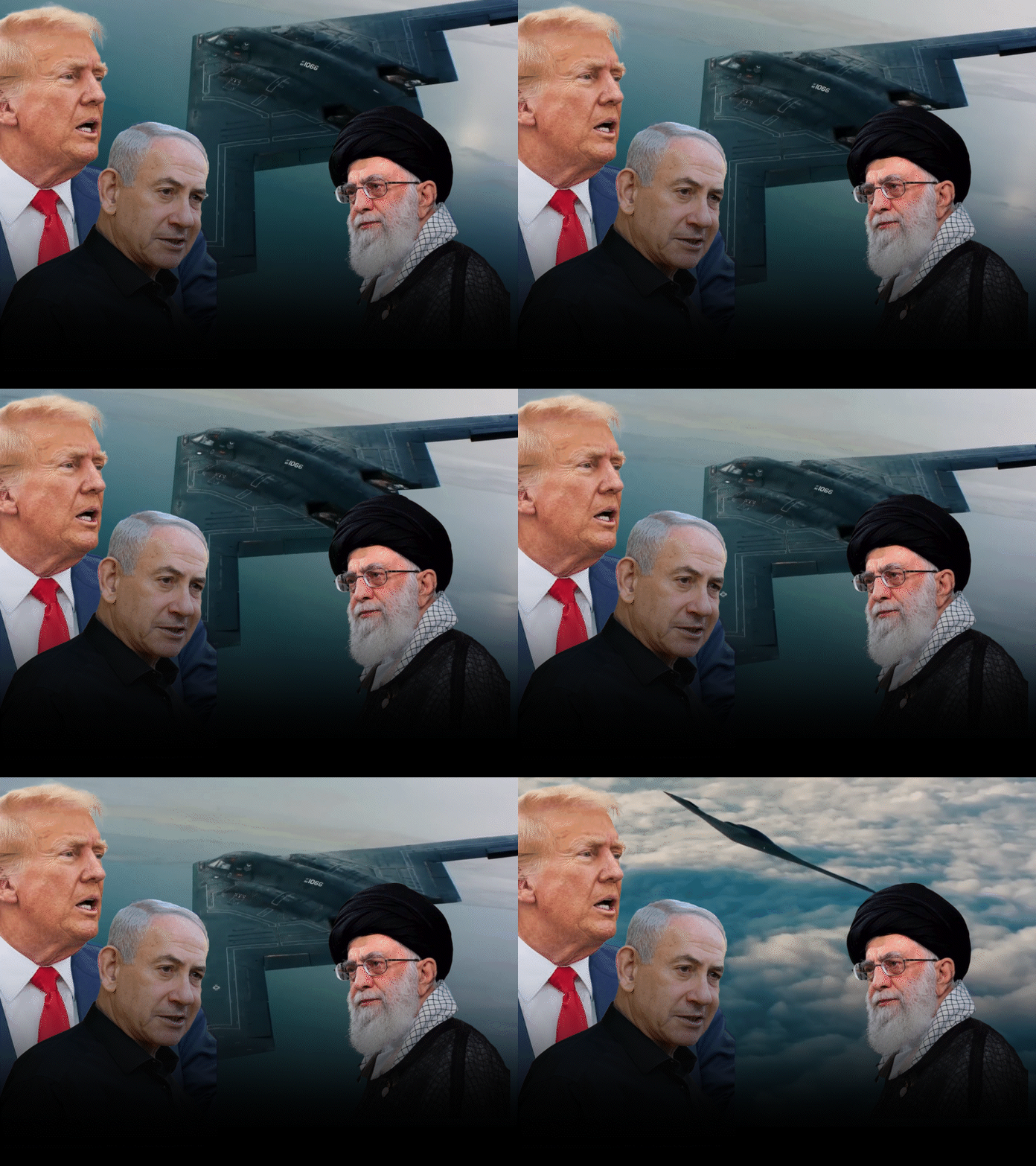
Senator J.D. Vance recently offered a stark assessment of the United States’ current involvement with Iran, characterizing the ongoing situation as being in the “middle of the game.” This perspective, articulated during a recent public appearance, suggests a long-term engagement rather than a fleeting moment of tension, drawing attention to the sustained nature of geopolitical maneuvering in the Middle East. His comments arrive amidst heightened regional volatility, with various actors navigating complex alliances and antagonisms.
The Ohio Republican’s analogy implies a strategic phase where initial moves have been made and the full scope of the conflict, or competition, is still unfolding. This viewpoint moves beyond immediate reactions to individual incidents, instead framing the relationship with Iran as a protracted, multi-faceted challenge. It prompts a reconsideration of the typical short-term news cycle, urging observers to adopt a broader historical and strategic lens when analyzing the dynamics between Washington and Tehran. Such a perspective often informs policy decisions, particularly concerning resource allocation and diplomatic efforts.
Vance’s remarks resonate with a growing sentiment among some policymakers that the United States’ role in the Middle East, particularly concerning Iran, is neither new nor easily resolved. The history of American engagement in the region spans decades, marked by periods of direct intervention, sanctions, and diplomatic overtures, each contributing to the intricate tapestry of present-day relations. Understanding this historical context becomes crucial when interpreting current events and forecasting potential future developments. The “middle of the game” suggests that while past strategies have shaped the present, future actions are still largely unwritten, with significant implications for regional stability.
The Senator’s use of a game-theoretic metaphor also highlights the perceived strategic calculations on both sides. It implies a series of moves and counter-moves, where each action by one party elicits a response from the other, creating a continuous feedback loop. This dynamic is evident in areas such as nuclear proliferation concerns, regional proxy conflicts, and maritime security in vital waterways. The intricate web of alliances and rivalries further complicates this strategic landscape, making any definitive “endgame” appear distant.
Considering the ongoing debates in Washington regarding foreign policy priorities, Vance’s assessment could influence discussions on defense spending, diplomatic initiatives, and the deployment of military assets. If the United States is indeed in the “middle of the game,” then a sustained, coherent strategy becomes paramount, rather than a series of reactive measures. This would necessitate a deep understanding of Iran’s motivations, capabilities, and regional aspirations, as well as a clear articulation of American objectives. The challenge lies in balancing immediate security concerns with long-term strategic goals, a task that often proves difficult in the fast-moving arena of international relations.
Ultimately, Vance’s characterization serves as a reminder that the relationship between the United States and Iran is a persistent and evolving challenge. It underscores the need for careful consideration, strategic foresight, and a nuanced understanding of a region perpetually at the crossroads of global interests. The “middle of the game” implies that while much has transpired, the most critical plays might still be ahead, demanding sustained attention and adaptive policies from all involved parties.