Negotiators representing the United States and Iran have reportedly forged a provisional framework agreement, aiming to prolong the current ceasefire by 60 days and initiate discussions regarding Iran’s nuclear program. This emerging understanding, detailed by US officials speaking to international news outlets, outlines a path toward a potential final accord. However, the comprehensive memorandum of understanding awaits formal endorsement from US President Donald Trump, without which it cannot proceed.
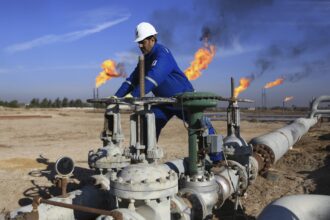
Reports suggest a crucial component of this tentative deal involves the reopening of the Strait of Hormuz, a vital international shipping lane. While Washington has indicated progress, Tehran has not yet publicly confirmed the agreement. Despite this, Fada Hossein Maleki, a member of Iran’s parliament’s National Security and Foreign Policy Commission, conveyed to the ISNA news agency that a significant portion of the Islamic Republic’s proposals have been accepted. Maleki expressed a lingering concern, however, pointing to what he termed the “unpredictability of Trump and the lapses in commitments that we have witnessed so far from the United States.” This sentiment underscores a broader skepticism within Iranian political circles regarding the reliability of American assurances.
The development of this tentative agreement comes after a period of heightened tension, where hopes for a resolution seemed to wane considerably. Recent exchanges of fire between US and Iranian forces, occurring within the last 24 hours amid an already fragile ceasefire, had threatened to derail diplomatic efforts entirely. Adding to the friction, Iran’s Ayatollah Mojtaba Khamenei delivered a message earlier on state television, asserting that the US and Israel were actively seeking to destabilize Iran. He claimed their strategy involved creating divisions and disintegration to compensate for military defeats and bring the nation to its knees.
Meanwhile, practical control over the Strait of Hormuz continues to be a point of contention. The IRGC-affiliated Tasnim news agency reported that several vessels attempting to transit westbound through the waterway were turned back for failing to coordinate with Iran’s newly established Persian Gulf Strait Authority (PGSA) and ignoring warnings from the IRGC Navy. The IRGC Navy released a statement claiming “smart control” of the strait, indicating that 26 commercial and oil tankers had successfully passed through the corridor in the preceding 24 hours after obtaining clearance. Data shared by maritime firm Lloyd’s List Intelligence on Thursday revealed an increase in non-Iranian vessels navigating the waterway, with ships flagged in Singapore, the UAE, South Korea, and a Norwegian-flagged vessel observed exiting the strait over the past week.
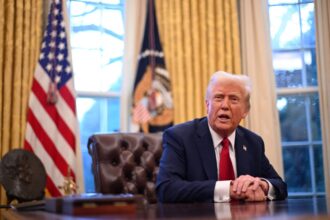
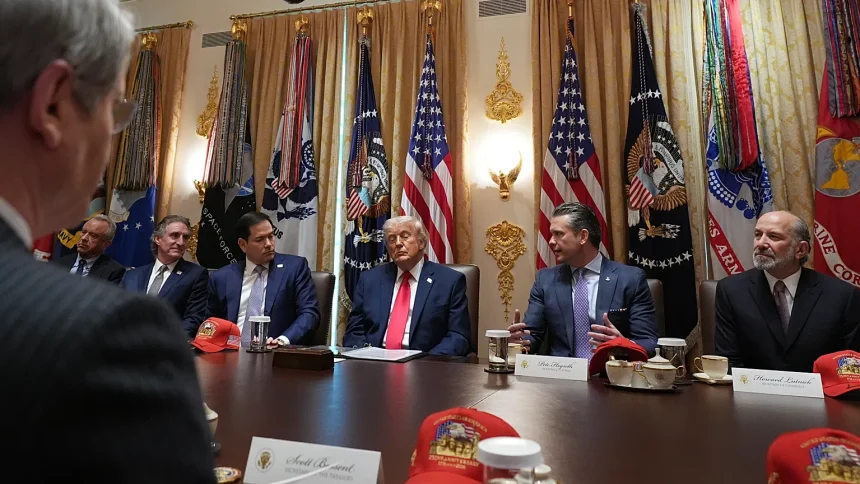
President Trump, speaking on Wednesday, had previously indicated dissatisfaction with Tehran’s offers, stating that if a deal wasn’t reached, the US would “have to finish the job.” While addressing a cabinet meeting at the White House, he also maintained that he was in no rush to conclude the Iran war, a stance that appeared to contradict earlier weekend suggestions that an agreement was imminent. Trump remarked that Iran was “very much intent” on making a deal, though he noted, “So far they haven’t gotten there. We’re not satisfied with it, but we will be.”
Earlier in the week, Iranian state television had broadcast details of what it presented as a draft agreement. This alleged draft included commitments from Washington to lift the naval blockade on Iran, restore traffic in the Strait of Hormuz, and withdraw US forces from the Gulf. However, the White House swiftly dismissed these reports, labeling them a “complete fabrication.” The Strait of Hormuz has been largely inaccessible to international shipping since the conflict commenced on February 28, a closure that has significantly impacted global energy markets. Under normal circumstances, approximately one-fifth of the world’s oil, alongside a substantial volume of other goods, transits through this critical maritime choke point daily. Its prolonged closure has fueled a sharp rise in energy prices and disrupted intricate global supply chains.