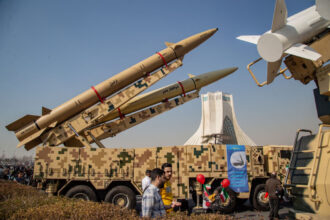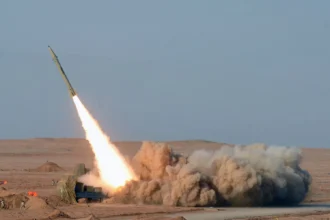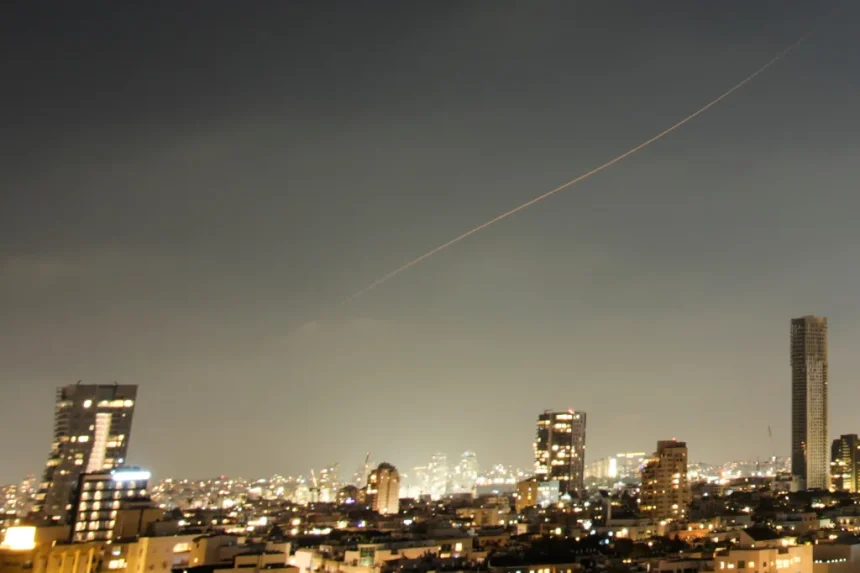
The fragile ceasefire, established in early April, fractured Sunday as Iran announced it had launched missiles toward Israel. This marks the first such direct bombardment since the cessation of hostilities, significantly complicating ongoing diplomatic efforts to secure a broader peace agreement in the region. Iran’s state broadcaster confirmed the launches, following Tehran’s earlier warnings of retaliation after Israel conducted an airstrike on Beirut’s southern suburbs. This Israeli action occurred despite explicit requests from Washington days prior to exercise restraint. Israeli military officials stated their strike was in response to earlier attacks by the Iranian-backed Hezbollah on northern Israel.
In the aftermath of the missile launches, Iran’s Revolutionary Guard issued a statement, asserting that any repetition of such aggression would prompt responses of “broader scope,” targeting “all American and Zionist targets throughout the region.” This declaration also referenced previous attacks on Iran’s coast and vessels operating near the Strait of Hormuz. The Israeli military reported intercepting the incoming missiles, and within an hour, the public was advised they could leave shelters, though remaining in close proximity was recommended. Sirens blared across various parts of the country, with multiple explosions reported in northern Israel. Brig. Gen. Effie Defrin, an Israeli military spokesman, characterized Iran’s actions as a “grave mistake.”
The attack on Beirut, which preceded Iran’s missile launches, struck a residential building, resulting in two fatalities and 20 injuries, according to Lebanon’s health ministry. This Israeli operation came just days after Lebanese and Israeli governments had agreed to a ceasefire during U.S.-hosted discussions, an accord that Hezbollah had rejected. Hezbollah, which claimed responsibility for firing at Israel earlier Sunday, advocates for an end to direct talks between Lebanon and Israel, aligning instead with Iran’s position that any comprehensive ceasefire deal between Tehran and Washington must encompass the situation in Lebanon. Iran had previously warned that an attack on Beirut would reignite full-scale conflict across the Middle East, even as Pakistan endeavors to restart negotiations between Tehran and Washington.
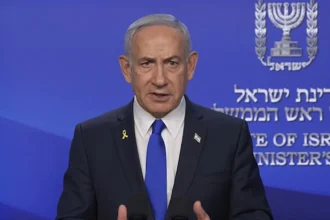
U.S. President Donald Trump addressed the escalating situation in an interview with Fox News Channel, expressing his desire for Iran to cease missile launches and return to the negotiating table. He also distanced the United States from Israel’s earlier strikes on Lebanon, stating, “I’m not happy about it,” and clarifying that these actions were not coordinated with Washington. Later, in an interview with NBC’s “Meet the Press,” Trump suggested a “more surgical attack on Hezbollah” and indicated he was not “demanding” Lebanon’s inclusion in an overall ceasefire deal in the Iran conflict. Israeli Prime Minister Benjamin Netanyahu, facing upcoming elections, has publicly maintained his intention to continue Israel’s offensive until he is confident that Hezbollah no longer poses a threat.
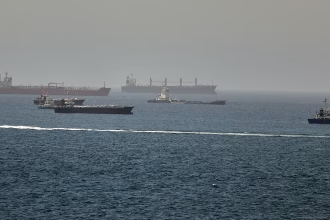
Diplomatic efforts continue amidst the renewed tensions. Pakistan’s interior minister visited Iran on Sunday, delivering a message to Iranian Supreme Leader Ayatollah Mojtaba Khamenei from Pakistan’s army chief, Field Marshal Asim Munir, though the message’s contents were not disclosed. Khamenei has not been seen publicly since his father’s death on the first day of the war in February. Pakistani authorities have indicated that Islamabad, with support from regional partners including Qatar, Turkey, and Egypt, is working to bridge differences between the United States and Iran. In Cairo, Egyptian Foreign Minister Bader Abdelatty and his Qatari counterpart, Sheikh Mohammed bin Abdulrahman Al Thani, discussed “proposed elements” for a potential agreement between the U.S. and Iran, without providing specific details. Meanwhile, Iran has maintained its asserted control over the Strait of Hormuz, while the U.S. has continued its blockade of Iranian ports, impacting global shipments of oil, natural gas, and fertilizer. Following Iran’s missile launches against Israel, Iraq’s Civil Aviation Authority announced a 72-hour closure of its airspace, and Syria’s aviation authority declared a 12-hour closure.