The prospect of an extended ceasefire between the United States and Iran, while seemingly offering a de-escalation, has introduced a complex layer of suspicion within Tehran, according to some observers. Despite the potential for significant concessions from Washington, including the lifting of a naval blockade on Iranian ports and some sanctions relief to allow oil sales, elements within Iran reportedly view these overtures with deep skepticism. This wariness, as Vali Nasr, a former senior State Department adviser, suggests, stems from the very generosity of the proposed terms, leading to a belief that a seemingly favorable deal might actually be a prelude to renewed conflict.
Ongoing discussions reportedly outline a framework where Iran would reopen the Strait of Hormuz, allowing unimpeded passage for ships without tolls. In return, the U.S. would step back from its blockade. However, the more intricate and contentious issues, such as Iran’s uranium enrichment program, a permanent end to U.S. sanctions, and the release of an estimated $25 billion in frozen Iranian assets abroad, are slated for negotiation within a subsequent 60-day window. This phased approach, while offering immediate relief, also creates a period of prolonged uncertainty, fostering an environment where distrust can fester.
Critics in the United States have already voiced concerns that such a deal might grant Iran too much leverage. Eric Brewer, formerly the National Security Council director for counterproliferation, highlighted on X that waiving sanctions on Iranian oil exports now could diminish Iran’s incentive to reach a nuclear agreement later. He also pointed out that tying sanctions relief to the Strait of Hormuz could undermine the U.S. ability to reimpose them without risking Iranian control over the vital waterway. This sentiment is echoed by several Republican senators, including Lindsey Graham, Roger Wicker, and Ted Cruz, who have publicly warned against a deal that they believe would empower Tehran and ultimately threaten regional stability, particularly for Israel. Senator Graham specifically cautioned that recognizing Tehran’s control over the strait would be a significant shift in power dynamics, potentially becoming a “nightmare” for Israel.
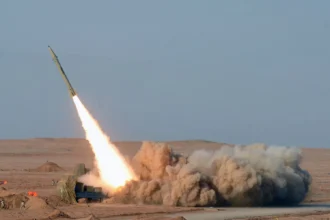
Despite the recent U.S.-Israeli military actions that have reportedly impacted Iran’s military and economy, Tehran has demonstrated its capacity to maintain the closure of the Strait of Hormuz, employing missiles, drones, and fast-attack boats. This sustained capability, even under pressure, has contributed to Iran’s perception of negotiating from a position of strength, as noted by the Institute for the Study of War (ISW). The Institute further suggests that securing sovereignty over the Strait of Hormuz is a primary objective for Iran in these negotiations. The current U.S. naval blockade, while present, does not prevent vessels not entering or exiting Iranian ports from passing, allowing Iran to impose conditions through the Islamic Revolutionary Guard Corps.
The reluctance of former President Trump to resume attacks and break the ceasefire, coupled with his decision to curtail efforts to protect tanker traffic with Navy warships, further complicates the situation. Iran, holding significant sway over global oil markets due to its control of the strait, has shown little inclination to compromise on its core demands. Yet, even with these apparent advantages, the Iranian regime itself seems to question the sincerity of the U.S. offer. Past rounds of negotiations, both last year and earlier this year, concluded with U.S. military action against Iran, a history that naturally fuels suspicion.
Vali Nasr articulated this internal Iranian dilemma, suggesting that “the more generous the terms for Iran the more the suspicion that U.S. is not serious about peace and wants to distract Iran ahead of another attack.” Consequently, Iranian leaders are likely seeking concrete evidence of U.S. military de-escalation. The decision to trust the U.S. in these circumstances, according to Nasr, would be a “gamble” ultimately resting with Supreme Leader Mojtaba Khamenei. The prolonged negotiation process itself, as ISW indicates in a separate report, may serve to normalize Iran’s de facto control over the Strait of Hormuz, a reality the international community can ill afford to let stand indefinitely.