The air raid sirens began their mournful wail across Kyiv shortly after 3 AM, a familiar and yet perpetually terrifying sound. What followed was not the usual scattered drone attack or cruise missile volley, but a barrage of ballistic missiles, reportedly numbering in the dozens, targeting the Ukrainian capital. Residents describe a night of relentless explosions, the concussive force shaking buildings, and the sky briefly illuminated by flashes of intercepted projectiles. This assault, characterized by Ukrainian officials as the largest ballistic missile attack on Kyiv since the full-scale invasion began, marked a significant escalation in Russia’s ongoing aerial campaign.
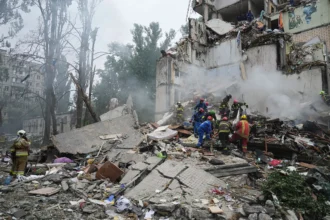
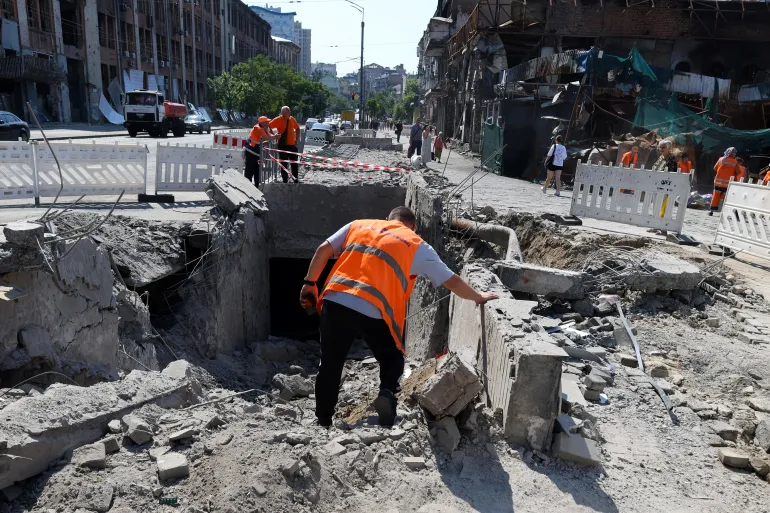
Initial reports from Kyiv’s military administration detailed fragments of intercepted missiles falling across multiple districts, including Shevchenkivskyi, Darnytskyi, and Solomianskyi. These falling debris caused damage to civilian infrastructure, igniting fires and injuring several individuals. Emergency services were immediately dispatched, navigating the dark streets to assess the damage and provide assistance. The sheer volume and speed of ballistic missiles present a formidable challenge for air defense systems, even those as advanced as the Patriot batteries supplied to Ukraine. Unlike slower cruise missiles or drones, ballistic missiles follow a high, arcing trajectory, descending at supersonic speeds, leaving minimal time for interception.
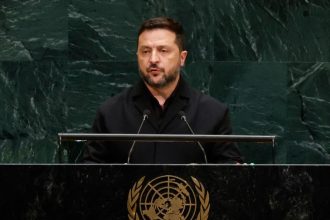
Ukrainian President Volodymyr Zelenskyy, in an address following the attacks, reiterated calls for increased international support for air defense capabilities. He emphasized that while Ukraine’s defenders had achieved a high rate of interception, even a small percentage of missiles getting through could cause catastrophic damage in densely populated urban centers like Kyiv. The psychological toll on the city’s inhabitants is also considerable; after months of relative calm, the intensity of this particular attack served as a stark reminder of the ever-present threat. Many spent the night in underground shelters or metro stations, emerging at dawn to survey the destruction and grapple with the implications of such a concentrated assault.
Analysts suggest this shift towards a more intense ballistic missile campaign could be an attempt by Russia to deplete Ukraine’s limited and valuable air defense interceptor stockpiles. By forcing Ukraine to expend these expensive munitions against a high volume of incoming threats, Russia might be aiming to create vulnerabilities for subsequent, larger-scale attacks. It also sends a clear message of continued pressure on the capital, regardless of the ongoing fighting along the front lines in the east and south. The precision and scale of this particular barrage indicate a deliberate strategy, likely targeting critical infrastructure or military installations within and around Kyiv, though Ukrainian authorities have yet to confirm specific targets.
The international community was quick to condemn the attacks. Statements from various Western leaders and organizations underscored the brutality of targeting civilian areas and reaffirmed their commitment to supporting Ukraine. However, these condemnations, while important diplomatically, do little to stop the immediate threat. The urgency of providing more sophisticated and numerous air defense systems, including interceptors, has been a recurring theme in discussions between Kyiv and its allies. As the conflict continues, the skies over Kyiv remain a critical battleground, and the effectiveness of Ukraine’s air defenses against such formidable barrages will undoubtedly shape the trajectory of the war.