The escalation of conflict between the United States and Iran has intensified, with Tehran reporting a U.S. airstrike on a nuclear construction site, a claim that satellite imagery largely contradicts. This development follows a series of retaliatory actions from both sides, pushing the region closer to a broader conflict after last month’s interim deal, intended to halt hostilities, effectively collapsed. The recent U.S. strikes, launched on Sunday, were a direct response to the killing of American troops in Jordan, marking a significant turn in the ongoing friction.
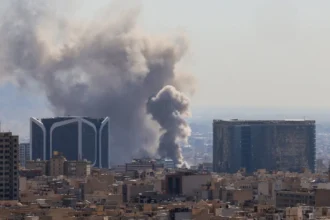
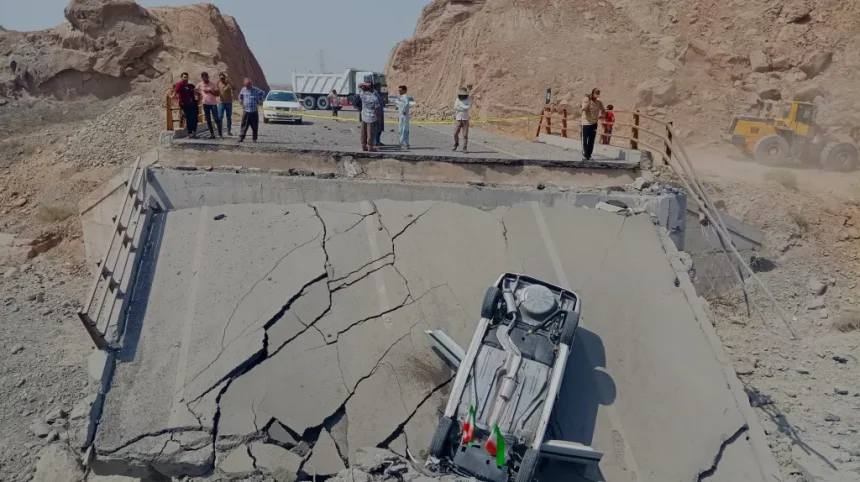
For the past week, American forces have targeted various Iranian facilities, including bridges, water desalination plants, and electrical infrastructure. These actions, according to the U.S. military’s Central Command, aim to degrade Iran’s capacity to control the Strait of Hormuz and to punish the Islamic Revolutionary Guard Corps. The Guard, a central pillar of Iran’s theocracy, commands its ballistic missile arsenal, and U.S. military footage, reportedly showing strikes by fighter jets and Tomahawk cruise missiles, indicated targets in mountainous regions where the Guard often maintains missile bases.
In response, Iran has directed its own missile attacks toward U.S.-allied countries across the Middle East. Jordan, Kuwait, and Bahrain all activated their air defense systems on Sunday, anticipating incoming Iranian drones and missiles. Jordanian military confirmed shooting down several Iranian missiles, which caused no casualties or damage. Israel also issued a warning as missiles launched towards Jordan’s port city of Aqaba created a risk of spillover into Israeli territory, prompting its own interceptors to be launched from the outskirts of Eilat to prevent debris from falling.
The Iranian atomic energy agency stated that the Darkhovin nuclear plant construction site in the southwest was among the targets. However, satellite images from Planet Labs PBC, taken in early July, show the site largely as cleared earth with minimal construction activity. The International Atomic Energy Agency, which last visited the location, confirmed that it was in the “very early stages of construction” and contained no nuclear material. This discrepancy highlights the complex and often opaque nature of information emanating from the conflict zone.
The strategic targeting of civilian infrastructure has drawn sharp criticism. Jasem Mohamed al-Budaiwi, the secretary-general of the six-nation Gulf Cooperation Council, has accused Iran of war crimes, citing attacks on vital facilities such as power and water desalination plants. Kuwait, for instance, reported that one of its power and water desalination plants was attacked for the second time in two days, causing fires, although its power grid remained stable. International humanitarian law generally protects such civilian sites, but their status can change if used for military purposes, requiring attacks to be proportionate and minimize civilian harm.
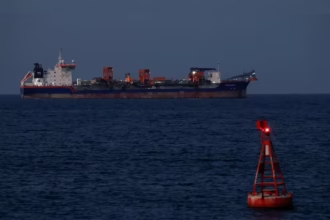
U.S. President Donald Trump had previously threatened to target Iran’s power stations and bridges to compel Tehran to loosen its grip on the Strait of Hormuz, a critical waterway through which a fifth of global oil supplies once transited. Recent attacks suggest the U.S. military is now executing this strategy, focusing on Iranian coastal areas. The U.S. has also reimposed a naval blockade on Iranian ports to halt crude oil shipments, redirecting five ships and disabling one in the past week.
With the 60-day negotiation period for a permanent end to the war and discussions on Iran’s nuclear program now past its halfway mark, the interim deal appears to be unraveling. Iranian Supreme Leader Mojtaba Khamenei issued a warning on Saturday of “unforgettable lessons” if the U.S. continues its attacks, while an Iranian negotiator accused the U.S. of violating the interim agreement and announced a suspension of commitments. The human cost has been significant, with 16 U.S. service members killed and over 430 wounded since the conflict began, and Iranian authorities reporting at least 50 deaths and 517 wounded from the latest U.S. strikes. The full extent of Iran’s materiel losses remains undisclosed.