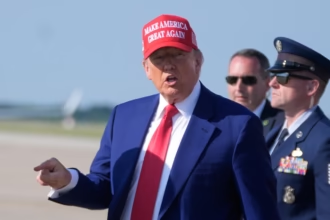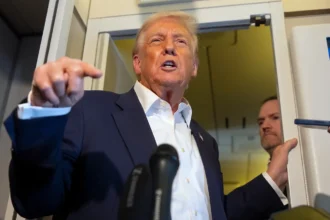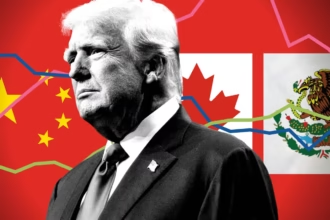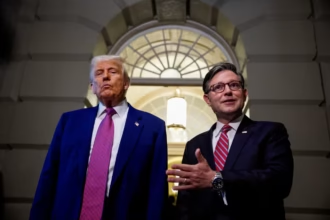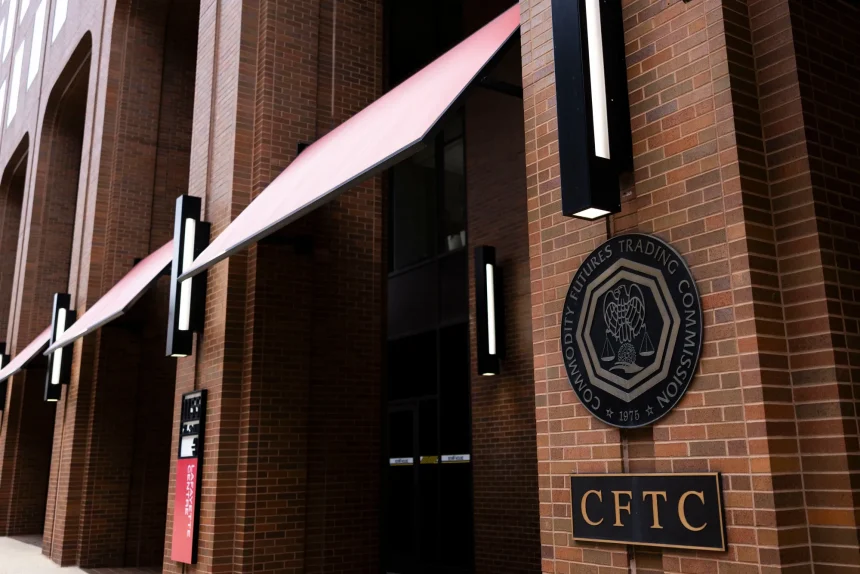
The President, Donald Trump, has publicly voiced his support for the Commodity Futures Trading Commission (CFTC) to regulate prediction markets, a move that places him squarely in the middle of an escalating jurisdictional dispute with individual states. This intervention comes as the landscape for these speculative platforms grows increasingly complex, drawing scrutiny from various governmental bodies eager to assert authority over their operation. Trump’s endorsement signals a preference for a singular federal approach rather than a fragmented state-by-state regulatory patchwork, which proponents argue could stifle innovation and create an uneven playing field.
Prediction markets, where participants wager on the outcome of future events ranging from political elections to economic indicators, have seen a surge in popularity, but their legal status remains ambiguous in many jurisdictions. Companies like PredictIt, which operates under a no-action letter from the CFTC allowing limited academic research, have been central to this debate. The CFTC, traditionally responsible for regulating derivatives and futures markets, views these platforms as falling within its purview, suggesting that the underlying contracts behave similarly to financial instruments it already oversees. However, state regulators, particularly those with established gambling laws, often argue that prediction markets constitute a form of illegal gambling and should be governed at the local level.
Trump’s stance is particularly notable given his own history with public polling and a penchant for unconventional political engagement. His support for federal oversight could be interpreted as an attempt to streamline the regulatory environment for platforms that often provide real-time, albeit speculative, insights into public sentiment and future events. This federal preference aligns with arguments from operators who contend that a national framework would offer clarity, reduce compliance burdens, and foster a more robust market for predictive analytics without the complexities of navigating 50 different legal interpretations. They often point to the potential for these markets to offer valuable data points beyond mere entertainment, serving as alternative indicators for everything from election probabilities to policy outcomes.
Conversely, state attorneys general and gaming commissions are wary of what they perceive as an expansion of unregulated gambling within their borders. They emphasize consumer protection, often citing concerns about market manipulation, fraud, and the potential for addiction, issues traditionally addressed through state-level gaming regulations. The argument from states is often rooted in the idea that allowing the CFTC to preside over these markets would undermine existing state laws designed to protect citizens from the social costs associated with widespread gambling. This divergence creates a classic federalism conflict, where the scope of federal power clashes with states’ rights to govern matters within their borders.
The former president’s intervention could lend significant political weight to the CFTC’s position, potentially influencing future legislative efforts or court decisions. His backing could embolden federal regulators to assert more aggressive authority, even as states continue to pursue actions against platforms operating without their explicit approval. The outcome of this regulatory tug-of-war will likely shape the future accessibility and nature of prediction markets in the United States, determining whether they evolve under a unified federal umbrella or remain subject to a complex, disparate set of state-specific rules. For participants and operators alike, the clarity of a single regulatory body, as advocated by Trump, could be a welcome development, simplifying an otherwise convoluted legal landscape.