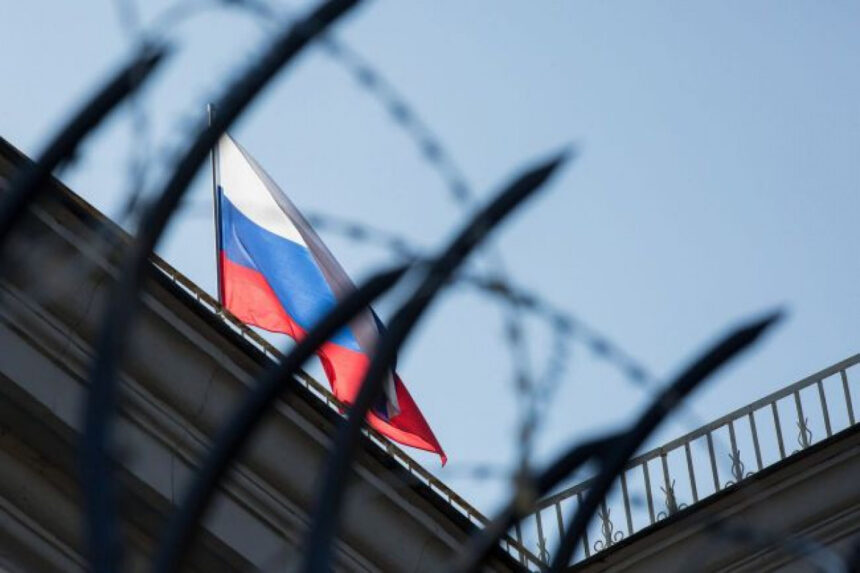
The European Commission has formally added Russia to its updated list of high-risk third countries for money laundering and terrorist financing, a designation that places Moscow alongside jurisdictions with severe structural deficiencies in financial oversight. The move significantly tightens scrutiny on all financial flows connected to Russia, reshaping compliance obligations for banks, businesses, investment firms, and service providers across the European Union.
- Why the EU Took This Step: Systemic Risks and Regulatory Concerns
- 1. Erosion of Anti–Money Laundering (AML) Safeguards
- 2. Increased Financial Opacity
- 3. Evidence of State-Linked Financial Crime Structures
- 4. Deterioration in Cooperation With International Bodies
- 5. Heightened Risks Associated With Sanctions Circumvention
- Implications for EU Banks, Businesses, and Investors
- • More stringent customer verification
- • Mandatory risk assessments
- • Heightened monitoring of trade and payments
- • Increased reporting to Financial Intelligence Units (FIUs)
- • Restrictions on correspondent banking relationships
- Impact on Russia’s Economic Integration With Global Markets
- 1. Higher Transaction Costs
- 2. Reduced Banking Access
- 3. Compromised Investment Channels
- 4. Broader Index and Vendor Exclusions
- A Turning Point in EU Financial Security Strategy
- Shift From Reactive to Proactive Regulation
- A Message to Global Financial Markets
- Strengthening EU Internal Security
- Reactions Across Europe and Beyond
- What Comes Next: Implementation and Enforcement
- 1. Publishing detailed compliance guidance
- 2. Enhancing cooperation with FIUs and Europol
- 3. Expanding monitoring of third-country intermediaries
- 4. Reviewing the designation annually
- Conclusion: A Defining Step in Europe’s Financial Defenses
The decision marks one of the most consequential regulatory escalations since the start of the war in Ukraine, reflecting not only geopolitical tensions but also deep concerns about the transparency, governance, and integrity of Russia’s financial system.
Why the EU Took This Step: Systemic Risks and Regulatory Concerns
The European Commission’s assessment cited multiple grounds for adding Russia to the high-risk list:
1. Erosion of Anti–Money Laundering (AML) Safeguards
European regulators argue that Russia’s internal controls, supervisory mechanisms, and AML enforcement have significantly deteriorated since 2022.
2. Increased Financial Opacity
Sanction evasion, shadow trading networks, and the use of intermediaries to move capital across borders have become more prevalent, according to EU intelligence and financial monitors.
3. Evidence of State-Linked Financial Crime Structures
Reports highlight that elements of Russia’s political and economic system rely on opaque networks that hinder international efforts to track illicit transactions.
4. Deterioration in Cooperation With International Bodies
Russia’s withdrawal from, or limited engagement with, key global transparency initiatives has weakened mutual oversight protocols.
5. Heightened Risks Associated With Sanctions Circumvention
The EU’s increasing sanctions packages have incentivized complex routing of funds through offshore hubs and third countries—raising red flags for enforcement authorities.
The Commission’s decision aligns with recommendations from the Financial Action Task Force (FATF), which suspended Russia’s membership in 2023 and warned of significant AML deficiencies.
Implications for EU Banks, Businesses, and Investors
With Russia now officially categorized as a high-risk jurisdiction, all EU-based entities must apply enhanced due diligence (EDD) for any transaction, partnership, or financial activity involving Russia or Russian nationals operating through foreign intermediaries.
Key obligations include:
• More stringent customer verification
Financial institutions must collect additional documentation on beneficial ownership, funding sources, and transaction purpose.
• Mandatory risk assessments
Banks must review exposure to Russian-linked accounts, subsidiaries, and counterparties.
• Heightened monitoring of trade and payments
Cross-border transactions with Russian ties will face additional scrutiny, delays, and potential reporting requirements.
• Increased reporting to Financial Intelligence Units (FIUs)
Suspicious transactions will likely trigger immediate reporting obligations under EU AML directives.
• Restrictions on correspondent banking relationships
EU banks may reassess or terminate relationships with Russian financial institutions.
For businesses, the ruling increases the compliance burden in sectors such as real estate, consulting, logistics, digital services, and legal advisory.
Impact on Russia’s Economic Integration With Global Markets
The EU’s decision further isolates Russia from Western financial systems:
1. Higher Transaction Costs
Russian companies will experience increased friction when engaging with EU partners, raising operational expenses.
2. Reduced Banking Access
EU institutions may limit or halt services, including account openings, lending, trade finance, and custody operations.
3. Compromised Investment Channels
Private equity, venture capital, and institutional investors will face stricter rules that effectively discourage Russia-related exposure.
4. Broader Index and Vendor Exclusions
Financial benchmarks, payment processors, and compliance vendors may adjust policies reflecting Russia’s upgraded risk classification.
This designation deepens Russia’s reliance on non-Western financial networks—particularly those in China, the Middle East, and alternative payment systems outside SWIFT.
A Turning Point in EU Financial Security Strategy
The Commission’s move reflects a wider transformation in Europe’s approach to financial crime and geopolitical risk.
Shift From Reactive to Proactive Regulation
The EU is increasingly using AML mechanisms as a tool for strategic pressure, complementing sanctions and export-control regimes.
A Message to Global Financial Markets
This designation signals to international banks and regulators that engaging with Russia carries heightened systemic and reputational risks.
Strengthening EU Internal Security
By restricting financial channels linked to illicit Russian networks, the EU aims to protect:
- Its financial institutions
- Capital markets
- Supply chains
- Critical infrastructure
from exposure to opaque or high-risk activities.
Reactions Across Europe and Beyond
EU Member States
Most member states support the classification, though some warn that the compliance burden will be heavy for small and medium-sized enterprises.
Russia
Moscow condemned the decision, calling it politically motivated and harmful to global financial stability.
Global Regulatory Bodies
International AML watchdogs have noted alignment between the EU’s designation and global concerns about Russia’s transparency and oversight standards.
Financial Sector
Banks and compliance firms welcomed the clarity but cautioned that implementation will require substantial operational adjustments.
What Comes Next: Implementation and Enforcement
The EU will undertake several follow-up actions:
1. Publishing detailed compliance guidance
To help banks and companies interpret their obligations.
2. Enhancing cooperation with FIUs and Europol
Focus will be on detecting sanctions circumvention, illicit trade, and shell-company networks.
3. Expanding monitoring of third-country intermediaries
Especially jurisdictions frequently used as Russia-linked conduits.
4. Reviewing the designation annually
Though experts expect Russia to remain on the list for the foreseeable future.
Conclusion: A Defining Step in Europe’s Financial Defenses
By adding Russia to the high-risk list for money laundering, the European Commission has taken a decisive step in reshaping the continent’s financial security posture. This action not only sharpens regulatory oversight but also redefines how European institutions must engage with Russian-linked financial activity.
The designation solidifies Russia’s growing isolation from Western financial networks and elevates compliance expectations across every EU industry touched by international capital flows. As the geopolitical landscape evolves, the decision reinforces a central message: Europe is prepared to use financial regulation as a frontline tool in safeguarding its economic integrity and collective security.