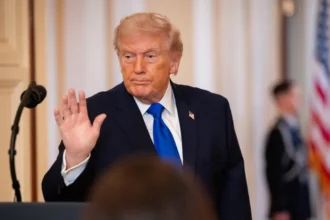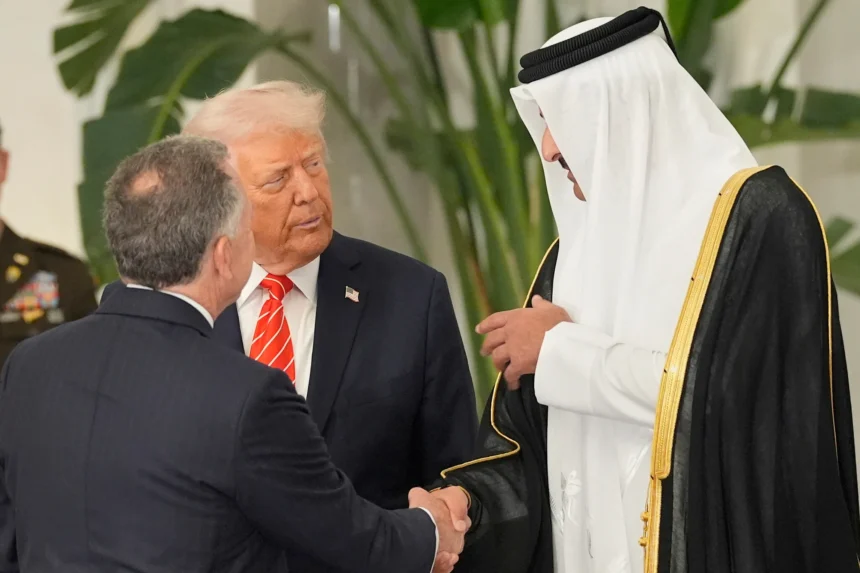
Senior officials from the United States, Israel, and Qatar have held a series of discreet but strategic diplomatic meetings aimed at mending strained relations and reviving cooperation between two of Washington’s most important Middle Eastern partners. The talks come at a pivotal moment, as the Trump administration intensifies efforts to persuade regional allies to formalize diplomatic relations with Israel, a priority that remains central to U.S. policy in the region.
- A Delicate Diplomatic Balancing Act
- Inside the Talks: Strategic Themes and Diplomatic Signals
- 1. Restoring Functional Working Channels
- 2. Exploring Long-Term Normalization Pathways
- 3. Ensuring Regional Stability Amid Shifting Alliances
- 4. Managing Tensions Related to Gaza and the Palestinian Issue
- The Broader Context: Trump Administration’s Push for Regional Transformation
- Israel’s Position: Pragmatic Openness with Strategic Reservations
- Qatar’s Calculus: Balancing Modernization, Mediation, and Regional Leadership
- A Path Forward: Quiet Diplomacy Over Public Announcements
- Conclusion: A Subtle but Significant Diplomatic Effort Underway
The discussions reflect broader geopolitical recalibrations across the Gulf and Levant, where shifting alliances, economic ambitions, and security concerns are reshaping long-held dynamics. For Washington, bridging divides between Doha and Jerusalem is viewed as essential to advancing its vision for a more interconnected and strategically aligned Middle East.
A Delicate Diplomatic Balancing Act
Relations between Qatar and Israel have historically fluctuated, shaped by broader Arab–Israeli tensions, the Israeli–Palestinian conflict, and Qatar’s unique diplomatic posture within the Gulf Cooperation Council (GCC). While Qatar maintains informal channels and past periods of quiet engagement with Israel, formal diplomatic ties remain off the table—complicated by domestic sensitivities, regional politics, and Doha’s role as a key mediator in Palestinian affairs.
Recent tension between the two sides, including disputes over Gaza policy and messaging during conflict escalation, prompted the United States to step in with the goal of stabilizing relations and identifying areas of potential cooperation.
Why the U.S. Is Pushing Now
U.S. officials cite several strategic motivations:
- Consolidating regional alliances amid rising instability
- Strengthening Israel’s diplomatic standing following normalization deals with UAE, Bahrain, Morocco, and Sudan
- Encouraging Qatar’s deeper integration into regional security frameworks
- Stabilizing coordination on Gaza and humanitarian negotiations
- Leveraging Qatar’s role as a mediator with various regional actors
The timing is critical, as Washington seeks to leverage recent momentum from other normalization agreements into a new diplomatic push involving Doha.
Inside the Talks: Strategic Themes and Diplomatic Signals
While the discussions remain largely confidential, officials familiar with the process highlight several key themes:
1. Restoring Functional Working Channels
The U.S. is encouraging both sides to rebuild quiet coordination mechanisms, particularly relating to Gaza, hostage negotiations, and humanitarian access. Qatar’s ability to communicate with multiple parties makes it an indispensable mediator, but maintaining trust with Israel is essential for progress.
2. Exploring Long-Term Normalization Pathways
Although Qatar is not expected to normalize ties with Israel in the near term, U.S. diplomats aim to lay the groundwork for future steps—small confidence-building measures that could deepen economic or technical cooperation over time.
This approach mirrors the phased strategy used prior to the UAE and Bahrain normalization deals.
3. Ensuring Regional Stability Amid Shifting Alliances
The Gulf region continues to undergo political realignment. Qatar wants assurances that U.S. and Israeli support for normalization does not come at the expense of Doha’s regional interests or relationships. Washington, in turn, is pushing for a more unified approach to counterterrorism and regional de-escalation.
4. Managing Tensions Related to Gaza and the Palestinian Issue
Qatar maintains strong political and humanitarian ties with the Palestinian territories, making it both a stakeholder and a mediator. Israel has expressed concerns about certain channels of Qatar’s influence, while Qatar insists on the necessity of humanitarian engagement.
The U.S. is working to facilitate a structured dialogue to reduce misunderstandings and strengthen cooperation.
The Broader Context: Trump Administration’s Push for Regional Transformation
Since the Abraham Accords, the Trump administration has made it a central diplomatic priority to reshape Middle East alliances by encouraging Arab–Israeli normalization. While several major steps have been achieved, the next phase—bringing influential players like Qatar, Saudi Arabia, and Oman into the framework—presents significantly greater challenges.
Why Qatar Matters Strategically
Qatar plays an outsized role in regional diplomacy:
- Major U.S. ally and home to the Al Udeid Air Base, a key CENTCOM command site
- Global energy power through LNG exports
- Indispensable mediator in hostage, ceasefire, and humanitarian negotiations
- Diplomatic network spanning Iran, Gaza, Lebanon, and Afghanistan
- Increasingly influential economic actor
Bringing Qatar closer to Israel would represent a diplomatic breakthrough with far-reaching security and economic implications.
Israel’s Position: Pragmatic Openness with Strategic Reservations
For Israel, Qatar remains both a potential partner and a complex diplomatic challenge. On one hand:
- Qatar’s mediation capacity is uniquely valuable
- Long-term normalization would strengthen Israel’s regional acceptance
- Economic ties could unlock new markets and investments
On the other hand:
- Qatar’s relationships with Palestinian factions create friction
- Differences over Gaza governance remain a sticking point
- Public opinion within Qatar limits visible rapprochement
Still, Israeli officials have signaled cautious openness to deeper engagement if facilitated through U.S. diplomacy.
Qatar’s Calculus: Balancing Modernization, Mediation, and Regional Leadership
Doha’s foreign policy is guided by strategic autonomy. While Qatar maintains strong U.S. ties and does not rule out future shifts, it must balance:
- Domestic opinion on the Israeli–Palestinian conflict
- Its reputation as a neutral mediator
- The need to maintain relations with regional partners, including Iran
- Economic and security considerations tied to the U.S. alliance
- Its role in humanitarian diplomacy
For Qatar, the goal is to preserve flexibility while avoiding entanglement in regional rivalries.
A Path Forward: Quiet Diplomacy Over Public Announcements
Diplomats emphasize that no major breakthrough should be expected in the immediate term. Instead, the meetings reflect a long-term strategy:
- Build trust incrementally
- Institutionalize working-level communication
- Identify technical areas for cooperation (aviation, health, infrastructure)
- Maintain U.S.-directed momentum on normalization
Any formal move toward diplomatic ties would require a significant shift in regional conditions and domestic sentiment—both of which remain fluid.
Conclusion: A Subtle but Significant Diplomatic Effort Underway
The recent talks among U.S., Israeli, and Qatari officials underscore Washington’s determination to reshape the geopolitical landscape of the Middle East through strengthened partnerships and gradual normalization initiatives. While Qatar is unlikely to formalize diplomatic relations with Israel in the near future, the renewed dialogue marks an important step in reducing tensions, rebuilding trust, and setting the stage for future cooperation.
As the region undergoes rapid transformation—economically, politically, and strategically—the role of U.S. diplomacy in fostering alignment among its key allies has become more critical than ever. The quiet engagement between Doha and Jerusalem, with Washington as mediator, may not yield immediate headlines, but it represents the underlying diplomatic architecture that shapes the future of Middle East stability.