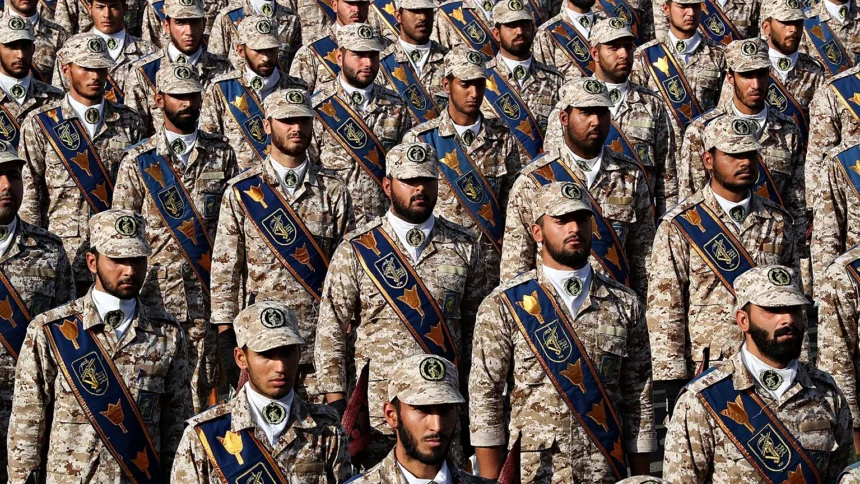
Tehran has formally designated all European Union militaries as terrorist organizations, a move announced by parliamentary speaker Mohammad Bagher Qalibaf. This declaration follows the EU’s decision last week to place Iran’s paramilitary Revolutionary Guard, or IRGC, on its own list of terror groups. While the Iranian response is largely symbolic, it mirrors a 2019 law that permits such reciprocal declarations against nations that designate Iranian military entities as terrorist organizations, a precedent set when the United States first applied the label to the Guard.
The EU’s recent action stems directly from the ongoing, violent suppression of widespread protests across Iran. Security forces, particularly elements within the IRGC, have been accused of extreme brutality against demonstrators. Human rights organizations suggest a staggering number of casualties, with some EU foreign ministers citing figures potentially as high as 30,000 victims. This brutal crackdown on dissent, sparked by the death of Jina Mahsa Amini, has drawn international condemnation.
Amini’s death in 2022 became a potent symbol. The young Kurdish woman was arrested by Tehran’s morality police for allegedly not adhering to the country’s strict dress code regarding headscarves. She subsequently lost consciousness while in custody, fell into a coma, and later died in a hospital. Her death ignited a nationwide wave of protests, catalyzing a broad international solidarity movement under the Kurdish slogan “Jin, Jiyan, Azadî” – “Woman, Life, Freedom” – which has become a powerful emblem of resistance against state violence and oppression.
Despite the strong rhetoric and reciprocal designations, the practical implications of the EU’s move on the IRGC are expected to be limited. Extensive sanctions are already in place against the Revolutionary Guards, meaning the recent classification is unlikely to introduce significant new material consequences. However, the decision to label the IRGC as a terrorist organization has been a subject of intense and often controversial debate within the European Union for several years, highlighting deep divisions on how to approach Tehran.
Iran’s Foreign Minister Araghchi described the EU’s decision as a “serious strategic mistake.” Meanwhile, parliamentary speaker Ghalibaf, a former Guard commander himself, accused Europe of acting as a proxy for American interests. Speaking to the Iranian news agency Isna, Ghalibaf asserted that “Europe wants to please its master, America, with these measures.” This sentiment was visibly reinforced by members of parliament, who demonstrated their protest by wearing Revolutionary Guards uniforms. Videos circulating in Iranian media depicted these politicians chanting slogans like “Death to America” and “Death to Israel,” often with raised fists, underscoring the deep-seated animosity and defiance.
The Islamic Revolutionary Guards have a documented history of extreme violence and play a central role in the systematic repression of the Iranian populace. Their pervasive influence extends beyond military matters, touching various aspects of Iranian society and governance. The recent exchange of terror designations marks a further deterioration in the already fraught relationship between Iran and the European Union, signaling a deepening chasm in diplomatic engagement and a hardening of positions on both sides.