Laurie Dieffembacq/EP
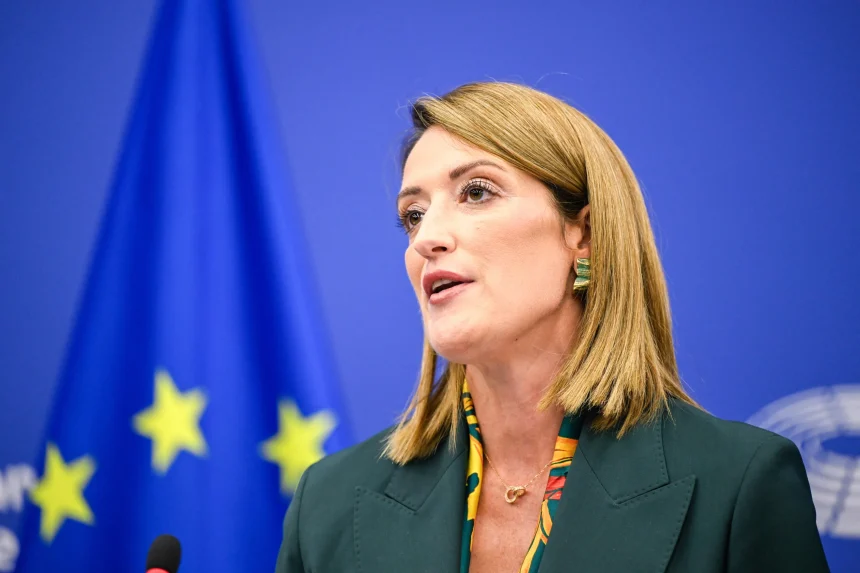
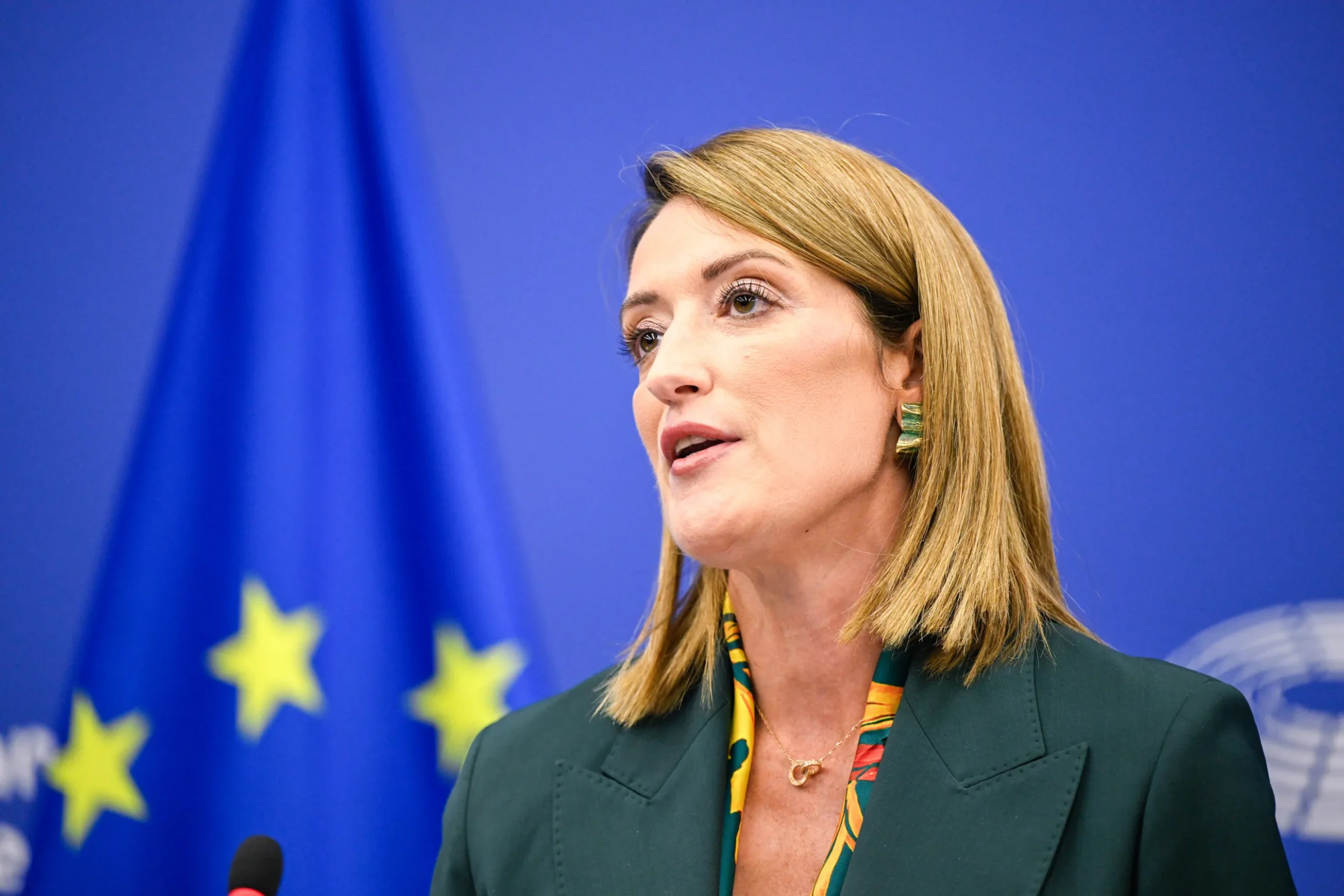
European Parliament President Roberta Metsola says Germany should negotiate directly with the Trump administration to resolve a brewing trade dispute over drug pricing, warning that avoiding the table risks a far worse outcome than any deal Berlin might dislike.
“If you don’t talk directly and reach a deal — the art of the deal — then the consequences might be more difficult to swallow. So my advice to anyone would be: just try to find it,” Metsola said in an interview with POLITICO on the sidelines of the UN General Assembly in New York.
The dispute centers on an investigation by the Office of the U.S. Trade Representative into Germany’s drug pricing policies, which accuses Berlin of “persistent underpayment” for pharmaceutical products. A clear majority of witnesses at a Washington hearing this week backed that claim, and the probe could ultimately hand Trump legal justification to impose new tariffs on German exports.
Metsola pushed for compromise rather than confrontation, arguing Europe can “still lead in pharmaceuticals” but needs to become “much more agile, not only in pricing but also in terms of clinical trials and bringing new products on the market” to avoid what she called “an impossible race on drugs.”
Even while backing negotiation over confrontation, Metsola issued a pointed warning to Washington: any new tariff on German goods could breach the 15% tariff ceiling Trump agreed with European Commission President Ursula von der Leyen at his Turnberry golf resort in Scotland last year. She pointed to a suspension clause the European Parliament insisted on adding to that deal, cautioning “there are legal consequences” if the administration targets individual EU countries. “The agreement we voted on already foresaw that,” she said, adding that the same clause applies to U.S. steel and aluminum derivative tariffs, which are supposed to fall in line with the 15% ceiling by year’s end.
On AI, Metsola used a UN sideline speech to call for “guardrails,” rejecting the idea that regulation puts Europe at a disadvantage against the U.S. and China. “I remain convinced that the race is not between the EU and the U.S. It is between democratic AI and autocratic AI. The EU and America have to be together in this race,” she said, while pushing back on suggestions that Europe lacks leverage: “We depend on U.S. tech. But U.S. tech depends on the EU market.” She also signaled support for extending the EU’s AI Act to cover liability for U.S. tech giants, pointing to the bloc’s Digital Services Act as a potential framework.
On China, Metsola struck a similarly assertive tone as EU Trade Commissioner Maroš Šefčovič heads to Beijing this week, with the bloc aiming for an agreement by mid-October covering market access, action on trade imbalances and overcapacity, and certainty on critical raw materials. “We cannot afford to become a continent that is just a consumer continent,” she said, calling for an “honest,” “strong” and “self-confident” conversation with Beijing.
She also urged the 10 EU countries that still haven’t ratified the decade-old CETA free-trade deal with Canada to do so, ahead of an EU-Canada summit expected in Montreal in October where both sides hope to seal a Digital Trade Agreement. Asked about the deal’s lack of dedicated AI provisions, Metsola dismissed the concern: “The idea of having separate chapters on AI would be akin to having chapters on the internet in the past.”
Pressed on her center-right European People’s Party’s growing reliance on right-wing votes to pass legislation, Metsola declined to rule out future alliances with hard-right parties like Germany’s AfD or France’s Rassemblement National, describing herself instead as “a proper centrist” who believes “majorities should be built from the center outwards.” She is expected to seek a third consecutive term as Parliament president in early 2027, though she declined to confirm that to POLITICO, and deflected a question about eventual ambitions to lead the European Commission: “It is the honor of a lifetime and the responsibility of a lifetime to run this parliament. It’s not easy. So I focus on that.”