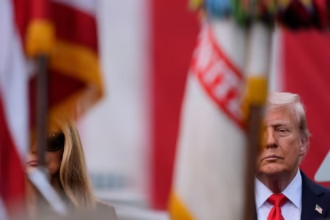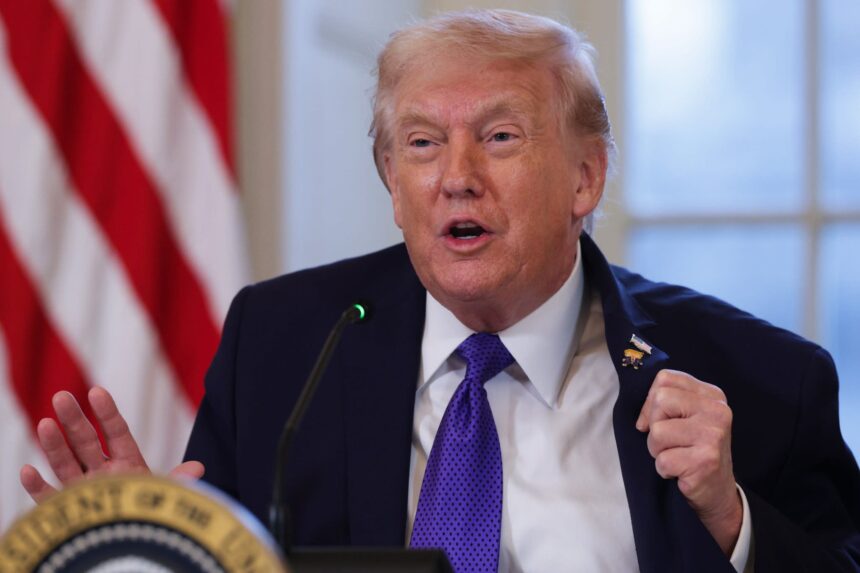
The notion of running a nation like a corporation has gained currency, particularly under the current Donald Trump administration. This perspective suggests that the United States, viewed as “USA Inc.,” could benefit from a CEO-like leadership, prioritizing efficiency and strategic positioning. Discussions with several Fortune 500 CEOs at Davos recently revealed a consistent sentiment: a perceived pro-business stance from the current president, a refreshing change for some compared to the previous administration. One executive noted, “It feels like he wants us to win,” reflecting a shift in the perceived relationship between government and major enterprises.
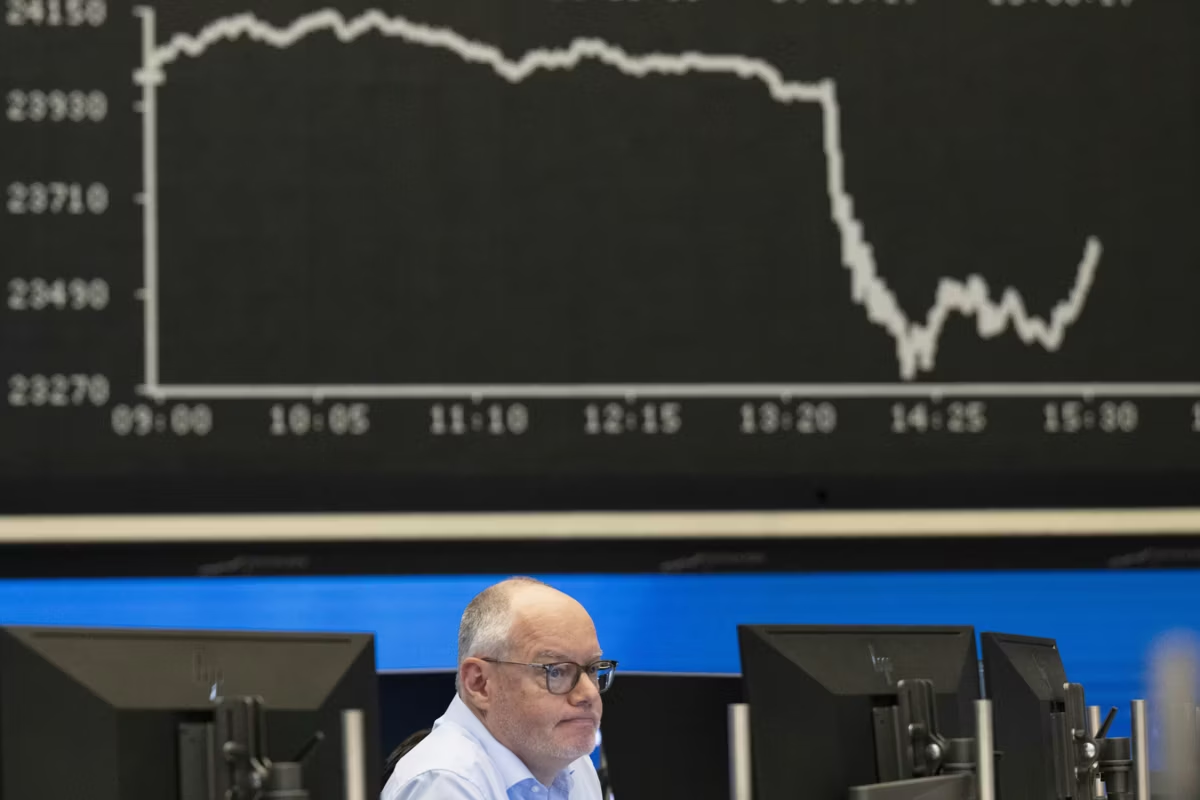
This approach was evident during the World Economic Forum, where President Trump hosted a multi-hour dinner and networking session for top CEOs after his address. Such direct engagement is seen by some as a practical application of a business-oriented mindset to governance. The economic landscape during this period has been marked by significant activity. Markets have shown growth, and the U.S. economy registered a robust 4.4% GDP increase in the third quarter of last year, a performance that surpassed many expectations. This economic momentum is partly attributed to the escalating competition in artificial intelligence development, a sector driving considerable investment and innovation.
Despite the favorable economic indicators, not all executives universally endorse the president’s methods or rhetoric. Some have privately expressed reservations about his tactics, with one CEO advising peers to approach certain situations as if watching a “silent movie,” suggesting a focus on actions rather than words. However, the overarching strategy, which emphasizes a more businesslike approach to government and fosters private-public partnerships, is seen by some as potentially beneficial for the nation. The United States, as a global hub for innovation and capital, holds a unique position, being home to a significant number of the world’s wealthiest individuals and top innovators.
This “CEO-president” model is an ongoing experiment, pushing established boundaries and exploring new avenues for national management. Actions such as the implementation of tariffs, designed as new revenue streams, and proposals for equity stakes in lieu of traditional government subsidies, illustrate a departure from conventional policy. This move-fast, make-or-break-America approach, as it has been characterized, continues to unfold with its ultimate outcomes yet to be fully determined. It prompts critical questions regarding the intersection of national interest, business prosperity, and the personal interests of the president.
The overlap between what benefits the country, what aids the business community, and what serves the president’s own objectives can sometimes appear indistinct. This complex dynamic is explored in recent analyses, which delve into how President Trump’s background in dealmaking informs his leadership style, treating the role of president akin to the CEO of a vast enterprise. Further illustrating the family’s entrepreneurial endeavors, Eric Trump has launched American Bitcoin, aiming to establish himself as a significant player in cryptocurrency mining and holdings. He has explicitly stated his father’s non-involvement in this venture, emphasizing its independent operation.
Beyond these political and economic discussions, the business world continues to focus on technological advancements and corporate leadership. Google’s AI mastermind, Demis Hassabis, was a notable presence at Davos, representing the cutting edge of artificial intelligence. Meanwhile, an annual ranking of the World’s Most Admired Companies, determined by votes from Fortune 500 executives, spotlights the peers held in highest regard within the corporate sphere. These diverse aspects collectively paint a picture of a dynamic economic and political environment, shaped by both traditional forces and unconventional leadership paradigms.