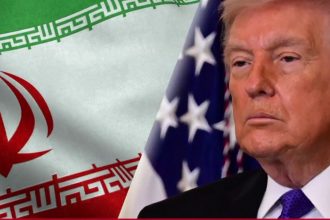
Tensions in the Persian Gulf have intensified dramatically, with Iran announcing strikes on 85 U.S. military sites located in Bahrain and Kuwait. This development follows a series of reciprocal actions, including U.S. forces targeting Iranian coastal areas and Iran’s earlier engagement with three tankers in the Strait of Hormuz. The Strait, a critical maritime chokepoint, has been a focal point of contention, with Kuwait, Qatar, and Saudi Arabia all issuing condemnations against Iran for what they described as harassment of their vessels. In response to the escalating situation, the U.S. has reinstated sanctions on Iranian oil sales, a move Iran’s foreign minister, Abbas Araghchi, characterized as a “flagrant violation” of existing agreements.
The immediate economic repercussions were swift and global. The price of Brent crude oil, a key international benchmark, surged from $72 per barrel yesterday to $78 this morning. This spike underscores the market’s sensitivity to instability in a region vital for global energy supplies. Simultaneously, major stock markets worldwide experienced a selloff, reflecting investor apprehension regarding the potential for wider conflict. Surprisingly, even gold, traditionally considered a safe haven asset during times of geopolitical uncertainty, saw its continuous futures contract decline by 2.24% today, settling at $4,066.40 per troy ounce. This unusual dip suggests a more complex market reaction than typically observed in such crises.
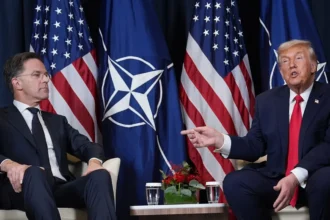
Amidst these international developments, President Trump’s stance on the Iran ceasefire remains ambiguous, stating “as far as I’m concerned, it’s over,” while also indicating that negotiations would continue. The president also vocalized frustration with European allies, criticizing their perceived lack of support in his actions against Iran and their reluctance regarding his interest in acquiring Greenland. European leaders, meanwhile, reportedly express bewilderment at Trump’s fixation on the Arctic territory and irritation over his apparent disregard for their contributions, including the use of European bases for strikes and the deployment of minesweeping ships to the Gulf. Despite these tensions, Norway and Poland’s leaders expressed confidence that the U.S. would not withdraw troops from Europe, even after Trump’s recent threats. Concurrently, Britain, France, and Germany committed to investing over $50 billion in long-range weaponry, signaling a broader rearmament trend.
Beyond the immediate geopolitical fallout, the technology sector is grappling with its own set of challenges. SpaceX, despite its recent inclusion in the Nasdaq 100 index, experienced a 7% decline yesterday, closing at $149.47. While still above its IPO price of $135, it represents a significant drop from its peak of $201.80. However, overnight trading saw a slight recovery, possibly fueled by positive analyst notes from JPMorgan, Deutsche Bank, and Morgan Stanley, all rating the stock a buy. JPMorgan, for instance, initiated coverage with a price target of $225 by December 2027, valuing the stock at 41 times its estimated earnings per share in 2028.
A broader trend within tech points to a divergence between chipmakers and their AI hyperscaler customers. While semiconductor stocks have soared, hyperscalers have lagged the S&P 500 Index by the most since 2022, according to Lisa Shalett of Morgan Stanley. She notes that investors are rationally re-evaluating hyperscalers due to increased capital expenditure and uncertain returns, favoring chip manufacturers who currently enjoy significant pricing power. This dynamic highlights a sector grappling with massive investments in AI infrastructure, with companies like Meta, Microsoft, Amazon, Oracle, and Alphabet incurring substantial debt to build AI data centers. ING’s Jan Frederik Slijkerman warns that this aggressive spending could hurt profitability, citing Alphabet’s projected FY26 capex-to-sales ratio of 44% and Microsoft’s at 35%. The critical question for investors, Slijkerman emphasizes, is whether these investments will ultimately yield returns that exceed their cost of capital and whether anticipated revenue growth will materialize.
Meanwhile, the landscape of U.S. entrepreneurship is undergoing a notable shift. Inherited businesses are now accounting for a growing share of ownership, surpassing purchased businesses since 2022 and projected to reach 23% by 2026, according to Bank of America. This reversal of a historic trend suggests a significant transfer of wealth is reshaping the entrepreneurial ecosystem. In other financial news, an estimate by Ohsung Kwon at Wells Fargo suggests close to a million investors in a Trump memecoin collectively lost $3.8 billion, even as the former president reported $636 million in earnings. The confluence of geopolitical instability, market volatility, and evolving investment trends paints a complex picture for the global economy.