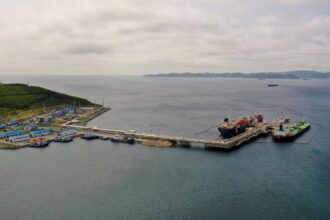
Early morning hours brought a significant drone attack to Russia’s Black Sea region, specifically targeting a port and fuel storage facilities. Unverified reports and social media footage indicate multiple explosions in the vicinity of Novorossiysk, a crucial port city on the Black Sea coast. This incident marks one of the more substantial aerial assaults on Russian infrastructure within the region in recent months, raising questions about the evolving tactics and capabilities of the forces behind these operations.
Ukrainian officials have not issued an immediate claim of responsibility, maintaining a characteristic silence on such cross-border incidents. However, Russian authorities were quick to point fingers, with the Ministry of Defense asserting that their air defense systems successfully intercepted and destroyed a number of unmanned aerial vehicles. Despite these claims of interception, visual evidence circulating online suggests that at least some targets were indeed hit, with large fires reported at specific locations, including what appeared to be fuel depots. The sheer scale of the attack, involving what Russian sources described as a “massive drone raid,” suggests a coordinated effort rather than isolated incidents.
The port of Novorossiysk is not merely a commercial hub; it serves as a critical naval base for Russia’s Black Sea Fleet and a major export terminal for oil and other commodities. Any significant disruption to its operations could have wider implications for both military logistics and global energy markets. Ships awaiting entry or departure from the port were reportedly advised to take precautionary measures, and maritime traffic was temporarily suspended as emergency services responded to the situation. Local residents described hearing explosions for an extended period, indicating a sustained engagement between the incoming drones and defensive systems.
Emergency services were deployed rapidly to contain the resulting fires and assess the damage. Initial reports from regional governors indicated no immediate casualties, though this information is often subject to revision as full assessments are completed. The extent of environmental damage, particularly from potential fuel spills, remains to be determined. Such incidents naturally lead to heightened security alerts across the region, with increased patrols and vigilance around critical infrastructure. The psychological impact on local populations, accustomed to relative calm despite the ongoing conflict, is also a significant factor.
This latest drone attack on Russia’s Black Sea infrastructure follows a pattern of similar incidents over the past year, targeting various strategic sites from military airfields to energy facilities. Each event underscores the persistent vulnerability of these assets to aerial incursions and highlights the continuous adaptation of offensive and defensive strategies. While official details remain sparse and often conflicting, the observable outcomes—fires, disruptions, and official responses—paint a clear picture of an escalating campaign that continues to test the resolve and resources of all parties involved. The precise long-term effects on Russia’s military operations and economic activities in the Black Sea region will likely unfold in the coming days and weeks.