A significant diplomatic push is underway, bringing together the European Union, the United States, and Japan in a joint effort to bolster economic and national security through the diversification and secure supply of critical raw materials. Within the next month, these key global players are expected to formalize their cooperation by signing a memorandum of understanding, a move that signals a rare alignment on trade policy, even surprising some observers given past approaches by the US. This planned partnership aims to identify and support projects across the entire critical minerals supply chain, encompassing mining, refining, processing, and recycling, all with the explicit goal of stimulating demand and diversifying sources for all participants.
The scope of this collaboration extends beyond project identification. Discussions are also slated to cover strategies for preventing supply chain disruptions, fostering research and innovation in the sector, and establishing mechanisms for information exchange on stockpiling. These minerals, including arsenic, baryte, gallium, graphite, tungsten, and various permanent magnets, are indispensable for both the burgeoning clean technology sector, critical for achieving carbon neutrality by 2050, and for strengthening defense capabilities by 2030. The EU, for its part, has already inked 14 major trade deals to diversify its raw material supply, underscoring the urgency of this global race for essential components.
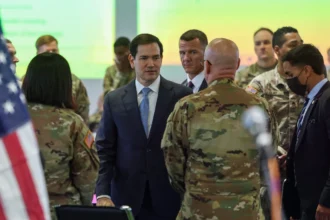
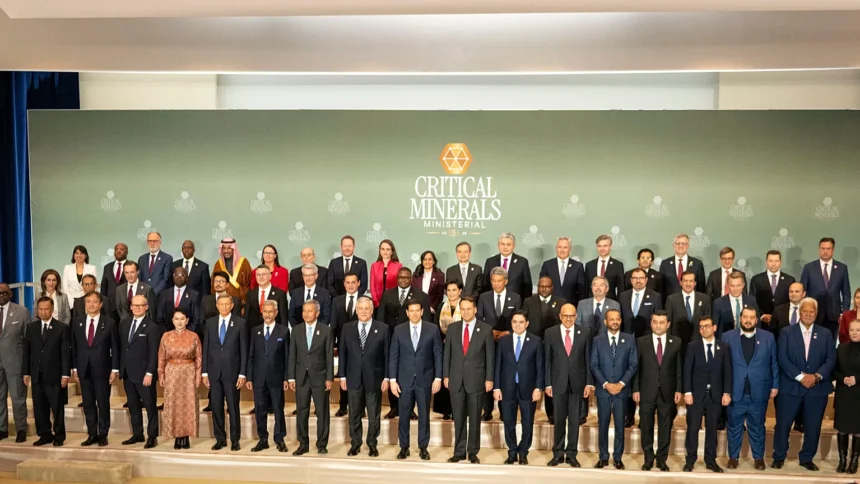
Stéphane Séjourné, the EU’s industry chief, is a central figure in these ongoing discussions, engaging with US Secretary of State Marco Rubio in Washington, D.C. This comes on the heels of a recent EU audit that highlighted the bloc’s considerable dependence on China for these minerals, indicating a significant shortfall in meeting its own 2030 supply targets. Secretary Rubio hosted the inaugural “Critical Minerals Ministerial” at the State Department, an event that gathered over 50 nations with the stated objective of advancing collective efforts to strengthen and diversify these vital supply chains. He emphasized that every country, regardless of its mineral endowments, has a role to play, whether in refining or in leveraging collective buying power to cultivate a more resilient global market.
During the Washington gathering, US Vice President J.D. Vance outlined plans for establishing a system to set price floors for critical raw materials, advocating for a trading bloc among allies and partners. Vance stressed the fragility and concentrated nature of current supply chains, noting how asset and commodity prices are often depressed by external forces. He argued that more predictable and less erratic prices would support domestic supply chains and the necessary investment to sustain them. This proposed trading bloc, Vance explained, would guarantee American access while simultaneously expanding production across the entire zone. US Interior Secretary Doug Burgum echoed this sentiment, revealing that approximately 30 countries are interested in joining such an alliance to trade critical minerals and lessen their reliance on China. Burgum acknowledged that while the US typically favors free markets, the dominance of certain players who can flood the market necessitates such strategic interventions to protect economic value.
Even as these international discussions unfold, European nations are reinforcing their commitment to the sector. Italy and Germany, for instance, jointly submitted a document to the European Commission, reiterating their dedication to mitigating strategic dependencies and building secure supply chains for European companies. This follows pledges made by their respective foreign ministers, Adolfo Urso and Katherina Reiche, at a summit in January. Their official statement confirmed that Italy and Germany would coordinate their positions in international forums, fully supporting the EU’s negotiations with the United States on critical minerals in the coming weeks. However, not all observers view these developments without skepticism. Robin Roels, a Policy Officer for Raw Materials at the European Environmental Bureau, expressed concern that the EU might be abandoning its pursuit of strategic autonomy too readily, suggesting that true autonomy lies in boosting circularity, investing in recycling and substitution, and moving away from the current linear economic model.