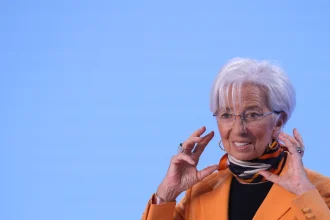

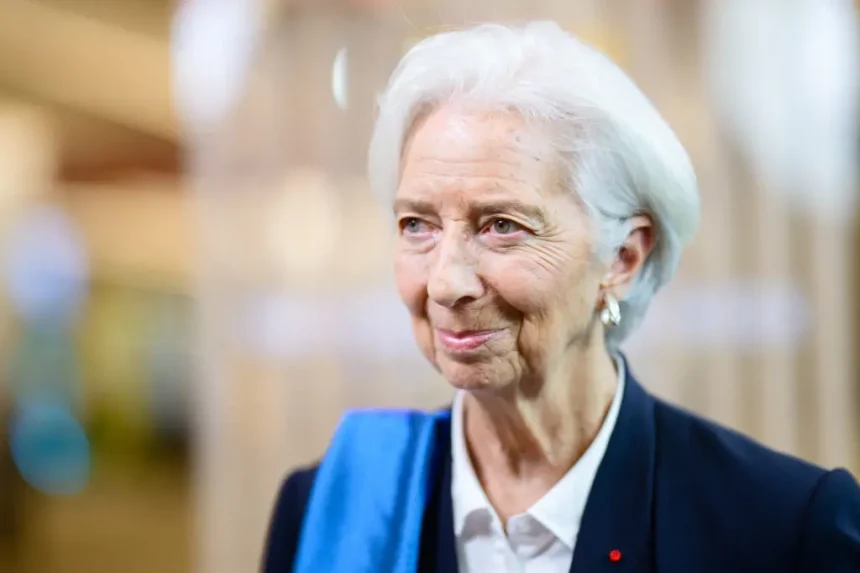
Christine Lagarde’s decision to step down as European Central Bank president on 7 February, nine months ahead of her term’s formal end on 31 October 2027, is only part of a larger leadership reshuffle now underway at the ECB. Her departure lands alongside two other vacancies, chief economist Philip Lane’s exit on 31 May and executive board member Isabel Schnabel’s on 3 January, leaving the central bank filling three senior roles at once.
EU leaders have moved quickly in response, launching the selection process immediately after Lagarde’s announcement with a stated goal of agreeing on all three appointments before the European Council summit on 17-18 December, a tight window given how consequential each of these roles is to eurozone monetary policy.
The timing of Lagarde’s own exit is the more politically charged piece. At 70, she could have served out her full term, but stepping down early specifically clears the succession decision while Emmanuel Macron, a centrist, remains France’s president. The concern driving that choice is explicit: Marine Le Pen, a right-wing candidate, could win France’s presidential election in April-May 2027, and EU leaders are moving to settle ECB leadership before that vote rather than risk a different political dynamic shaping the choice. One analyst described the move bluntly as the EU trying to guard itself at least somewhat against the risk that Le Pen may win.
Two names have already emerged as frontrunners for Lagarde's seat: Klaas Knot, the former head of the Netherlands' central bank, and Pablo Hernandez de Cos, general manager of the Bank for International Settlements. Both bring the kind of international monetary policy credibility that has typically been table stakes for the ECB presidency, and their early emergence suggests EU leaders are already converging on a shortlist rather than starting from scratch.
Lagarde, for her part, framed her departure around what she leaves behind rather than the political maneuvering around the timing, saying she leaves with a sense of good work done and an ECB that is fit for the future. Her tenure included the pandemic response and the subsequent inflation surge, among the most consequential stretches in the institution's history.
What makes this succession unusual isn't just the early exit, it's the scale: three senior ECB positions turning over within months of each other, compressed into a selection timeline deliberately shaped by a national election more than a year away. Whoever fills these roles will inherit not just the eurozone's current policy challenges but a leadership team assembled under real political time pressure rather than the normal staggered, lower-stakes rotation these appointments usually follow.