Christopher Chen/U.S. Air Force
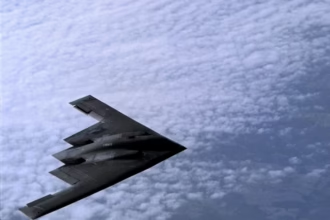
The US military’s presence in the Arctic is ramping up fast, with fighter jets, mobile rocket systems and advanced radar now regularly deployed to Alaska as melting sea ice opens the region to both commercial traffic and growing military competition from Russia and China.
“I think what’s changed is primarily two things. One is that the melting sea ice has made the Arctic more accessible. And we’re seeing increased activity both commercially and militarily in the Arctic, particularly during the summer months,” said Lt. Gen. Robert Davis, commander of Alaskan Command, describing a region that was once a strategic afterthought and is now drawing sustained attention from multiple militaries at once.
Davis pointed to a second factor compounding the access issue: rival powers actively testing their reach into the region. “The other factor is that China and Russia and others are continuing to advance their military capabilities and capacity with an interest in showing that they can use them in the Arctic as well,” he said.
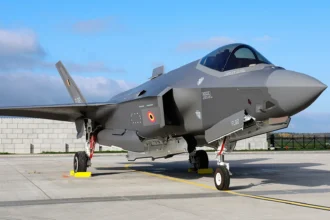
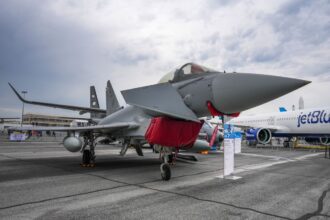
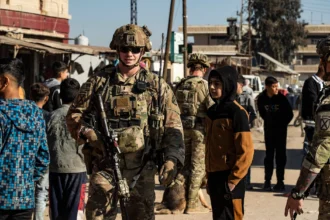
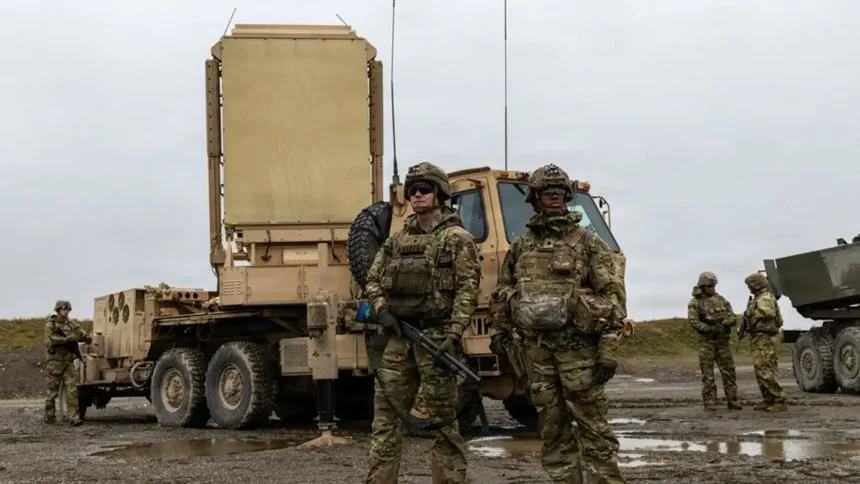
The buildup is tangible on the ground. F-35s and F-16s are positioned in Alaska, HIMARS mobile rocket systems have been deployed to the western part of the state, and AN/TPQ-53 radar systems now support operations out of Joint Base Elmendorf-Richardson and other major Alaskan air bases. From September 18 to 22, US and Canadian forces ran Operation Tundra Merlin, a joint exercise testing rapid rocket-system deployment, fighter jet operations and maritime strike scenarios in the Bering Sea.
The exercises come against a backdrop of increasingly visible coordination between Moscow and Beijing in the region. In July 2024, NORAD detected Russian Tu-95 bombers flying alongside Chinese H-6 bombers inside the Alaskan Air Defense Identification Zone, the first time the two countries’ long-range bombers had been intercepted flying together near US airspace, a moment widely read as a deliberate signal of the emerging Russia-China military relationship in the Arctic.
For Davis and the forces under his command, the shift means the Arctic is no longer a quiet flank to be monitored passively but an active theater requiring the same kind of rapid-deployment readiness the US maintains elsewhere, a reality reinforced every time ice melts open a new stretch of water that both commercial shippers and rival militaries are eager to use.