
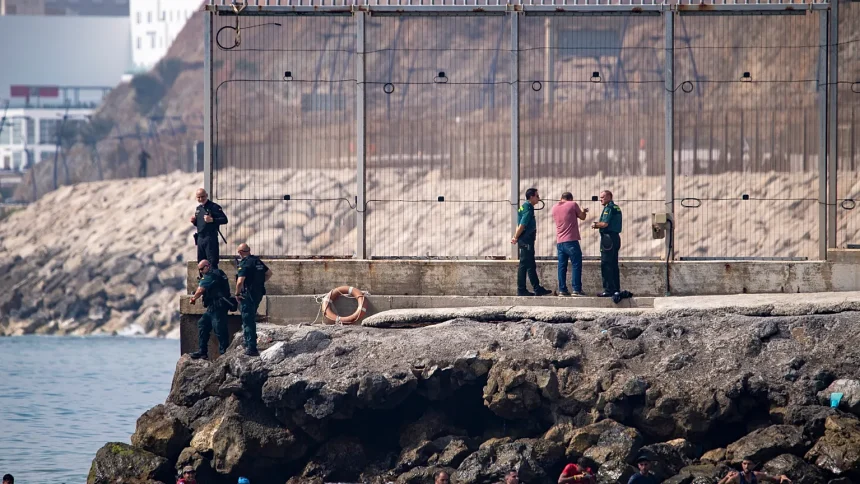
The images from Ceuta, depicting hundreds of migrants entering the Spanish enclave from Morocco, have ignited a sharp diplomatic exchange between Italy and Spain, prompting calls for significant changes to European border policies. Italian Foreign Minister Antonio Tajani voiced strong objections, stating that the “irregular and uncontrolled immigration poses a threat to national security” and advocated for closing the free travel Schengen area with Spain. His remarks, posted on X, specifically criticized a previous Spanish government decision to grant legal status to over 500,000 undocumented migrants, suggesting it was “profoundly misguided” and encouraged human trafficking.
This stance was quickly echoed by Italian Prime Minister Giorgia Meloni, who also took to social media to declare Rome’s readiness for “extraordinary measures” to protect Italy’s borders, including a potential “suspension of the Schengen area with Spain.” The Spanish foreign minister, in response, summoned the Italian ambassador to address what he termed Tajani’s “inappropriate” comments, highlighting the growing tension between the two EU member states over migration policy and border control.
The immediate backdrop to this diplomatic friction is the recent influx into Ceuta, where hundreds of individuals arrived from Morocco by swimming or using inflatable devices to reach Tarajal beach. This surge overwhelmed local Civil Guard officers and led to tragic outcomes, with nine reported fatalities during the attempts to cross. The regional president of Ceuta had implored Madrid to declare a national emergency, citing the local authorities’ inability to manage the situation. Initially, the Spanish Interior Ministry had not considered a national emergency declaration, but the escalating situation led to the deployment of military personnel to reinforce security and restore order in the autonomous city. Spanish Prime Minister Pedro Sánchez is also expected to visit Ceuta as political pressure mounts.
European officials have also weighed in, with Magnus Brunner, the European Commissioner for Migration, confirming ongoing contact with Spanish authorities and reiterating the critical importance of safeguarding the EU’s external borders in combating irregular migration. The European Commission has offered operational support through Frontex, the European Border and Coast Guard Agency, signaling a broader concern across the bloc. These events evoke memories of the 2021 migration crisis, when approximately 10,000 people entered Ceuta within a two-day period, underscoring the recurring challenges faced by the enclave.
While Morocco has publicly affirmed its cooperation with Spain and the EU in managing the recent arrivals, historical precedents suggest a more complex dynamic. Rabat has previously faced accusations of leveraging migration flows as a tool for political pressure against its European neighbor. Despite Moroccan diplomatic sources asserting that the increased crossings do not reflect an intentional facilitation of illegal migration, sources within Spain’s Civil Guard in Ceuta have questioned the level of Moroccan cooperation. They suggest that support from the Moroccan Gendarmerie has been limited and insufficient to alleviate border pressures, even as the Spanish government maintains that cooperation remains active.
Spain’s Interior Minister Fernando Grande-Marlaska is slated to travel to Ceuta for meetings with local officials to assess the situation directly. Both Spain and Morocco have reportedly agreed on a procedure to expedite returns, though specifics regarding timelines or figures have not been released. The Spanish Interior Ministry also posited that human trafficking networks might be exploiting a recent court ruling to encourage migrants to attempt the perilous crossing, a view also shared by Rabat, despite its own law enforcement’s role in border management. The evolving situation underscores the intricate web of national security concerns, humanitarian challenges, and international relations that define Europe’s ongoing migration discourse.