The sustained drone campaign launched by Ukraine against Russian energy infrastructure has prompted Russian President Vladimir Putin to describe the current period as “difficult.” This acknowledgment comes as Ukrainian attacks continue to target refineries and fuel depots, impacting supply lines and leading to restrictions on fuel sales in various Russian regions, including those far from the front lines. These long-range assaults, which have escalated significantly in recent months, aim to disrupt Moscow’s war economy and exert pressure on the Kremlin.
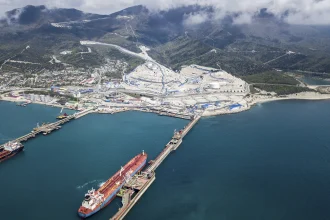
Ukrainian President Volodymyr Zelenskyy has openly stated that these strikes are intended to diminish the resources fueling the Russian war machine. Sunday’s drone activity reportedly included a significant incident at the Slavyansk-na-Kubani refinery in Russia’s Krasnodar region, east of occupied Crimea. Local authorities confirmed that debris from downed drones caused a fire and resulted in one fatality in Slavyansk, with another individual injured in a nearby village. The Slavyansk facility is a substantial refinery, processing nearly four million tons of crude annually and serving as a critical source for petroleum products destined for export through Russia’s Black Sea ports, such as fuel oil, naphtha, and marine fuel.
Beyond the Krasnodar region, Zelenskyy also indicated that another refinery, located in the Yaroslavl region approximately 700 kilometers from the Ukrainian border, was struck during the overnight operations. While Russian authorities offered no immediate confirmation of a direct strike on the Yaroslavl refinery, Mikhail Evraev, the local governor, reported temporary road closures between Moscow and Yaroslavl due to what he termed “an enemy attack by Ukrainian drones.” Furthermore, Yaroslavl’s airport, along with several others in southern and western Russia, experienced brief closures overnight, according to Russia’s civil aviation agency.
The strategic focus of Ukraine’s campaign extends to choking off fuel deliveries to Crimea, the Black Sea peninsula annexed by Moscow in 2014. Just last weekend, Kremlin-installed officials in Crimea were forced to suspend gasoline sales to civilians, a direct consequence of Kyiv’s targeting of supply routes, which triggered the most severe energy crisis there since the annexation. The broader impact of these disruptions is now being felt thousands of kilometers away from the Ukrainian border. In Russia’s Irkutsk region in Siberia, Governor Igor Kobzev announced restrictions on fuel sales, limiting drivers to 50 liters per vehicle per day at state-run Rosneft stations, with other stations potentially imposing even stricter caps. Similar limitations have also been reported by private gas station networks in the Irkutsk and Tomsk regions earlier this month, citing supply disruptions.
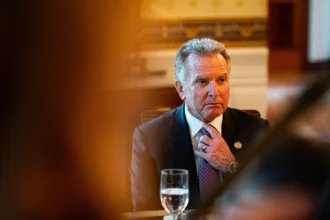
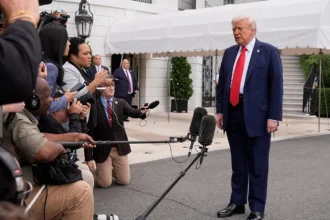
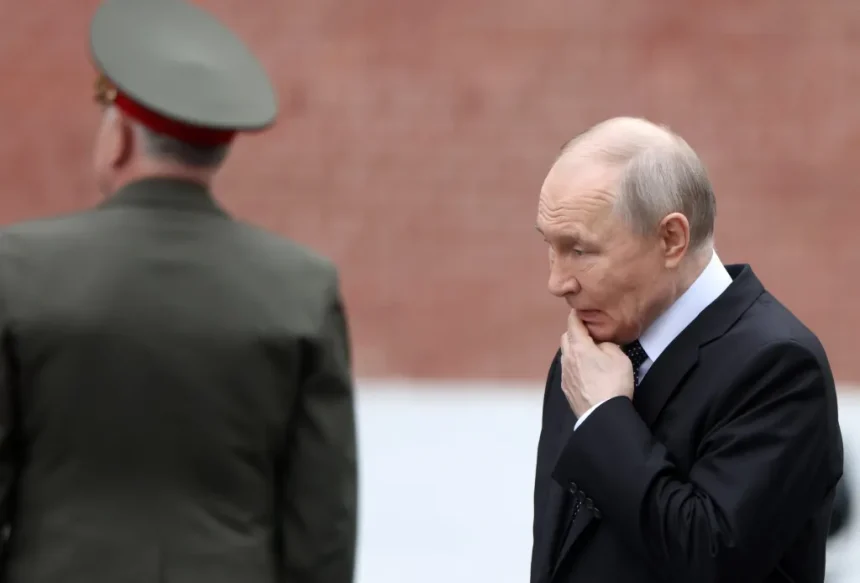
During a conference held by his ruling United Russia party, President Putin acknowledged the challenging circumstances facing the country. While he did not directly reference the Ukrainian strikes or the resulting fuel shortages, he affirmed that Russia would “honor all its social obligations” to its citizens. Putin emphasized the need to adapt certain plans given the current situation but insisted that all “strategically important development programs” would proceed as scheduled. He spoke of continuing to build housing and roads, creating new jobs, and supporting domestic businesses, suggesting that the current period, despite its difficulties, has offered valuable lessons and a deeper understanding of Russian identity.
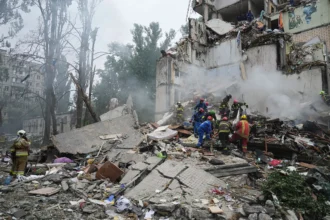
Amidst these developments, Russian Deputy Prime Minister Alexander Novak indicated that Moscow is actively reviewing its fuel export agreements to ensure domestic needs are not compromised. Meanwhile, the conflict continues to exact a heavy toll on both sides. In Ukraine, an aerial bomb killed two people and injured sixteen, including two children, in Zaporizhzhia. Across the border in Russia’s Belgorod region, Ukrainian drone strikes claimed one life and injured another. The Russian Defense Ministry reported shooting down 213 Ukrainian drones overnight, while the Ukrainian air force stated it intercepted 125 drones and seven missiles out of 142 long-range strike drones and eight missiles launched by Russia.