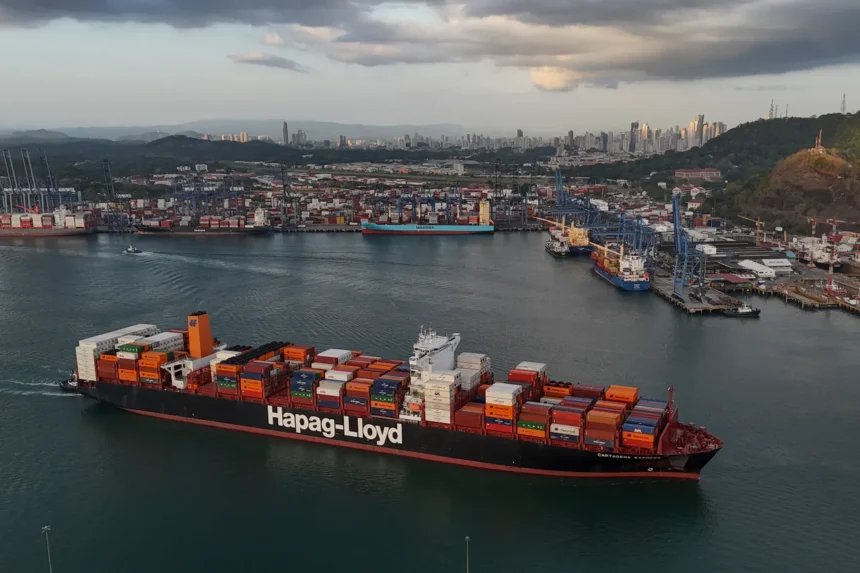
A Panamanian court’s recent decision to invalidate contracts held by CK Hutchison, the Hong Kong-based conglomerate, for the operation of crucial terminals at both ends of the Panama Canal, has ignited a significant diplomatic response. This judicial action, which deems the company’s concessions unconstitutional, has drawn a swift and firm commitment from China to safeguard its businesses operating abroad. The terminals in question are vital components of global shipping infrastructure, making the court’s ruling a development with broader implications beyond the immediate corporate interests.
The court’s judgment specifically targets the long-standing agreements under which a unit of Li Ka-shing’s CK Hutchison group has managed these strategic port facilities. These operations, including the one at the port of Cristobal, have been central to the efficient flow of maritime trade through the canal for an extended period. The legal challenge to their constitutional validity culminated in the ruling, which has been met with explicit rejection from Hong Kong authorities. The immediate financial impact on CK Hutchison was evident as shares in the conglomerate experienced a decline following the announcement.
China’s pledge to protect its enterprises comes hours after the Panamanian court’s declaration, underscoring the perceived importance of such overseas investments to Beijing’s economic strategy. While the specifics of how China intends to “protect” its businesses remain to be seen, the statement itself signals a potential for diplomatic engagement on the matter. The involvement of a major Hong Kong entity like CK Hutchison, with its deep historical ties and significant operational footprint, positions this incident as a test case for how such international disputes involving Chinese-affiliated companies might be handled in the future.
The Panama Canal itself is a choke point of immense geopolitical and economic significance, handling a substantial portion of global maritime trade. Any disruption or change in the management of its key infrastructure can send ripples through international logistics and trade networks. The unconstitutionality ruling, therefore, is not merely a technical legal detail but a fundamental challenge to the operational framework of these critical assets. It raises questions about the stability of long-term concessions and the legal environments in which international corporations operate.
The situation further highlights the complex interplay between national sovereignty, international commerce, and legal frameworks. Governments often assert their right to review and modify agreements within their borders, yet such actions can have far-reaching consequences for investor confidence and international relations. As the situation unfolds, observers will be watching closely for how CK Hutchison navigates this legal and operational challenge, and what form China’s promised protection will ultimately take. The incident serves as a stark reminder of the intricate risks inherent in large-scale international infrastructure investments, particularly those in strategically vital locations.