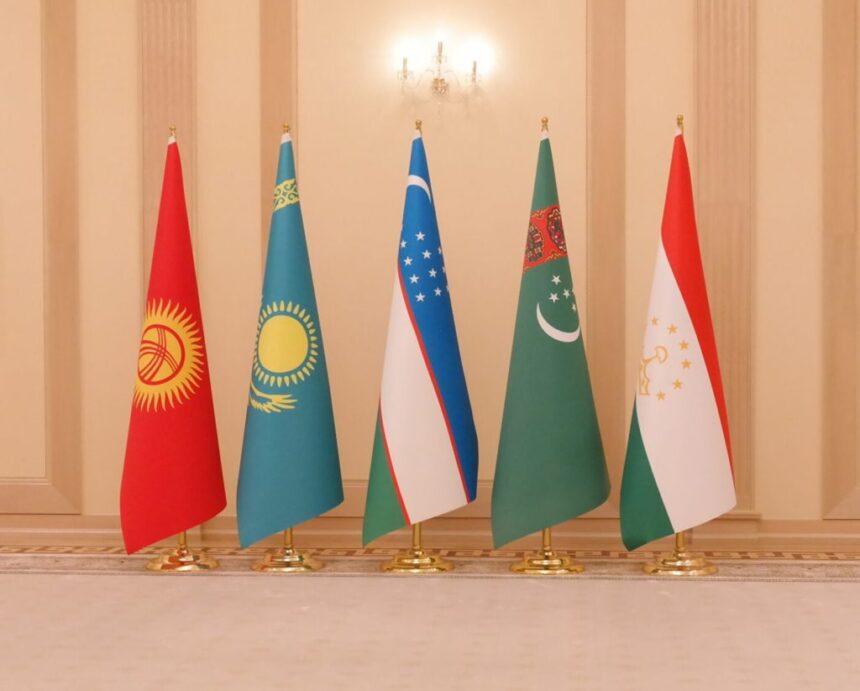
Central Asia’s economies collectively expanded by over 6% in 2025, a figure that significantly overshadows growth projections for many advanced nations. This robust performance, with independent estimates placing regional expansion between 6.2% and 6.6%, provides a notable contrast to the more modest forecasts for countries like the United States and those within the Euro area. While the World Bank reported a 6.2% regional growth, the Eurasian Development Bank (EDB) cited a slightly higher 6.6%, encompassing Kazakhstan, Uzbekistan, the Kyrgyz Republic, and Tajikistan, with Turkmenistan’s data limitations precluding its inclusion in these specific calculations. This growth trajectory stands in stark relief to the EDB’s predictions of approximately 1.6% for the United States and 1.1% for the Euro area in 2026, or China’s anticipated 4.6% expansion.
Kazakhstan, the region’s largest economy, marked its strongest performance in over a decade, growing by approximately 5.9% in 2025, with a forecast of 5.5% for 2026. This surge was primarily underpinned by its oil sector, benefiting from an earlier-than-expected increase in output from the Tengiz oil field. Beyond hydrocarbons, the manufacturing sector has also shown considerable momentum, particularly in machinery and metals, evidenced by the establishment of new factories across various regions. Aigul Berdigulova, a Senior Analyst at the EDB’s Centre for Macroeconomic Analysis, attributed this to the unexpected strength of investment potential and rapid industrial output, driven in part by governmental efforts aimed at economic diversification. Such growth has translated into increased mortgage and car lending, alongside a rise in domestic travel, though officials remain aware of the inherent limitations of an energy-centric growth model, prompting investments in Caspian Sea transport routes and processing industries to broaden revenue streams.
Uzbekistan delivered one of the most impressive performances across the region, with its GDP growing by 7.4% in 2025 and projected to reach 6.8% in 2026. The nation’s economy surpassed €133 billion in 2025, a substantial leap from roughly €56 billion just nine years prior, simultaneously pushing GDP per capita from about €1,750 to approximately €3,220. This economic ascent was fueled by a more than 15% year-on-year increase in fixed capital investment during the first nine months of 2025, complemented by a 33% surge in exports. Persistently high global gold prices played a significant role, with export revenues from the precious metal climbing over 70% year-on-year. Gulasal Madrahimova, Dean at the Tashkent Institute of Textile and Light Industry, highlighted the burgeoning services sector, now contributing around €72.4 billion to GDP, with digital services, exemplified by initiatives like the ‘One Million AI Programmers’ project, creating high-income opportunities. President Shavkat Mirziyoyev noted that roughly five million people secured stable incomes in 2025, and 1.5 million rose above the poverty line, reflected in annual home purchases reaching 270,000 and car sales hitting one million.
Despite these impressive figures, economists like Pınar Yaşar, Country Economist at the World Bank Office for Uzbekistan, suggest the path ahead requires a stronger private sector, WTO accession, and a genuinely level playing field to attract further investment and create better jobs. The Kyrgyz Republic emerged as the region’s fastest-growing economy, with an estimated GDP expansion of 10.3% in 2025, projected to be 9.3% in 2026. Tajikistan also saw benefits from strong remittances and public investments. Kubat Rakhimov, a Kyrgyz expert in infrastructural development, suggests that for underinvested economies, such high growth often signals a catch-up phase rather than a fundamental structural breakthrough, arguing that real disposable income and labor productivity offer more meaningful insights into long-term progress than GDP growth alone.
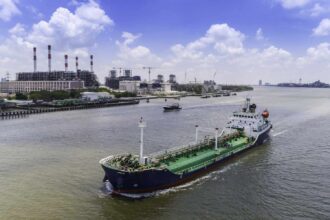
Azerbaijan, while not geographically Central Asian, maintains strong trade and energy ties to the region, experiencing a more moderate economic expansion of about 3.0% in 2025, according to the International Monetary Fund. This marks a slowdown from previous years, with the World Bank projecting 2.6% growth and the Asian Development Bank estimating 2.4% for the same period. Its economy, heavily reliant on oil and gas exports, channels energy revenues into critical infrastructure, including transport corridors across the Caspian Sea, enhancing its role as a transit hub for Central Asian exports. Authorities are also investing in renewable energy and non-oil sectors to diversify income sources and mitigate commodity price volatility.
However, a persistent challenge across Central Asia remains inflation, which continues to erode purchasing power. Kazakhstan experienced inflation of around 12% in 2025, while the Kyrgyz Republic saw approximately 9%, and Uzbekistan between 7-8%. These elevated rates keep interest rates high and constrain household spending, even amidst strong national growth. Evgeny Vinokurov, Chief Economist at the EDB, anticipates that lower inflation will eventually pave the way for interest rate cuts and stable national currencies. Furthermore, significant income disparities persist, as highlighted by World Bank data, with Kazakhstan’s GDP per capita at about $14,154 compared to Uzbekistan’s roughly $3,162 and the Kyrgyz Republic’s $2,420, starkly contrasting with the United States’ over $84,000. Economists caution that this current momentum is susceptible to external shocks, such as a slowdown in China, shifts in global demand for hydrocarbons and metals, or geopolitical dynamics. The World Bank forecasts a cooling of regional growth to about 5.0% in 2026 and 4.6% in 2027, citing uncertainties in global trade and weaker growth among key partners. The overarching task for Central Asia is to transform this period of rapid expansion into sustained gains in productivity, incomes, and institutional strength, ensuring that robust GDP figures translate into tangible improvements in daily life for its citizens.