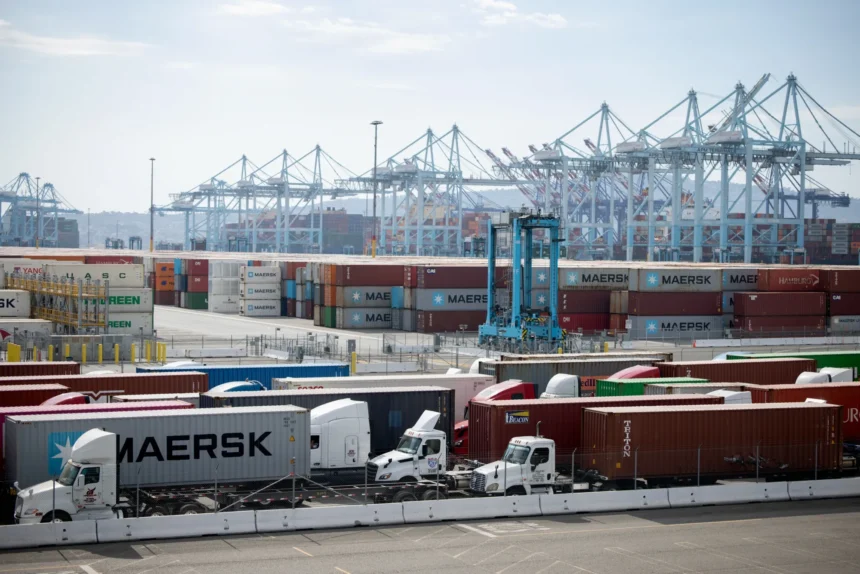
The United States trade deficit expanded significantly in the latest reporting period, reaching its widest point since October of the previous year. This shift follows a period where the gap had narrowed to its lowest level since 2009, a development that had garnered considerable attention for its potential implications on domestic production and global trade balances. The recent data, released by the Commerce Department, indicates a robust increase in the value of goods and services imported into the country, climbing by approximately 2.9% to reach $326.3 billion. This rise in imports outpaced a more modest 0.8% increase in exports, which settled at $257.1 billion, contributing directly to the widening deficit.
A closer examination of the import figures reveals that the surge was broad-based, touching various sectors of the economy. Consumer goods, a perennial driver of import volumes, saw a notable uptick, reflecting sustained domestic demand. Similarly, industrial supplies and materials, crucial components for manufacturing, also contributed to the increased import total. This suggests that businesses are either ramping up production or restocking inventories in anticipation of future demand, or both. The nature of these imports, ranging from everyday household items to key manufacturing inputs, underscores the intricate dependencies of the US economy on global supply chains.
On the export side, the picture was somewhat different. While there was growth, it was less pronounced than the import expansion. The increase in exports was largely attributed to a rise in industrial supplies and materials, indicating that certain US industries are finding markets abroad for their products. However, this growth was partially offset by declines in other categories, preventing a more substantial narrowing of the trade gap. The performance of exports is often seen as a barometer of global economic health and the competitiveness of American goods and services on the international stage.
The services sector, a critical component of the US economy, also played a role in the overall trade balance. Both services exports and imports experienced increases, though the net effect was not enough to counteract the significant movement in goods trade. The US generally maintains a surplus in services trade, a testament to its strengths in areas like intellectual property, financial services, and tourism. However, the dynamics within the goods sector often exert a more dominant influence on the headline trade deficit figures.
Economists are now sifting through the data to understand the underlying causes and potential long-term implications of this widening gap. A larger trade deficit can sometimes be viewed as a sign of a strong domestic economy, where consumer demand is robust enough to pull in goods from abroad. Conversely, it can also raise concerns about the competitiveness of domestic industries and the potential for job displacement if imports consistently outstrip exports. The trajectory of the trade deficit will continue to be a key indicator for policymakers monitoring the nation’s economic health and its position within the global trade landscape.