The deliberate constriction of internet access across Iran has emerged as a critical element in the government’s strategy to manage internal dissent. This tactic, often deployed during periods of unrest, effectively isolates the populace from external information and limits their ability to organize or share real-time events unfolding within the country. Such measures underscore a broader global trend where states increasingly view digital connectivity not merely as infrastructure, but as a potential vulnerability requiring stringent oversight. The implications of this digital curtain extend beyond immediate control, shaping both the domestic narrative and international perceptions of stability.
Historically, governments have utilized various methods to control information flow during crises, from censoring traditional media to disrupting communication lines. The digital age has simply provided new tools for these age-old objectives. When the internet grinds to a halt, or is selectively throttled, it creates a vacuum that can be filled by official narratives, while simultaneously hindering independent verification of facts. This creates a significant challenge for analysts and human rights organizations attempting to monitor the situation on the ground, making accurate reporting more difficult and often delaying the dissemination of crucial information to the global community.
Beyond domestic implications, the Iranian government’s approach to internet control also intersects with its foreign policy and economic vulnerabilities. The United States, for instance, has actively sought to pressure the Iranian economy through various sanctions, including tariffs on its trade partners. This economic pressure creates a difficult environment for the nation, further complicating its ability to address internal challenges. The interplay between external economic constraints and internal information control mechanisms forms a complex web, where each factor influences the other in a continuous cycle of pressure and response.
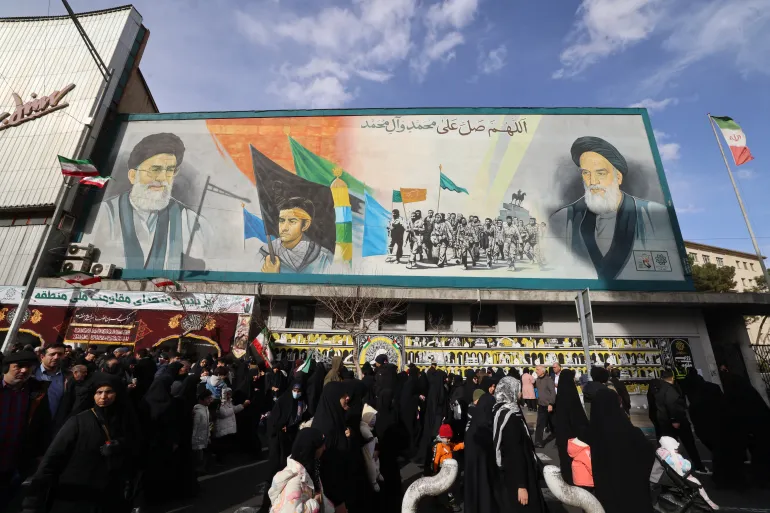
The visual landscape of Tehran itself offers a glimpse into this dynamic. Images from January 14, for example, depicted women crossing a street beneath a massive banner displaying hands grasping Iranian flags, alongside one woman flashing a victory sign. Such public displays, whether spontaneous or orchestrated, are part of the symbolic battleground where national identity and political narratives are contested. In an environment where digital communication is compromised, these overt public expressions become even more significant as indicators of prevailing sentiment, albeit filtered through the lens of state-sanctioned imagery.
The long-term effects of sustained internet blackouts are multifaceted, impacting not only political discourse but also economic activity and social cohesion. Businesses reliant on digital transactions suffer, educational institutions struggle to provide remote learning, and ordinary citizens find their daily lives disrupted. This disruption can breed resentment, even as it achieves the immediate goal of stifling unrest. The strategic use of internet shutdowns, therefore, represents a calculated risk, balancing immediate control against potential long-term alienation and economic damage. The global community continues to observe these developments, recognizing the profound implications for human rights, freedom of expression, and the future of digital governance.