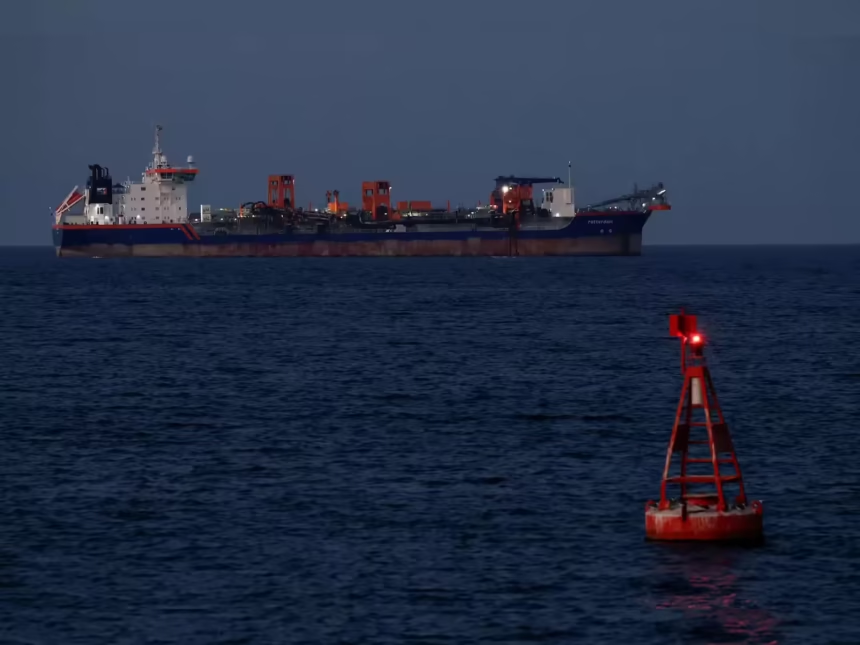
Two Indian LPG carriers, the MT Jag Viraat and the MT Maharshi Bhardwaj, are currently in transit through the Strait of Hormuz, a critical chokepoint for global energy supplies. Their passage underscores the ongoing reliance on this narrow waterway for the movement of vital commodities, even as geopolitical dynamics in the surrounding region remain a source of international concern. The vessels are expected to complete their journey through the strait without incident, following established maritime protocols.
The Strait of Hormuz, linking the Persian Gulf with the Arabian Sea and the broader Indian Ocean, sees approximately one-fifth of the world’s total petroleum liquids consumption pass through its waters daily. This makes it an indispensable conduit for oil and gas exports from major producers in the Middle East, including Saudi Arabia, Iran, Iraq, Kuwait, Qatar, and the United Arab Emirates. For India, a nation with rapidly growing energy demands, secure passage through this strait is paramount to its economic stability and energy security. The country imports a significant portion of its crude oil and liquefied petroleum gas through this route.
Maritime intelligence reports indicate that both the MT Jag Viraat and the MT Maharshi Bhardwaj are proceeding on their scheduled routes. The MT Jag Viraat, a very large gas carrier (VLGC), is known to frequently operate on routes connecting the Middle East with various Asian ports, while the MT Maharshi Bhardwaj, another substantial LPG carrier, also plays a role in sustaining India’s energy supply chain. Their current movements are routine, reflecting the continuous flow of trade that defines this maritime corridor.
The presence of these Indian-flagged vessels in the strait also highlights the intricate web of international shipping that relies on its unimpeded flow. Global shipping companies and naval forces from various nations maintain a presence in the area to ensure the safety and security of commercial traffic. While specific details of their cargo are not publicly disclosed for security reasons, LPG carriers typically transport propane and butane, crucial for industrial use and domestic consumption in India.
The sustained transit of commercial vessels, including these Indian carriers, through the Strait of Hormuz serves as a regular barometer of the delicate balance in regional affairs. Every passage is monitored closely by maritime authorities and international observers, given the strait’s strategic importance and its history of occasional disruptions. For the time being, the journey of the MT Jag Viraat and the MT Maharshi Bhardwaj continues uneventfully, mirroring the persistent rhythm of global trade.