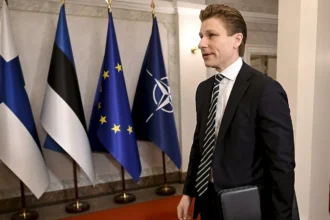
Finance ministers across the European Union have recently endorsed national defence investment strategies from eight additional member states, collectively accounting for half of the €150 billion available through the Security Action for Europe (SAFE) financial instrument. This approval, announced on Tuesday, brings the total commitment under the scheme to €74 billion from this latest group of nations. The countries involved in this particular tranche include Estonia, Greece, Italy, Latvia, Lithuania, Poland, Slovakia, and Finland, with Poland alone requesting over €43 billion of the available funds.
This development follows an initial round of approvals last week, where defence ministers greenlit plans from Belgium, Bulgaria, Denmark, Spain, Croatia, Cyprus, Portugal, and Romania, totaling €38 billion. The combined allocations thus far underscore a significant uptake of the SAFE instrument, which aims to provide affordable, long-term loans to member states. A spokesperson for the Cypriot presidency of the Council of the European Union highlighted that these decisions demonstrate the EU’s commitment to bolstering defence capabilities.
The SAFE instrument is a cornerstone of the Commission’s broader Readiness 2030 plan, an ambitious strategy designed to channel up to €800 billion into European defence before the decade concludes. Its primary objective is to accelerate the procurement of priority defence products, encompassing a wide array of military hardware and technological solutions. This includes essential items such as ammunition and missiles, artillery systems, drones, and anti-drone technologies. Furthermore, the scheme supports investments in air and missile defence systems, critical infrastructure protection, space asset safeguarding, cybersecurity, artificial intelligence technology, and electronic warfare systems.
A crucial stipulation of the SAFE initiative mandates that equipment acquired must be European-made. Specifically, no more than 35% of the component costs can originate from outside the EU, EEA-EFTA, or Ukraine. This provision is intended to strengthen Europe’s industrial defence base and foster greater strategic autonomy. The scheme is particularly advantageous for member states with less robust credit ratings, as it allows them to secure more favorable loan terms than they might otherwise obtain independently, leveraging the Commission’s higher credit standing.
Nineteen member states initially applied for financial assistance under SAFE, indicating a robust demand that even saw the scheme oversubscribed, with initial requests surpassing the €150 billion allocation. Czechia, France, and Hungary are among the nations still awaiting the Commission’s approval before their plans can be presented to ministers for final endorsement. Once approved, the EU executive can proceed with concluding loan agreements and disbursing pre-financing payments, which can amount to as much as 15% of the requested funds. Future tranches of funding will be released contingent on regular updates provided by member states to the EU executive, ensuring ongoing oversight and alignment with strategic objectives. Commission President Ursula von der Leyen had previously suggested late last year that the strong interest in the scheme could lead to its further expansion, potentially increasing the overall financial envelope.