A 68-year-old Russian man who journeyed from Kaliningrad to Lithuania by river found himself back on the Russian side of the border shortly after reaching Lithuanian soil. The individual, whose name has not been released, was met by border guards on the riverbank last Thursday afternoon after his unusual attempt to enter the country, and his request for asylum was ultimately denied.
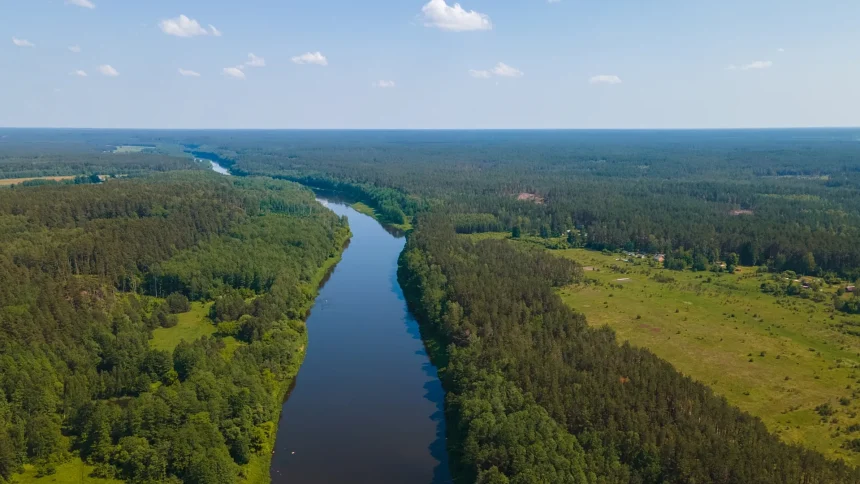
The State Border Guard press service in Lithuania confirmed that the man was provided with dry clothing after his swim. Details regarding the exact distance he covered in the water, his precise route, or the duration of his swim across the Nemunas River remain undisclosed. However, the Lithuanian authorities acted swiftly, a capability they attribute to continuous technical surveillance along this section of the river, which allows for immediate detection and response to such incidents. While rare, attempts to cross from Russia into Lithuania via the Nemunas are not unheard of, prompting constant vigilance from border forces.
According to the Lrytas news portal, the man informed Lithuanian authorities that he was fleeing Russia due to persecution over his social media activities. This claim formed the basis of his asylum request. Yet, after reviewing the circumstances surrounding his arrival and his narrative, Lithuanian officials identified discrepancies. Giedrius Mišutis, a spokesperson for Lithuania’s State Border Guard Service, stated that “inconsistent” information provided by the man, combined with “information concerning the threat posed by this person if he were to enter the EU,” led to the decision to return him. This assessment underscores the heightened security posture currently maintained by the Baltic state.
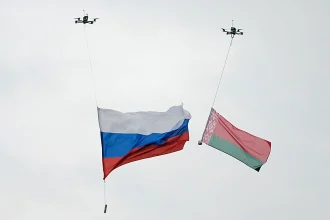
Lithuania’s eastern frontier, which includes a border with Belarus, a close Russian ally, and Russia’s heavily militarized Kaliningrad exclave, has been a focal point of geopolitical tension. The country has experienced multiple drone incursions in recent times, with a recent incident on Monday where a NATO fighter jet intercepted and shot down a drone that had entered Lithuanian airspace from Belarus. These events contribute to an environment where border security decisions are often made with an acute awareness of potential broader implications.
Since 2021, Vilnius has also been confronting what the European Union has characterized as the weaponization of migration. Thousands of migrants were directed toward the bloc’s eastern borders, a situation widely attributed to Belarus and Russia. This orchestrated pressure has prompted significant efforts by Lithuania to bolster its border infrastructure, enhance surveillance capabilities, and increase staffing levels along its extensive frontier. The decision regarding the Russian swimmer, therefore, occurred within a framework of elevated scrutiny and an established policy of robust border control, reflecting the complex security challenges faced by the nation.