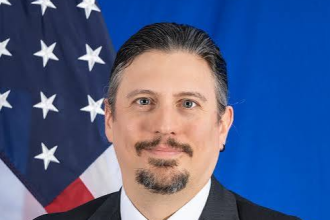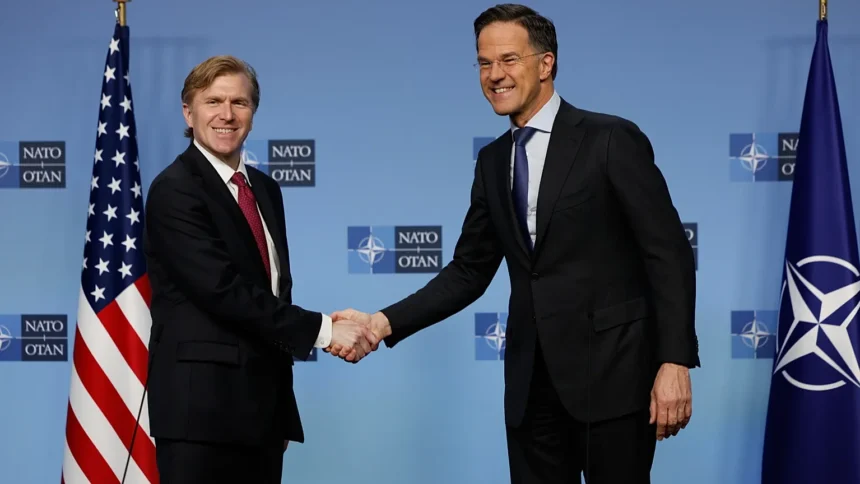
Brussels recently hosted a pivotal gathering of NATO defense ministers, where discussions underscored a growing consensus: the alliance, particularly its European pillar, is on the cusp of significant transformation. While the notion of a “NATO 3.0” might sound like a technical upgrade, it reflects a tangible shift in strategic thinking, driven by a desire for greater European responsibility in its own conventional defense. This sentiment, articulated by figures like US Under Secretary of War Eldridge Colby, suggests a reorientation where Europe is expected to shoulder the primary burden of deterring and, if necessary, countering aggression on the continent.
Colby, representing the US in place of Defence Secretary Pete Hegseth, reiterated a long-standing American call for increased burden-sharing. This push is not new, as Washington has consistently signaled its intent to pivot more resources towards the Indo-Pacific region. What appears to be novel, however, is the receptive ear it found among European counterparts. NATO Secretary General Mark Rutte captured this evolving sentiment, describing the meeting as one of the most significant he has attended, noting a “real shift in mindset” and a “unity of vision” toward a stronger European defense within the alliance.
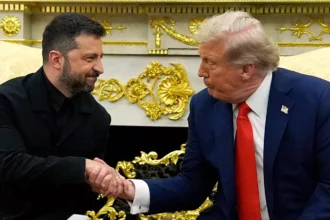
This evolving landscape is already reflected in concrete commitments. Rutte highlighted a “major shift and uplift” in defense spending slated for 2025. Notably, several nations – Denmark, Estonia, Latvia, Lithuania, and Poland – have already surpassed the newly agreed-upon target of 3.5% of GDP for defense spending, achieving this milestone a decade ahead of schedule. This accelerated commitment follows months of intense rhetoric, particularly from US President Donald Trump, which had previously cast shadows over the US commitment to NATO’s collective defense principle, especially concerning allies not meeting spending benchmarks. The recent discussions also follow a period where Trump’s administration threatened military action against Denmark regarding Greenland, an issue NATO has sought to mollify through enhanced vigilance in the Arctic and trilateral talks.
German Defence Minister Boris Pistorius openly acknowledged the necessity of this shift. He remarked that the US had historically borne the “lion’s share” of Europe’s conventional deterrence and defense, and that “now the time has come for Europeans to take over more and more, step by step.” This perspective was echoed by French counterpart Catherine Vautrin, who affirmed that European nations have already begun to strengthen the alliance’s “European pillar.” Romanian representative Radu-Dinel Miruță emphasized the need for increased European defense production, stressing that while collaboration with NATO and the US is crucial, the ultimate goal should be Europe’s self-sufficiency in protection.
The concept of a “no-surprise policy” was introduced by the Netherlands’ Ruben Brekelmans, advocating for open dialogue between the US and Europe to ensure that any American pullback is met with a corresponding European ramp-up. Brekelmans recognized the US security and defense priorities, which increasingly focus on the “western hemisphere” and the Indo-Pacific. However, he expressed confidence that through transparent communication, the alliance could manage these evolving expectations effectively. Evidence of this rebalancing is already emerging, with the US announcing it would not replace an infantry brigade stationed in Romania after its rotation, signaling a phased reduction of its forward presence.
While European allies have taken on more leadership roles within NATO’s command structure, certain elements remain strategically vital for transatlantic unity. The US has assumed control over the Allied Maritime Command, while retaining leadership of Allied Land Command and Allied Air Command. Rutte, despite acknowledging the significance of Europe taking on three joint force commands, underscored the “extremely important” role of an American in charge of drawing up the alliance’s military plans – the Supreme Allied Commander Europe. This arrangement, he argued, ensures a “strong, conventional US presence in Europe” and represents a logical division of labor given the US economy constitutes over half of the total NATO economy. The path forward for NATO appears to involve a more robust, self-reliant European defense, operating in close coordination with a strategically rebalancing United States.