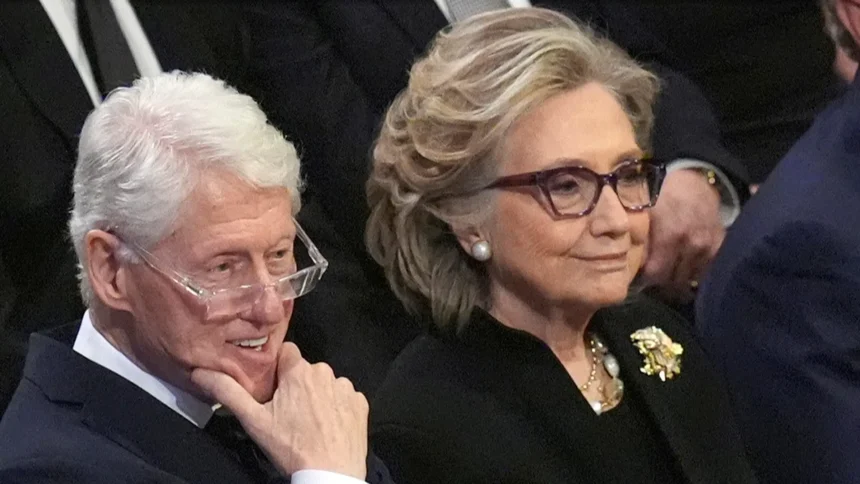
The prospect of a former president facing contempt of Congress charges, potentially carrying fines or even incarceration, loomed large for Bill Clinton this week before a last-minute agreement shifted the landscape. Both he and former Secretary of State Hillary Clinton have now committed to testifying in the House of Representatives investigation into convicted sex offender Jeffrey Epstein, a development that came after weeks of resistance and escalating pressure from the House Oversight Committee. Republican Congressman James Comer, who chairs the committee, had been steadfast in his demand for sworn depositions from both Clintons, rejecting earlier offers for alternative forms of testimony.
Negotiations intensified dramatically on Monday as the House Rules Committee prepared to advance contempt resolutions, a crucial step before a full House vote. Attorneys representing the Clintons communicated with Oversight panel staff, indicating their clients would comply with Comer’s demands for depositions on mutually agreeable dates. However, this offer was contingent on Comer agreeing to halt the contempt proceedings. While Comer acknowledged the communication, he cautioned that no final agreement had been reached and that he was not immediately dropping the charges. He maintained that the specifics of the testimony would dictate his next steps, stating, “We don’t have anything in writing.” The Rules Committee subsequently postponed its consideration of the contempt resolutions, reflecting the fluid nature of the situation.
The Oversight Committee’s investigation into Epstein and his associates prompted the initial subpoenas for the Clintons’ testimony back in August. For months, their legal representatives had challenged the validity of these subpoenas. However, as Comer moved forward with advancing criminal contempt charges last month, the tone of the negotiations began to shift. It is notable that the committee’s vote to advance contempt charges against Bill Clinton garnered support from nine of the 21 Democrats on the panel, with three Democrats also backing similar charges against Hillary Clinton. This bipartisan support underscored the seriousness with which some members of Congress view the need for full transparency in the Epstein inquiry.
Bill Clinton’s past connections with Epstein, which date back to the late 1990s and early 2000s, have resurfaced as a significant focus for Republicans leading this inquiry. While he is among several high-profile individuals documented to have had a relationship with Epstein, Clinton has not been accused of any wrongdoing in his interactions with the disgraced financier, who died by suicide in 2019 while awaiting trial on sex trafficking charges. The Clintons, for their part, have been critical of Comer’s approach, suggesting that the investigation has been politicized. They have also pointed to what they describe as a failure to hold the previous administration accountable for delays in releasing Department of Justice files related to Epstein.
The agreement to testify marks a pivotal moment in the ongoing congressional scrutiny of the Epstein network. It underscores the leverage a committee chair can exert through the threat of contempt, particularly when facing high-profile individuals. The precise dates and terms of the depositions remain subject to finalization, but the commitment to appear signifies a significant shift after a period of prolonged legal back-and-forth. The broader implications of these testimonies for the Epstein investigation, and for the individuals involved, will unfold as the process moves forward.