
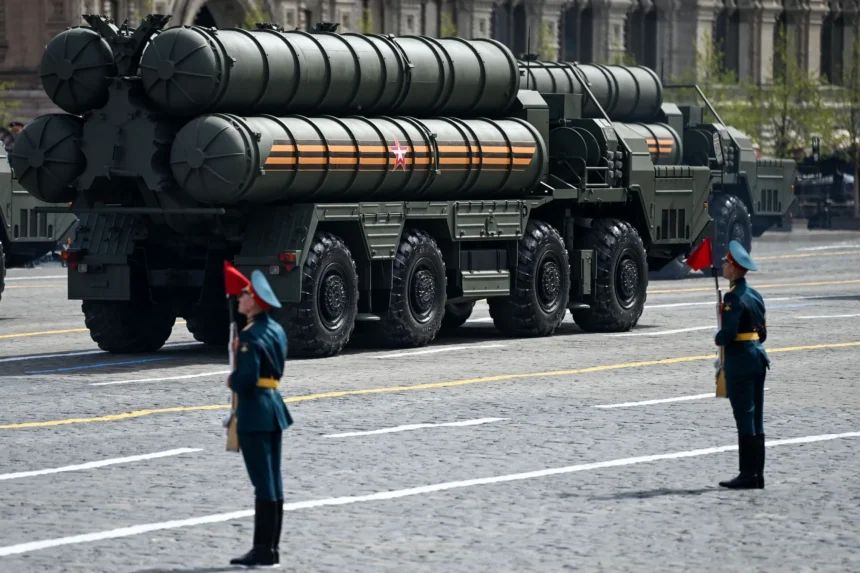
The longstanding dispute between the United States and Turkey over Ankara’s acquisition of Russia’s S-400 air-defense system resurfaced this week, as a senior U.S. envoy reiterated that Turkey’s future access to the F-35 fighter jet program is still contingent upon the removal of Russian-made missile systems from Turkish territory. The statement underscores Washington’s uncompromising position on safeguarding advanced NATO technology while trying to stabilize relations with one of the alliance’s most strategically important yet increasingly unpredictable members.
- A Defining Rift in the NATO Alliance
- Washington’s Position: A Clear, Non-Negotiable Condition
- Turkey’s Calculus: Strategic Autonomy vs. Defense Integration
- Possible Offramps: Are There Alternatives?
- Geopolitical Stakes: Why This Issue Matters Now
- 1. NATO’s Security Posture
- 2. U.S.–Turkey Relations Enter a Reset Phase
- 3. Russia’s Influence in the Region
- 4. Defense Industrial Supply Chains
- What Comes Next?
A Defining Rift in the NATO Alliance
Turkey’s purchase of the S-400 system in 2017 was a geopolitical shockwave. The move prompted Washington to eject Ankara from the F-35 consortium, block aircraft deliveries, and impose sanctions under the Countering America’s Adversaries Through Sanctions Act (CAATSA). While Turkish officials have repeatedly argued that the S-400 was a sovereign procurement decision, U.S. officials maintain that the Russian system poses unacceptable counterintelligence and security risks to the F-35’s stealth capabilities.
The latest comments by the U.S. envoy reaffirm that technopolitical tension remains unresolved despite broader efforts to repair ties following Sweden’s admission into NATO and Turkey’s recent push to re-engage with Western partners.
Washington’s Position: A Clear, Non-Negotiable Condition
According to the envoy, “Turkey’s reentry into the F-35 program requires the full removal and deactivation of the S-400 system.” The statement leaves no room for reinterpretation: as long as the Russian system remains on Turkish soil, relations in the defense-industrial sphere cannot normalize.
U.S. officials insist that the S-400, designed to detect and track Western aircraft, could compromise the integrity of the F-35 fleet by exposing sensitive stealth data to Russian technicians or data collection protocols. The Pentagon has repeatedly warned that co-locating Russian systems with advanced NATO platforms creates strategic vulnerabilities the alliance cannot accept.
Turkey’s Calculus: Strategic Autonomy vs. Defense Integration
Ankara maintains that the S-400 purchase was driven by urgent national security needs after earlier attempts to procure a Western missile defense system were stalled. Turkey argues that no NATO rules prohibit buying equipment from non-NATO suppliers and asserts that the S-400 would not be networked into NATO radar systems.
However, internal Turkish debates reflect a deeper strategic dilemma: whether to continue pursuing “balanced” relationships with Russia and the West, or pivot toward fuller integration with NATO’s defense ecosystem. President Recep Tayyip Erdoğan has signaled openness to alternative solutions—such as acquiring Eurofighter Typhoon jets or upgrading Turkey’s existing F-16 fleet—if the F-35 pathway remains blocked.
Still, Ankara has not committed to abandoning the S-400, as doing so would carry domestic political costs and could reshape Turkey’s broader strategic posture.
Possible Offramps: Are There Alternatives?
While Washington’s condition appears absolute, several theoretical compromises have been floated over the years:
- Storage of the S-400 in a non-operational state
Turkey previously proposed storing the system without activating it, similar to how some countries hold dormant weapons platforms. The U.S. rejected this. - Transfer or sale of the S-400 to a third country
Analysts have suggested that Ankara could offload the system to a non-NATO partner, reducing conflict points with Washington. - Deepened F-16 modernization as compensation
The U.S. Congress recently approved sales of new F-16s and modernization kits, seen by some as a tactical middle ground that maintains Turkey’s airpower without F-35 access.
Despite these discussions, the U.S. envoy’s latest statements signal that Washington’s stance has not softened.
Geopolitical Stakes: Why This Issue Matters Now
The dispute unfolds amid broader geopolitical realignments:
1. NATO’s Security Posture
As NATO adapts to post-Ukraine war realities, ensuring technological security and alliance cohesion is paramount. Turkey’s mixed defense alignments remain a source of uncertainty.
2. U.S.–Turkey Relations Enter a Reset Phase
Washington and Ankara are currently recalibrating after years of turbulence. Cooperation on regional security, energy, and counterterrorism hinges on resolving long-standing irritants like the S-400 issue.
3. Russia’s Influence in the Region
Turkey has maintained cooperative ties with Moscow on energy, trade, and security in Syria and the Black Sea. Washington views this balancing act with both caution and curiosity.
4. Defense Industrial Supply Chains
Turkey remains a critical NATO defense-industrial partner. Its suspension from the F-35 program disrupted manufacturing chains and affected economic interests on both sides.
What Comes Next?
The U.S. envoy’s remarks indicate renewed pressure on Ankara to make a strategic choice. If Turkey prioritizes NATO interoperability and defense modernization, removing the S-400 may become a pragmatic concession. If it continues to pursue a multipolar foreign policy, the F-35 door is likely to remain closed.
Ultimately, the decision could define Turkey’s defense trajectory for the next decade—shaping not only its airpower capabilities but also its place within the Western security architecture.