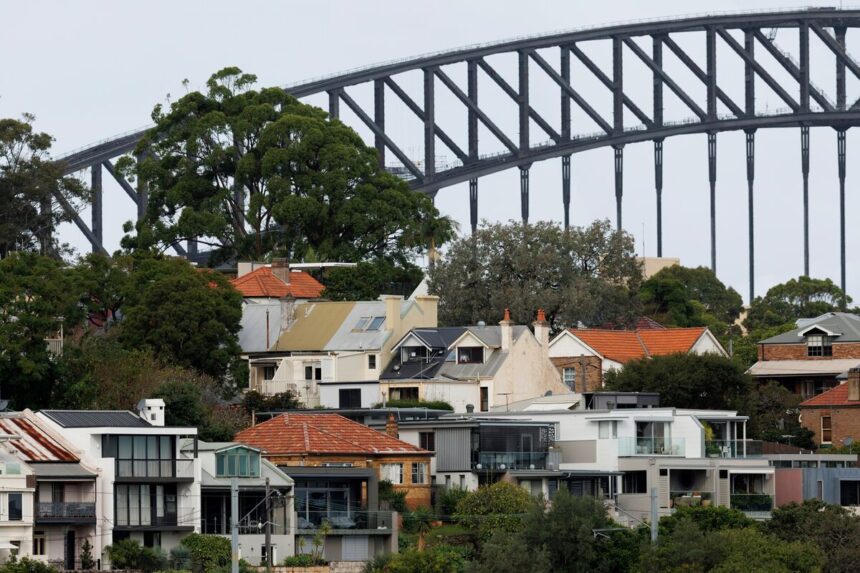
Australia’s housing crisis has reached a breaking point. Homeownership is increasingly out of reach for young Australians, rents are soaring at the fastest pace in decades, and major cities—from Sydney and Melbourne to Brisbane and Perth—are grappling with housing shortages that threaten economic growth, social stability, and generational equity.
- Australia’s Housing Problem: Deep, Structural, and Worsening
- 1. Population Growth Outpacing Housing Supply
- 2. Planning Restrictions that Favor Low-Density Suburbs
- 3. High Construction Costs and Labor Shortages
- 4. Investors and Speculative Demand
- 5. Urban Sprawl and Infrastructure Costs
- What Is Gentle Density—and Why Are Experts Pushing It?
- Why Australia Needs ‘Missing Middle’ Housing Now
- Where Gentle Density Could Have the Biggest Impact
- Policy Changes Needed to Make Gentle Density Happen
- 1. Zoning Reform
- 2. Streamlined Approvals
- 3. Incentives for Homeowners
- 4. Boosting Construction Workforce
- 5. National Standards for Medium-Density Building
- 6. Public-Private Partnerships
- Examples from Abroad: What Success Looks Like
- New Zealand’s “three homes per lot” rule
- Japan’s flexible zoning
- Canada’s shift to missing-middle housing
- France’s transit-oriented density
- The Biggest Obstacle: Local Resistance—Not Economics
- If Australia Embraces Gentle Density, the Housing Future Could Change Dramatically
- Conclusion: A Strategy Whose Time Has Come
Economists, planners, and policymakers agree on one thing: Australia needs more housing. But how it should be built, and where, remains fiercely contested. Enter the concept of “gentle density”—a middle-ground urban strategy gaining rapid traction among experts as a practical, scalable solution.
Gentle density promotes small-scale, incremental increases in housing supply through duplexes, triplexes, townhouses, granny flats, subdivided blocks, and low-rise apartment clusters. Rather than upending neighborhoods with high-rise towers or sprawling suburbs, gentle density aims to unlock capacity inside existing cities while preserving community character.
Increasingly, analysts argue that if Australia embraced this “missing middle” of housing, it could dramatically ease the crisis—adding hundreds of thousands of new homes in walkable, well-connected neighborhoods without the political backlash associated with large redevelopment projects.
This is the blueprint many believe Australia must adopt now, before the crisis becomes irreversible.
Australia’s Housing Problem: Deep, Structural, and Worsening
The roots of the housing crisis are complex, but several forces have converged to intensify pressure:
1. Population Growth Outpacing Housing Supply
Australia’s population is rising rapidly, driven by skilled immigration, student visas, and returning Australians.
But homebuilding has lagged for over a decade.
2. Planning Restrictions that Favor Low-Density Suburbs
Large parts of urban Australia remain zoned exclusively for single-family homes, blocking higher-yield development.
3. High Construction Costs and Labor Shortages
Material inflation, skilled worker shortages, and increased financing costs make large-scale projects slow and expensive.
4. Investors and Speculative Demand
Tax incentives favor investors, pushing prices up while crowding out first-time buyers.
5. Urban Sprawl and Infrastructure Costs
Expanding suburbia requires massive investment in transport, utilities, and public services—often too slow and costly to keep pace.
These structural factors create a housing system that is both unaffordable and insufficient in scale.
Gentle density directly addresses many of these barriers.
What Is Gentle Density—and Why Are Experts Pushing It?
Gentle density sits between sparse suburban homes and large apartment towers. It includes:
- duplexes
- triplexes
- fourplexes
- rowhouses
- townhouses
- courtyard apartments
- accessory dwelling units (granny flats)
- subdivided lots
- 2–4 storey low-rise developments
This housing is typically integrated seamlessly into existing neighborhoods and requires no major infrastructure overhaul.
Why gentle density works:
1. It adds supply quickly
Smaller-scale projects can be approved and built faster than high-rise towers.
2. It reduces construction costs
Medium-density buildings require fewer materials, smaller crews, and simpler designs.
3. It avoids political backlash
Many Australians resist high-rise developments—but are open to low-rise, community-aligned housing.
4. It fits into existing streets
Gentle density can be added one lot at a time, helping avoid disruptive mega-projects.
5. It supports public transport
More residents in transport-accessible neighborhoods boosts ridership and urban vibrancy.
6. It increases choice
Different household types—singles, seniors, key workers, small families—gain more options.
Countries like Japan, Canada, France, and New Zealand have successfully used gentle density to expand supply without destroying neighborhood character. Australia is now being pushed to follow suit.
Why Australia Needs ‘Missing Middle’ Housing Now
Australia’s housing stock is heavily skewed:
- 70% single-family homes
- 20% high-rise apartments
- 10% medium-density housing
The missing middle is almost nonexistent.
This overreliance on two extremes—wide suburban sprawl and large inner-city towers—creates a structural imbalance:
- young professionals cannot afford houses
- families do not want high-rise apartments
- older homeowners have no downsizing options
- essential workers cannot live near job centers
- infrastructure costs become unsustainable
Gentle density solves all of these simultaneously.
Where Gentle Density Could Have the Biggest Impact
1. Inner- and Middle-Ring Suburbs
Where infrastructure already exists:
- public transport
- schools
- parks
- utilities
- shops
These areas have enormous capacity for medium-density growth—if zoning changes allow it.
2. Transit Corridors
Building townhouses, rowhomes, and low-rise apartments near rail stations creates walkable, sustainable communities.
3. Aging Suburbs
Homes on oversized lots can be subdivided for:
- granny flats
- duplexes
- townhouses
This uses land far more efficiently.
4. Regional Hubs
Cities like Newcastle, Geelong, Wollongong, Sunshine Coast, and Hobart can add gentle density to accommodate rapid growth without sprawling outward.
Policy Changes Needed to Make Gentle Density Happen
Experts argue that Australia needs coordinated national, state, and local action.
1. Zoning Reform
Allowing duplexes, triplexes, and townhouses in neighborhoods currently zoned for single-family homes.
2. Streamlined Approvals
Fast-track medium-density projects to reduce time and cost.
3. Incentives for Homeowners
Tax breaks, grants, or low-interest loans for:
- granny flats
- subdividing large lots
- medium-density redevelopment
4. Boosting Construction Workforce
Training programs and visa incentives for skilled trades.
5. National Standards for Medium-Density Building
Reduce uncertainty and cost for architects, builders, and investors.
6. Public-Private Partnerships
Help councils deliver high-quality medium-density planning with private investment.
Examples from Abroad: What Success Looks Like
New Zealand’s “three homes per lot” rule
Dramatically increased housing supply in Auckland.
Japan’s flexible zoning
Allows mixed-use and medium-density housing across most urban areas—preventing housing shortages.
Canada’s shift to missing-middle housing
Cities like Toronto and Vancouver are rezoning single-family neighborhoods to allow multiplexes.
France’s transit-oriented density
High-quality medium-density housing integrated into transit nodes.
Australia can draw on these models to design a uniquely local solution.
The Biggest Obstacle: Local Resistance—Not Economics
The opposition to gentle density is rarely financial. It is political.
Common objections include:
- fear of increased traffic
- desire to preserve “neighborhood character”
- concerns about parking
- resistance to demographic change
- distrust of developers
- misinformation about densification
Yet these fears often overlook the reality:
- Low-rise density does not overwhelm infrastructure.
- Property values often increase with improved housing options.
- Neighbors benefit from upgraded amenities.
- Young families get access to homes they can afford.
Overcoming resistance requires community engagement, clear design standards, and strong political leadership.
If Australia Embraces Gentle Density, the Housing Future Could Change Dramatically
Benefits Include:
- more affordable homes
- more supply in high-demand areas
- shorter commutes
- more walkable communities
- less urban sprawl
- increased economic productivity
- more diverse housing options
- reduced pressure on high-rise construction
Gentle density is not a silver bullet—but it may be the single most scalable, politically realistic tool Australia has to address its housing crisis.
Conclusion: A Strategy Whose Time Has Come
Australia stands at a crossroads. It can continue the unsustainable path of sprawl and resistance to change—or it can embrace the missing middle as a way to unlock the housing supply the nation desperately needs.
Gentle density is not radical. It is common sense.
It is not disruptive. It is incremental.
It is not a threat to neighborhoods. It is their evolution.
If adopted with ambition and clarity, gentle density could reshape Australia’s housing future, restore affordability, and create more livable cities for generations to come.