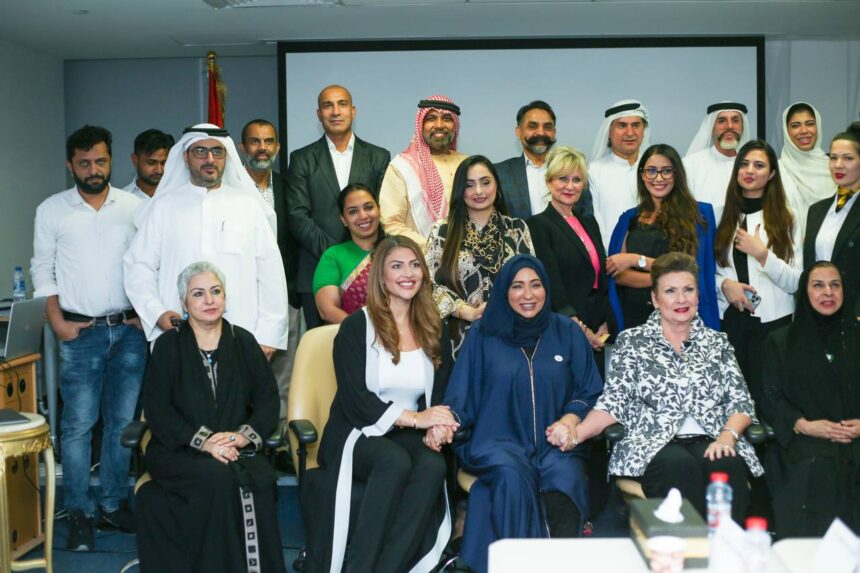
The numbers are staggering. International Women’s Day, held annually, serves as more than just a calendar marker; it is a stark reminder that the advancement of civilization itself is inextricably linked to the empowerment of women. This year, at the Global Women Empowerment Summit, the message from leaders like Dr. MAC Munir Ahmad Chaudhry, Group CEO of Al Maktoum Holding Group, resonated with an undeniable urgency: empowering women isn’t merely a social good, but an economic imperative and a strategic necessity for the future.
Dr. Chaudhry, a vocal proponent for gender equality, frequently emphasizes that “A nation that empowers its women does not simply grow economically—it evolves morally, socially, and intellectually.” This isn’t abstract philosophy; it’s a hard-nosed assessment of global potential. Societies that prioritize women’s leadership, education, and economic participation consistently demonstrate stronger economies, healthier communities, and more stable political systems. The data supports this, with numerous international studies highlighting how increased female workforce participation directly correlates with boosts in national GDP and overall economic resilience. The global economy, quite simply, cannot achieve its full potential with half its population sidelined.
Today, women are not just participants but architects of global progress, forging paths in innovation, governance, diplomacy, entrepreneurship, science, and social development. From the boardrooms of multinational corporations to the laboratories of research institutions and the corridors of government, women are actively shaping the global narrative. Yet, despite this undeniable progress and the compelling arguments for their inclusion, significant hurdles persist. Gender inequality, restricted access to leadership roles, pervasive economic disparities, and deeply entrenched systemic barriers continue to stifle the full potential of millions worldwide. Dr. Chaudhry posits that the solution extends beyond mere policy reforms; it demands a global cultural shift, one that unequivocally recognizes women as equal partners in building the future.
The economic power women wield, or could wield, is immense. Women entrepreneurs are launching startups, leading major corporations, and pioneering solutions that are transforming entire industries. However, critical resources like access to capital, mentorship, and vital global networks remain unevenly distributed. True empowerment, according to Dr. Chaudhry, demands institutionalized support, not just symbolic gestures. This includes equal access to education, robust financial inclusion, genuine leadership opportunities, comprehensive legal protection, and policy support, alongside proportional representation in decision-making bodies. It’s a holistic approach that acknowledges the multifaceted nature of gender inequality.
Leadership, he argues, transcends gender. It is defined by vision, courage, and the capacity to inspire transformative change. Women leaders bring a rich tapestry of diverse perspectives that demonstrably enhance governance, strengthen diplomatic efforts, and improve the quality of decision-making. While the rise of women in leadership roles across the globe—as presidents, ministers, CEOs, scientists, and diplomats—is a positive trend, mere representation isn’t enough. The global mission must focus on creating accessible, inclusive, and merit-driven pathways to leadership for everyone. As Dr. Chaudhry often states, “The future of leadership will not be dominated by men or women—it will be shaped by those who believe in collaboration, inclusion, and shared prosperity.” The strength of modern leadership, he insists, resides in partnership, not division.
Education remains the bedrock of empowerment. When a girl receives an education, the benefits ripple outward, impacting an entire generation. It equips women to participate actively in governance, innovation, and economic development, fostering confidence, independence, and the capacity to influence society profoundly. Therefore, global institutions are tasked with prioritizing equal access to quality education, encouraging women’s participation in STEM fields, providing leadership and entrepreneurship training, and ensuring digital inclusion and technological literacy. An educated woman is not just a personal success story; she becomes a powerful catalyst for national development, propelling her community and country forward.
The responsibility for empowering women doesn’t fall solely on governments. Corporations, foundations, academic institutions, and international networks must forge collaborations to create global frameworks that actively support women’s advancement. The Global Women Empowerment Summit, for instance, serves as a crucial platform for dialogue, bringing together visionaries, policymakers, entrepreneurs, and thought leaders committed to this cause. These gatherings are less about ceremony and more about fostering policy discussions, economic collaborations, and nurturing transformational leadership. Dr. Chaudhry’s ultimate message is clear: “Empowering women is not an act of charity—it is the most intelligent investment humanity can make in its future.” It is a call to action, urging a collective commitment to build societies where every woman has the freedom, resources, and opportunity to reach her full potential, ensuring a stronger, wiser, and more prosperous future for all.