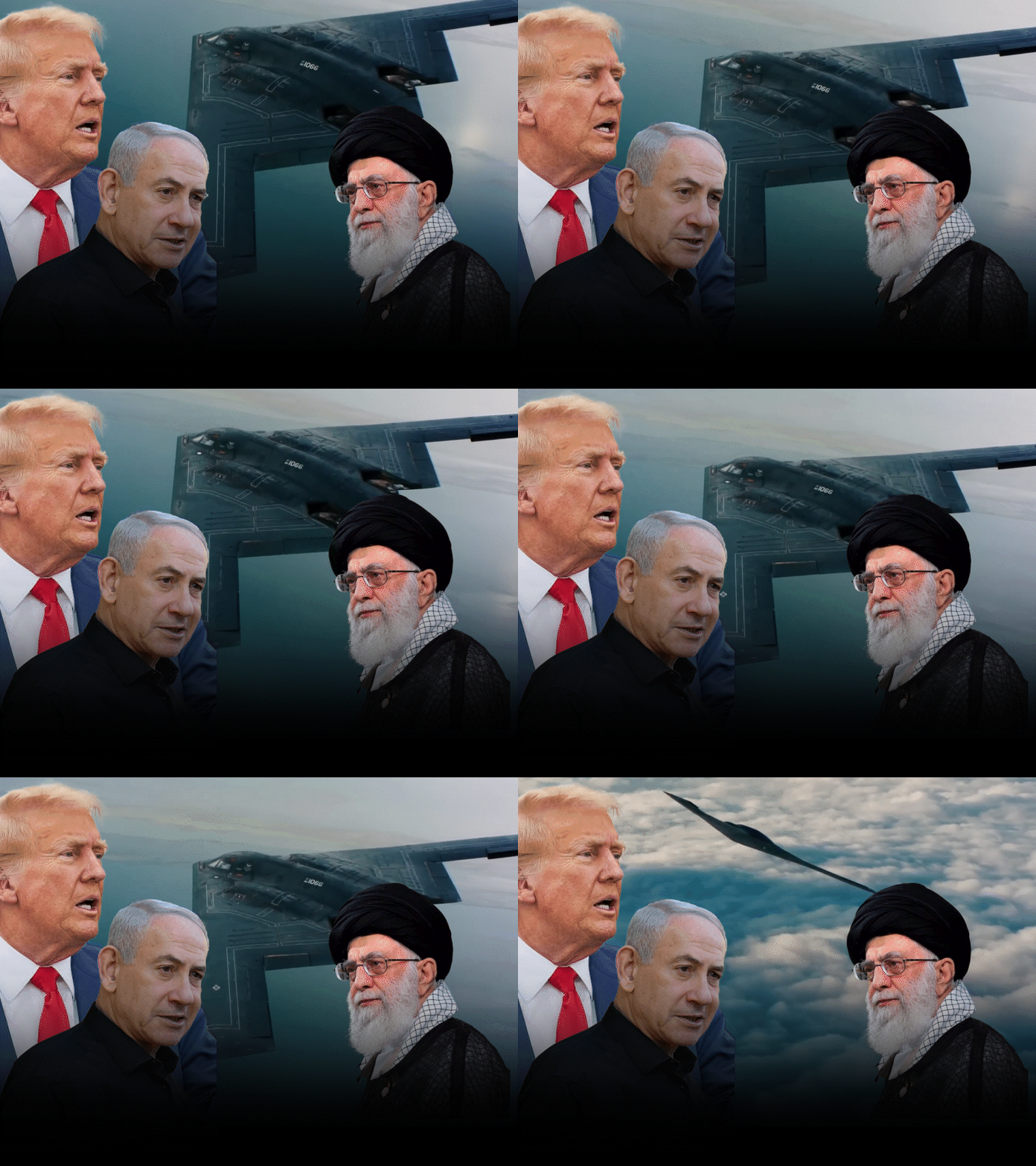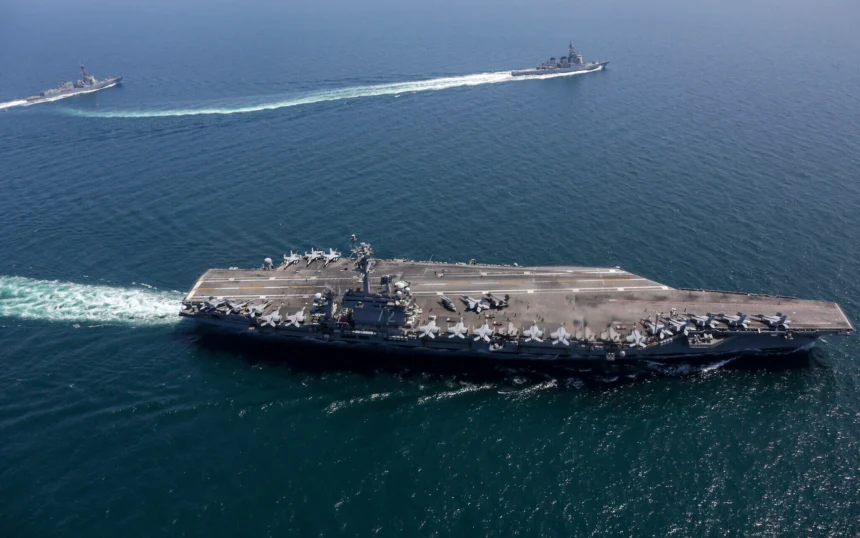
An F-35 fighter jet, launched from the USS Abraham Lincoln aircraft carrier, shot down an Iranian drone over the Arabian Sea this week, an incident that immediately sent oil futures upward by more than a dollar per barrel. The U.S. military confirmed the action, stating the Iranian Shahed-139 drone was “aggressively” approaching the carrier with “unclear intent.” This development unfolded as diplomatic efforts continued in an attempt to arrange nuclear talks between Tehran and Washington.
Navy Captain Tim Hawkins, a spokesperson for the U.S. military’s Central Command, elaborated on the engagement, asserting that the F-35C acted in self-defense to safeguard the aircraft carrier and its personnel. No American service members were injured, and no U.S. equipment sustained damage during the encounter. Meanwhile, Iran’s Tasnim news agency acknowledged the loss of contact with one of its drones in international waters, though it stated the cause remained unknown from their perspective. The Abraham Lincoln carrier strike group’s presence in the Middle East forms a significant component of a broader U.S. military buildup in the region, a response that followed a deadly crackdown on anti-government demonstrations in Iran last month.
President Donald Trump had previously warned that “bad things” were likely to occur if a deal with Iran could not be reached, particularly with U.S. warships positioned near the Iranian coast. Despite these escalating tensions, last week, Trump indicated that Iran was “seriously talking,” a sentiment echoed by Tehran’s top security official, Ali Larijani, who confirmed that arrangements for negotiations were underway. The drone incident, therefore, injects a new layer of complexity into already fraught relations, demonstrating the volatile nature of the standoff even as diplomatic channels are ostensibly being explored.
Adding to the regional instability, hours after the drone was downed, Iran’s Islamic Revolutionary Guard Corps (IRGC) boats reportedly harassed a U.S.-flagged merchant vessel in the Strait of Hormuz. According to Captain Hawkins, two IRGC boats, accompanied by an Iranian Mohajer drone, approached the M/V Stena Imperative at high speeds. These Iranian forces allegedly threatened to board and seize the tanker, ordering it to stop its engines. However, the Stena Imperative reportedly accelerated and continued its course.
A U.S. Navy warship, the McFaul, operating in the vicinity, subsequently escorted the Stena Imperative. This intervention led to the de-escalation of the situation, allowing the U.S.-flagged tanker to proceed safely through the critical waterway. Maritime risk management group Vanguard corroborated elements of the account, noting the Iranian demand for the tanker to halt. These separate but closely timed incidents underscore the persistent challenges to maritime security and freedom of navigation in one of the world’s most vital shipping lanes, against a backdrop of heightened military posturing and intricate diplomatic maneuvers.