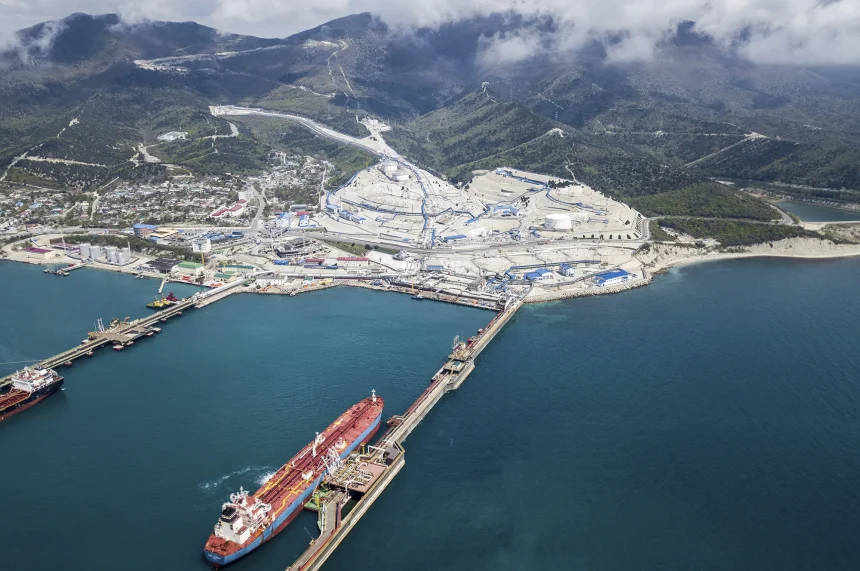
Novorossiysk, Russia’s largest port on the Black Sea and a critical artery for crude oil and petroleum product exports, abruptly suspended all loading operations earlier this week. The decision, confirmed by multiple shipping agents and port authorities, stemmed from escalating safety concerns following what officials described as an incident in the harbor approaches. While specifics remain scarce, the immediate cessation of activities at such a vital energy hub has sent ripples through global commodity markets, highlighting the precarious nature of supply chains in the current geopolitical climate.
Vessels awaiting clearance to enter or depart the port were reportedly instructed to hold their positions, creating a backlog that quickly extended into the open sea. Tankers laden with Urals crude, a key export blend for Russia, along with refined products like diesel and fuel oil, found themselves in limbo, their schedules thrown into disarray. This disruption arrived at a moment when global oil supplies are already under scrutiny, with analysts closely watching any development that could impact availability or pricing. The port is not only a conduit for oil from Russian fields but also handles Kazakh crude transiting through the Caspian Pipeline Consortium (CPC) terminal, further broadening the potential impact of any prolonged closure.
Initial reports from maritime intelligence firms indicated a temporary closure, with expectations that operations would resume once a thorough assessment of the situation was complete. However, the lack of immediate clarity from official sources fueled speculation within shipping circles. Port officials, while confirming the halt, offered limited details regarding the nature of the safety concerns, leading to an atmosphere of uncertainty among charterers and traders. This opaqueness is not uncommon in regions deemed strategically sensitive, yet it invariably complicates efforts to gauge the true extent and duration of disruptions.
The economic implications of such a shutdown, even a short-lived one, are substantial. Russia relies heavily on its Black Sea ports, particularly Novorossiysk, for its energy exports to international markets. Any impediment to these flows directly impacts revenue generation and can have wider consequences for global energy prices, particularly in Europe and Asia, which remain significant recipients of Russian hydrocarbons. Energy traders, already navigating a complex landscape of sanctions and geopolitical tensions, are now factoring this new variable into their risk assessments and supply strategies.
While the immediate focus remains on the resumption of loading activities, the incident underscores a broader vulnerability. Critical infrastructure, especially in regions adjacent to conflict zones, operates under heightened risk. The ripple effect of even a localized event at a major port like Novorossiysk can quickly extend across continents, affecting everything from shipping insurance premiums to the price at the pump. As the situation evolves, the global energy sector will be watching closely for any further developments, hoping for a swift and safe return to full operational capacity at this indispensable Black Sea gateway.