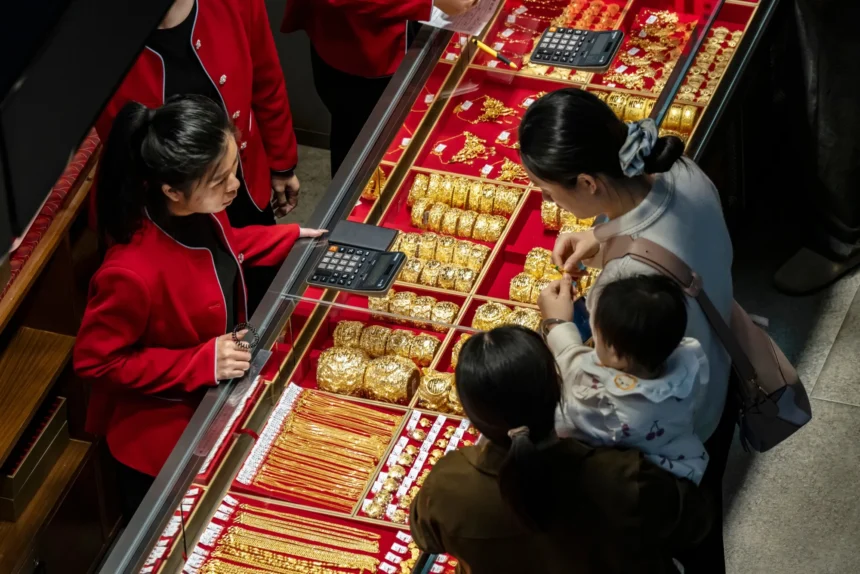
The gleaming storefronts of China’s major retail districts, long a symbol of burgeoning consumer wealth and a seemingly insatiable demand for gold, are now under unprecedented official scrutiny. This heightened oversight follows a series of high-profile incidents that have eroded consumer trust and exposed vulnerabilities within the precious metals market. What was once seen as a stable investment, particularly in times of economic uncertainty, has become a source of anxiety for many, leading to a visible crackdown on practices previously overlooked in the rush to capitalize on the nation’s gold frenzy.
For years, Chinese consumers have flocked to gold as both a traditional gift and a reliable hedge against inflation and currency fluctuations. The cultural significance of gold, intertwined with its perceived intrinsic value, has fueled a robust market across the country. This consistent demand created an environment where numerous smaller, often less regulated, gold retailers flourished alongside established giants. However, this expansive growth, coupled with sophisticated financial instruments tied to gold, inadvertently laid the groundwork for the recent issues that have garnered national attention.
One of the more prominent scandals involved a scheme where consumers were enticed to deposit gold with retailers, ostensibly for safekeeping, in exchange for high interest rates or other preferential terms. These arrangements, often resembling shadow banking operations, promised returns far exceeding those offered by traditional financial institutions. When some of these retailers, particularly smaller chains, faced liquidity issues or outright collapsed, the gold held on deposit vanished, leaving countless investors empty-handed and sparking widespread public outcry. The lack of transparency and regulatory oversight in these specific gold-backed financial products proved to be a critical flaw.
Authorities have responded with a multi-pronged approach, focusing on reinforcing existing regulations and introducing new measures designed to protect consumers. Inspections of gold retailers have intensified, with a particular emphasis on verifying the authenticity and weight of products sold, as well as scrutinizing the financial arrangements offered alongside physical gold purchases. There is a clear effort to distinguish legitimate gold trading from speculative financial products that may be mislabeled or misrepresented to the public. Enforcement actions against non-compliant businesses have also been widely publicized, aimed at deterring similar future misconduct.
The impact of this crackdown extends beyond the immediate closure of problematic retailers. It has prompted a broader re-evaluation of how gold is bought, sold, and invested in China. Consumers are now urged to exercise greater caution, prioritizing established and reputable dealers and rigorously questioning any offers that seem too good to be true. Financial institutions are also facing pressure to clarify their roles in the gold market, ensuring that any gold-related products they offer are transparent and fully compliant with national financial regulations. This shift signifies a maturation of the market, moving away from unchecked expansion towards a more structured and secure environment.
Ultimately, this period of intense scrutiny is reshaping the landscape of China’s gold market. While the underlying demand for gold is unlikely to diminish, the way in which that demand is met is undergoing a significant transformation. The focus has shifted from mere volume to integrity and consumer protection, a necessary evolution to restore confidence after a series of unsettling revelations. The expectation is that these measures will lead to a more resilient and trustworthy gold sector, one where the luster of the precious metal is matched by the transparency of its trade.