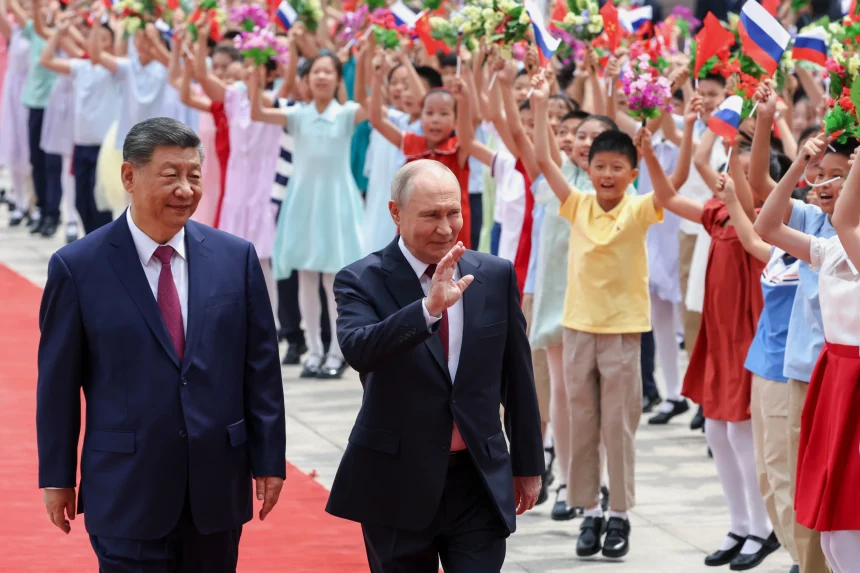
Just days after President Donald Trump concluded a high-profile visit to Washington, Vladimir Putin and Xi Jinping convened, underscoring the enduring strategic alignment between Russia and China. Their meeting, held in a climate of escalating international tensions, served as a clear reaffirmation of their nations’ deepening partnership, a relationship that has consistently challenged established geopolitical norms. The discussions reportedly spanned a wide array of topics, from economic cooperation to global security, with both leaders emphasizing a shared vision for a multipolar world order.
The timing of this summit was particularly notable, occurring shortly after a period of intense scrutiny on the United States’ role in international affairs. While details of the Trump visit to the U.S. capital remained largely speculative in public discourse, its immediate aftermath saw Moscow and Beijing moving to reinforce their own collaborative framework. This pattern has become increasingly familiar: as Western alliances face internal or external pressures, the Russia-China axis often responds with a show of unity, projecting an image of steadfast resolve against perceived hegemonies.
During their talks, which extended over several hours, President Putin and President Xi reportedly delved into specific initiatives aimed at strengthening their economic ties. This included discussions on energy supply agreements, joint infrastructure projects, and mechanisms to enhance trade in their respective national currencies, a move designed to reduce reliance on the U.S. dollar. Such economic maneuvers are not merely transactional; they are integral to a broader strategy of building resilience against potential sanctions and fostering a parallel financial system that operates beyond the traditional Western-dominated structures.
Beyond economics, the leaders also addressed pressing global security concerns. Both Russia and China have consistently called for a more inclusive international dialogue on security architecture, often criticizing what they view as unilateral actions by certain global powers. Their common stance on issues ranging from regional conflicts to cybersecurity reflects a convergence of interests in maintaining strategic stability while simultaneously advocating for reforms within international institutions. This shared perspective forms a bedrock for their coordinated diplomatic efforts on the world stage.
The symbolism of this meeting, coming so swiftly on the heels of another significant international engagement, was not lost on observers. It signals a deliberate effort by Moscow and Beijing to demonstrate continuity and strength in their relationship, irrespective of developments elsewhere. For both Putin and Xi, the message appears to be one of unwavering commitment to a partnership that they believe is essential for navigating the complexities of the 21st century. This steadfastness contrasts with the often-fluctuating nature of alliances in other parts of the world, presenting a united front that aims to project stability and influence.
Ultimately, the meeting between Putin and Xi serves as a potent reminder of the evolving global landscape. It highlights a strategic patience and a long-term vision shared by both leaders, who continue to invest heavily in their bilateral relationship as a cornerstone of their foreign policy. As geopolitical currents shift, the enduring nature of the Russia-China partnership remains a constant, shaping discussions and decisions far beyond their immediate borders.