Arif Kartono/AFP/Getty Images
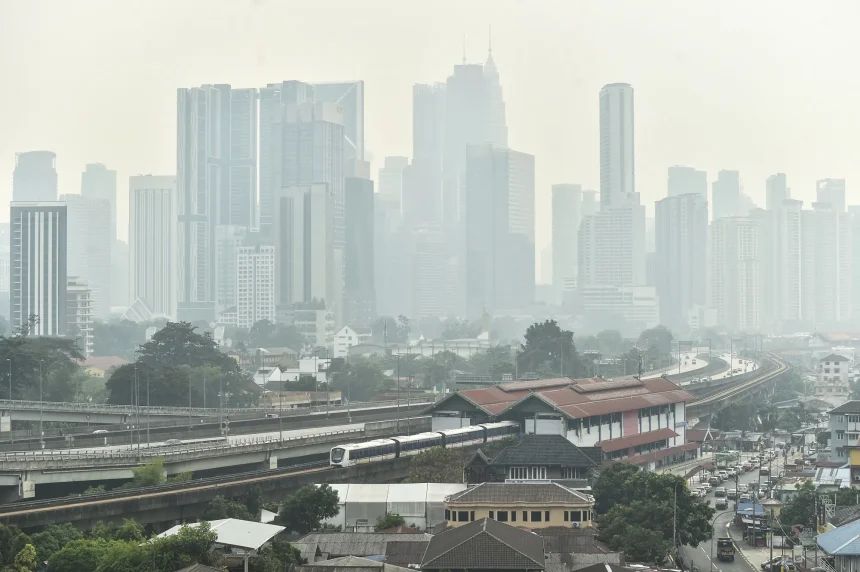
Kuala Lumpur’s skyline disappeared behind a thick gray shroud this week as smoke from Indonesian wildfires drifted across the Malacca Strait, pushing the Malaysian capital’s air quality into the “very unhealthy” range. By Thursday afternoon, data from IQAir ranked Kuala Lumpur as the most polluted major city in the world.
Johor Chief Minister Onn Hafiz Ghazi, head of Malaysia’s second-most populous state, called for an emergency meeting of regional leaders to confront the crisis. “ASEAN needs to play a more active role and hold an emergency meeting to address this crisis collectively,” he wrote in a Facebook post, as his own state shut schools through the end of the week — a closure affecting roughly 617,000 students, according to the state education ministry.
Malaysia’s Prime Minister has separately reached out to Indonesian President Prabowo Subianto to discuss joint efforts to contain the smog, as wildfires continue to burn across swathes of the Indonesian archipelago, most heavily in West Kalimantan and parts of Sumatra. The fires have sent transboundary haze across the region for weeks, and the ASEAN Specialised Meteorological Centre had already activated a Level 3 trans-boundary haze alert, its highest tier, for the southern part of Southeast Asia.
The haze isn’t confined to Malaysia. Smoke from the same fires has disrupted events in neighboring Singapore and forced school closures in Malaysian states beyond Johor, including Sarawak, where unhealthy Air Pollutant Index readings have been climbing. Indonesian authorities say they’ve deployed tens of thousands of personnel and dozens of aircraft to fight the fires, but environmental groups have raised concerns that funding cuts, combined with intensifying El Niño conditions, are straining the country’s ability to get ahead of the blazes.
For Malaysia, the smog has become more than an environmental nuisance — it’s increasingly a recurring test of regional cooperation. The same haze problem forced the country to move its own National Day address indoors earlier this year, and with this week’s emergency call from Johor’s leader, pressure is building on ASEAN to treat the annual crisis as a collective governance failure rather than a problem for Indonesia to solve alone.