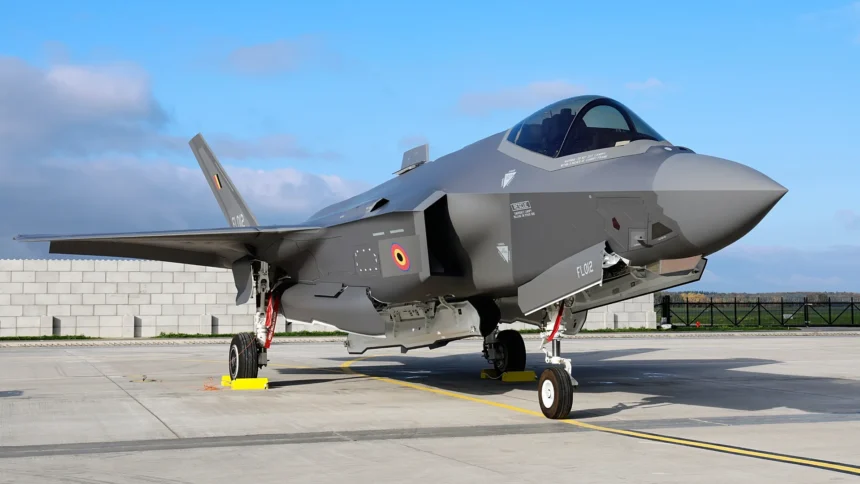
Since last Saturday, the F-35 Lightning II has emerged as a central component in the US-Israeli military operations targeting Iran. This advanced fighter jet, designated with an “F” for Fighter and “35” for its place in the US military’s aircraft lineage, has been instrumental in the aerial campaign that has reportedly led to the deaths of Supreme Leader Ali Khamenei and several top Iranian commanders. Its operational footprint extends across more than 3,000 strikes on Iranian targets since late February, highlighting its critical role in the ongoing hostilities.
Described by former US President Donald Trump as “like an almost invisible fighter,” the F-35’s stealth capabilities are a key factor in its effectiveness. Its design incorporates radar-absorbing paint and specialized materials, allowing it to largely evade detection by enemy radar systems. This stealth advantage enables the aircraft to deploy a range of armaments, including smart bombs, cluster bombs, and precision-guided missiles, from distances up to 400 kilometers, often without being seen. Beyond its stealth, the F-35 integrates data from its onboard radar, cameras, and electronic sensors into a unified system, providing pilots with comprehensive situational awareness and a tactical edge. This technological sophistication has proven highly effective in neutralizing Iranian air defenses and establishing air dominance, thereby facilitating unimpeded attacks by other aircraft.
Manufactured by Lockheed Martin, a prominent US defense contractor, the F-35 is a fifth-generation stealth multirole fighter. It is designed for a broad spectrum of missions, encompassing air-to-air combat, ground attacks, surveillance, and reconnaissance. Capable of reaching speeds of approximately 2,000 kilometers per hour (Mach 1.6) and flying at altitudes up to 50,000 feet, the aircraft boasts a range of up to 2,200 kilometers. The US currently operates a fleet of over 600 F-35s, with many deployed from allied military bases across the Middle East and from aircraft carriers such as the USS Gerald Ford in the Mediterranean and the USS Abraham Lincoln in the Arabian Sea. Israel contributes an additional 48 F-35s to the operational deployment.
The F-35, which entered service in 2015, comes in three primary versions—A, B, and C—each with a unit cost between €80 million and €120 million, depending on the configuration. The A version is optimized for conventional runways and deep-strike operations, the B version offers vertical take-off capabilities, and the C version is adapted for aircraft carrier operations. This versatility has made the F-35 a popular choice among NATO members and US allies, including the UK, Italy, Netherlands, Canada, Denmark, Norway, Belgium, Poland, Germany, Greece, and Romania. The aircraft’s advanced software and military systems allow for seamless, real-time sharing of battlefield data with other allied forces.
Despite its widespread adoption, the F-35’s reliance on US software and security systems, as well as complex supply chains for maintenance, has raised some concerns among international partners. Speculation once suggested that the US could potentially disable access to this software, effectively rendering an allied nation’s F-35 fleet inoperable. However, the F-35 Joint Program Office (JPO) has explicitly refuted these claims, stating there is “no kill switch.” Recent diplomatic tensions, particularly between the Trump administration and European leaders over issues ranging from Ukraine and Venezuela to Greenland and now Iran, have also influenced some countries’ procurement decisions. Spain, for instance, cancelled plans to acquire F-35s last August, while the substantial operating costs deterred Portugal and Switzerland.
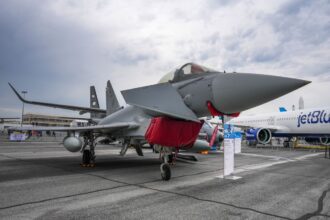
The F-35’s primary rival in the international market is the Eurofighter Typhoon, a faster and more agile aircraft utilized by nations such as Germany, Italy, Spain, Austria, and the UK. The UK recently deployed an additional four Typhoons to defend Qatar against potential Iranian aggression. In a significant development on March 4, an Israeli F-35 achieved the aircraft’s first air-to-air combat kill, downing an Iranian YAK-130. This incident underscores the F-35’s combat capabilities, in contrast to a false claim by Iran in June last year that it had shot down two Israeli F-35s during a 12-day conflict. The F-35 continues to represent a significant technological edge in modern aerial warfare.